What has been confirmed about the human case?
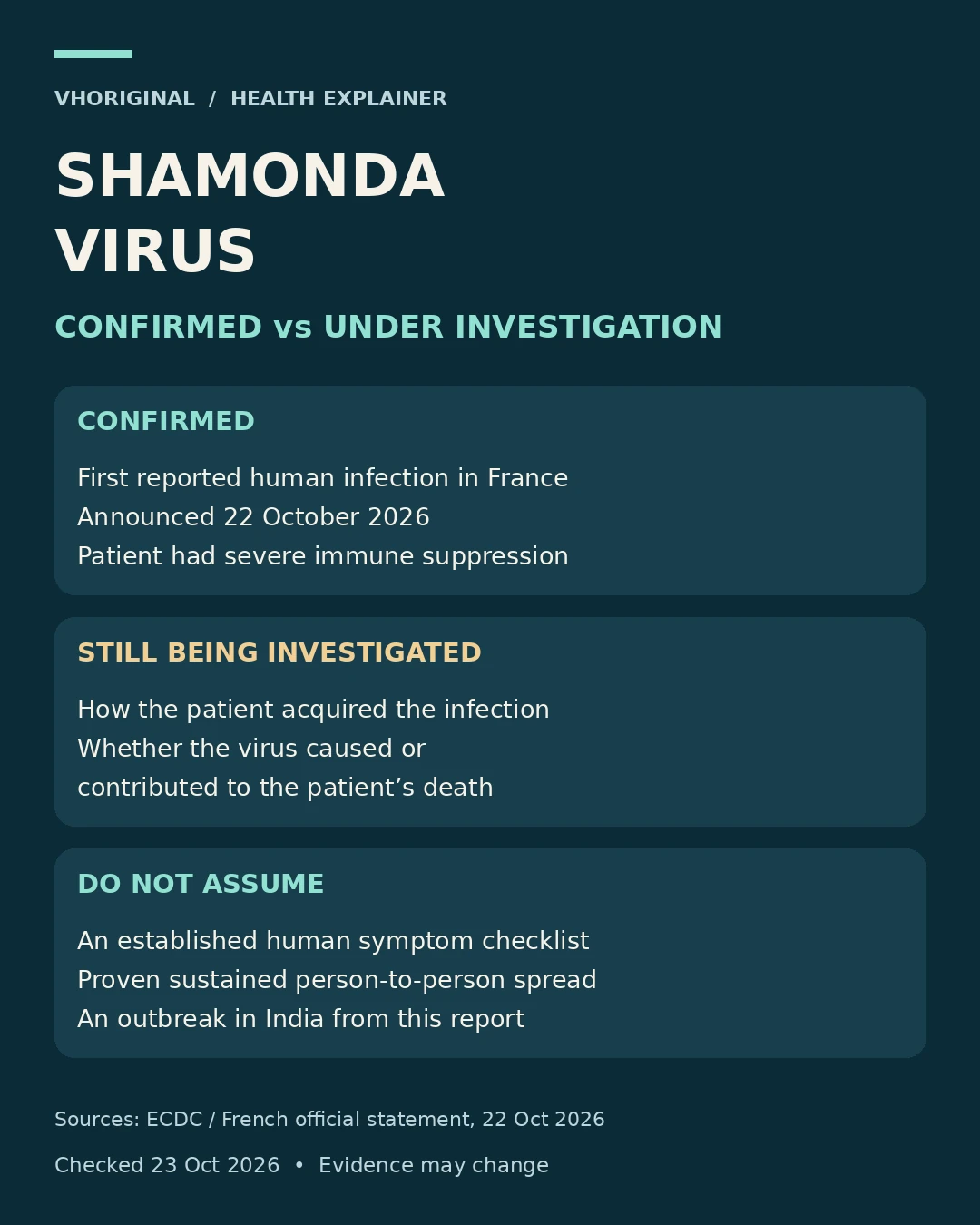
France announced the first documented human Shamonda virus infection on 22 October 2026. The patient was receiving treatment for a serious illness, was severely immunocompromised and died in early October. ECDC says investigations are continuing into whether the virus caused or contributed to the death.
At the time of the French statement, no health risk to the general population had been identified on available knowledge. That does not settle every unanswered question. This explainer reflects sources checked on 23 October 2026. “Human Shamonda Virus” is a search phrase about this infection, rather than a separately established virus name.
What is Shamonda virus and how does it spread?
Shamonda is an orthobunyavirus previously known primarily in animals. The World Organisation for Animal Health, WOAH notes its isolation from cattle in Nigeria in 1965. Infected biting midges of the genus Culicoides transmit it between animals.
An infected midge bite is a hypothesis for the French human infection, not a confirmed reconstruction. ECDC says the route of acquisition and the particular midge species involved remain under investigation. Animal detection alone does not prove that touching cattle transmits infection to people.
What symptoms does it cause in humans?
It would be misleading to present an established general human symptom checklist at this stage. The first reported patient already had serious underlying illness. French authorities considered brain complications before death very likely related to infection; the separate question of whether the virus caused or contributed to death remains under investigation.
Fever, diarrhoea, reduced milk production and reproductive problems reported in animals must not be relabelled as “five confirmed human symptoms”. Fever, headache or an insect bite alone cannot establish a Shamonda diagnosis. A clinician assesses the possible causes and need for testing.
Does this mean a new pandemic or an outbreak in India?
One detected human infection does not establish a pandemic or sustained person-to-person transmission. The official statements reviewed here do not establish that pattern. Conversely, it would no longer be accurate to say the virus can never infect a human.
These sources describe France and the European situation. They do not support a claim that Shamonda is spreading in India, nor do they establish a worldwide count of zero Indian cases. Consult India’s NCDC and local health-authority notices for local information. Do not forward a foreign report as an Indian outbreak alert.
Prevention and treatment: what can readers do?
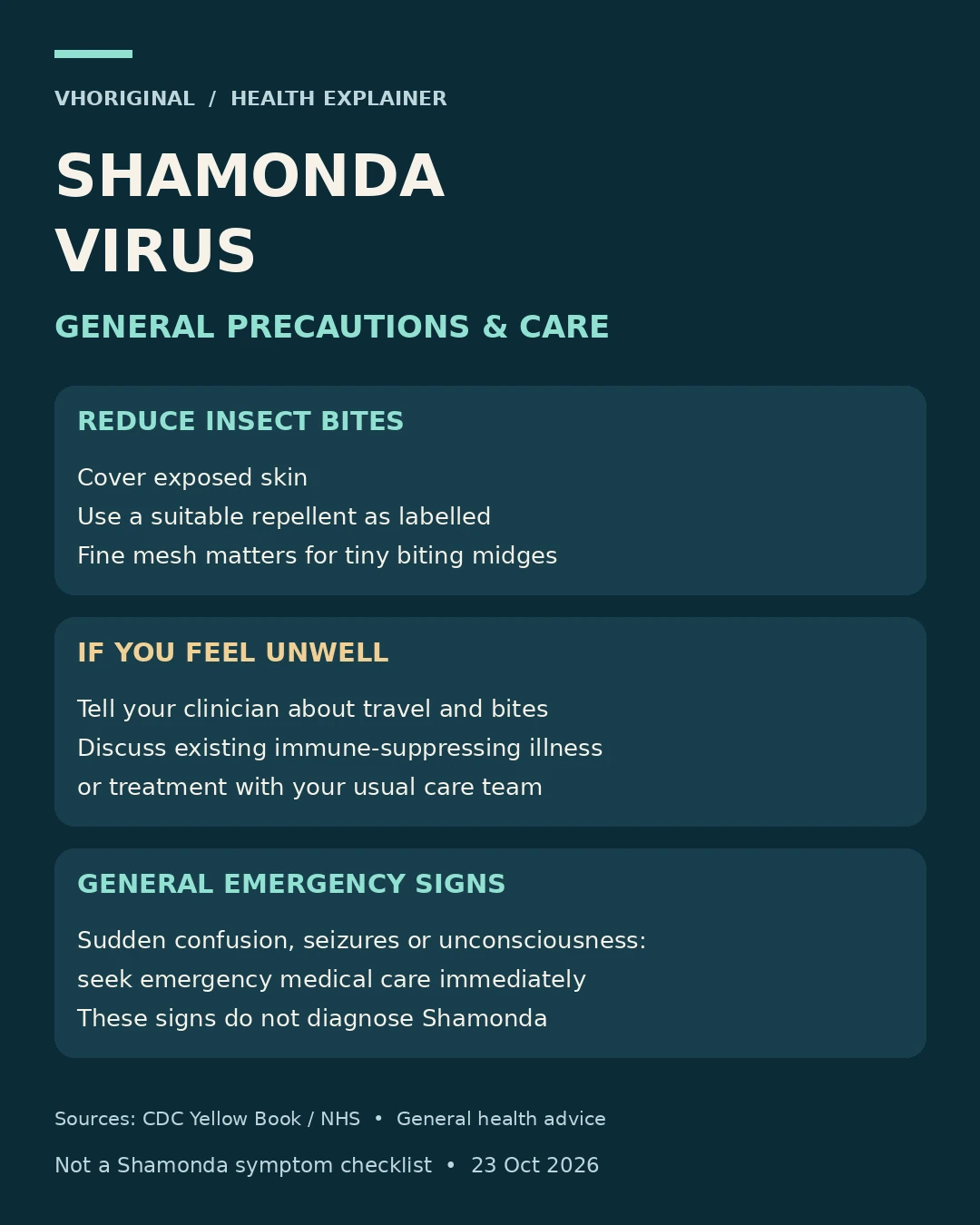
General bite-avoidance measures include covering exposed skin and using an appropriate repellent according to its label. The CDC Yellow Book discusses repellents labelled for biting midges. Ordinary insect screens may have openings too large to exclude these tiny insects.
These are general precautions against bites, not a proven guarantee against Shamonda infection. The reviewed sources do not justify starting a home remedy, an “immunity booster”, antibiotics or antivirals for this virus. Do not stop prescribed treatment on your own. This article does not recommend a specific human cure, vaccine or drug dose.
When should someone seek medical help?
If unwell, tell your clinician about recent travel, insect bites and existing treatment. People whose immune systems are weakened by illness or treatment should seek individual advice from their usual care team. Do not choose tests or medicines solely from an online article.
General emergency signs: sudden confusion, a seizure or loss of consciousness requires immediate emergency medical care. The NHS encephalitis guidance identifies serious neurological signs requiring urgent help. This is general medical safety advice, not a validated Shamonda symptom checklist or diagnostic rule.
What should livestock owners know?
Ask a veterinarian to investigate a sudden reduction in milk production, fever, diarrhoea or reproductive problems in livestock. Do not diagnose Shamonda from this article. The French animal-health guidance and WOAH information concern animals, not human treatment.
French authorities state that available scientific data do not document transmission through meat, milk or derived products. This is not permission to consume raw milk or products from sick animals. Follow local food-safety requirements and veterinary advice.
Our advice for assessing the headlines
Check the date and original health authority first. Detection of a virus, a possible link with complications and established causation of death are distinct claims. Keep an investigation labelled as an investigation.
Our posters separate established information from unanswered questions. The featured image is conceptual artwork rather than an actual micrograph of the virus. Check the source links for newer official statements as the situation develops.
Frequently asked questions
Is Shamonda an entirely new virus? No. It has been known in animals for decades; the newly reported development is a human infection.
Was it confirmed as the cause of death? ECDC says its role in causing or contributing to death is being investigated.
Can we list five established human symptoms? The limited early evidence does not justify a general checklist.
Is person-to-person spread established? The official statements reviewed here do not establish it.
Are home remedies a cure? These sources do not establish such a human treatment. Seek clinical advice when unwell.
Sources and health information note
French official statement, 22 October; ECDC human-case investigation; WOAH animal-health information; French livestock guidance; CDC bite prevention; NHS encephalitis guidance. General health information, not personal diagnosis or treatment. This article is not represented as medically reviewed.