Who was Dr Rachna Shroff?
A cancer specialist’s contribution can extend beyond consultations to testing new approaches, widening access to research and helping younger scientists develop their careers. Dr Rachna Shroff combined those roles as a clinician-scientist. Following news of her death, understanding that work gives a fuller picture of her life than reducing it to a headline about her illness.
Checked October 17, 2026. This profile uses the University of Arizona, ASCO and primary research sources. It focuses on verified education, professional contributions and legacy rather than inferring personal medical details that the institutional tributes do not disclose.
Education and the beginning of a research career
The University of Arizona College of Medicine tribute traces her interest in research to her school years. An Osler Fellowship gave her a cancer-laboratory opportunity in 1993. Her mother was a nephrologist and her father a biochemist.
She completed undergraduate study at Brown University and her medical degree at Thomas Jefferson University. After fellowship training and work at MD Anderson Cancer Center, she returned to Tucson in 2018 to join the University of Arizona. The path illustrates how research careers develop through education, training and sustained collaboration.
| Area | Verified information |
|---|---|
| Name | Rachna T. Shroff, MD, MS, FASCO |
| Main field | Gastrointestinal oncology |
| Major institution | University of Arizona Cancer Center |
| Earlier work | MD Anderson Cancer Center |
| Specialist interests | Biliary tract and pancreatic cancers |
What did she contribute to cancer research?
ASCO’s remembrance recognises her expertise in pancreatic and biliary tract cancers and her leadership in clinical investigations and gastrointestinal research at Arizona. Her responsibilities brought patient care and the development of research programmes together.
The university records more than 80 publications. A publication count alone, however, does not fully explain a researcher’s contribution. The important questions include which clinical problem was examined, why it mattered to patients and how other teams can assess the evidence.
Working across the clinic and research can connect patients’ questions with scientific studies. Findings can then inform conversations about care. This is a collaborative process involving institutions and many professionals, rather than the story of one person producing a universal cure.
Clinical trials: what does this work involve?
The National Cancer Institute explains that treatment trials test new approaches or different ways of using existing treatments. They follow protocols, monitoring procedures and eligibility requirements. A research announcement is therefore not the same thing as an immediately available, proven treatment.
One concrete example of Dr Shroff’s published work is the phase III SWOG S1815 study, comparing treatment combinations for advanced biliary tract cancers. It appeared in the Journal of Clinical Oncology in 2025. A publication gives readers an identifiable piece of research rather than a vague claim about scientific achievement.
Research matters beyond whether a headline sounds promising. Systematically comparing benefit, possible harm and differences between approaches helps medicine answer practical questions. Reading a study and changing an individual treatment plan are separate activities; the latter requires discussion with the treating team.
FACT CHECK: ASCO’s tribute describes her own illness as an aggressive cancer. That wording does not establish a particular cancer type. Her research specialism should not be substituted for a confirmed personal diagnosis.
A lasting award for younger researchers
The Association of American Cancer Institutes describes the effort to establish a Young Investigator Award in her name for early-career biliary cancer researchers. More than 600 donors helped the campaign exceed its $1.35 million endowment goal.
The purpose of that support matters as much as the amount. A young researcher needs more than an interesting question: time, mentorship, colleagues and resources also shape what can be investigated. An award can help support that starting point.
Reducing her story to its final medical chapter would miss this effort to sustain future work. Research can continue through new teams, new questions and opportunities for the next generation. That is a meaningful part of the legacy described by the organisations that worked with her.
Mentoring and the human side of medicine
ASCO also remembers her involvement in mentoring, professional committees and cancer communication. She supported programmes for younger colleagues and professional networking for women. Her contribution was not limited to the papers carrying her name.
The Arizona Cancer Center’s life tribute includes her connections with patients, colleagues and family. Such accounts help readers see the person behind a list of appointments and achievements, while keeping the focus on what those who knew her chose to share publicly.
Mentorship can have effects that extend well beyond one project. A student can learn to ask a better question; a young doctor can learn to listen more carefully; a team can learn to explain uncertainty honestly. Those skills continue through the people who carry them into later work.
Advice: reading cancer-related news accurately
Start by checking whether a detail comes from a university, hospital, professional organisation or only a circulating headline. A precise diagnosis, age or death date should not be added without a clear source. Leaving an undisclosed detail unspecified is part of respectful, accurate reporting.
One specialist’s illness or death does not, by itself, support a general conclusion about every cancer treatment. Individual circumstances differ. For a family interested in research participation, NCI guidance recommends starting a conversation with the doctor or care team.
Use this profile to understand her life and research contributions. It does not diagnose anyone or prescribe a medicine or treatment plan. Questions about an individual case belong with the professionals who have the relevant medical information.
Frequently asked questions
What was her medical field?
She specialised in gastrointestinal oncology and clinical research.
Where did she study and train?
Her education and training included Brown University, Thomas Jefferson University and MD Anderson.
Is her exact personal cancer type established here?
No. The cited institutional remembrance uses “aggressive cancer”; this article does not infer a more specific diagnosis.
Who is the award intended to support?
Early-career scientists working on biliary cancer research.
Is a clinical trial suitable for every patient?
Eligibility and individual circumstances matter. Discuss the question with the treating team.
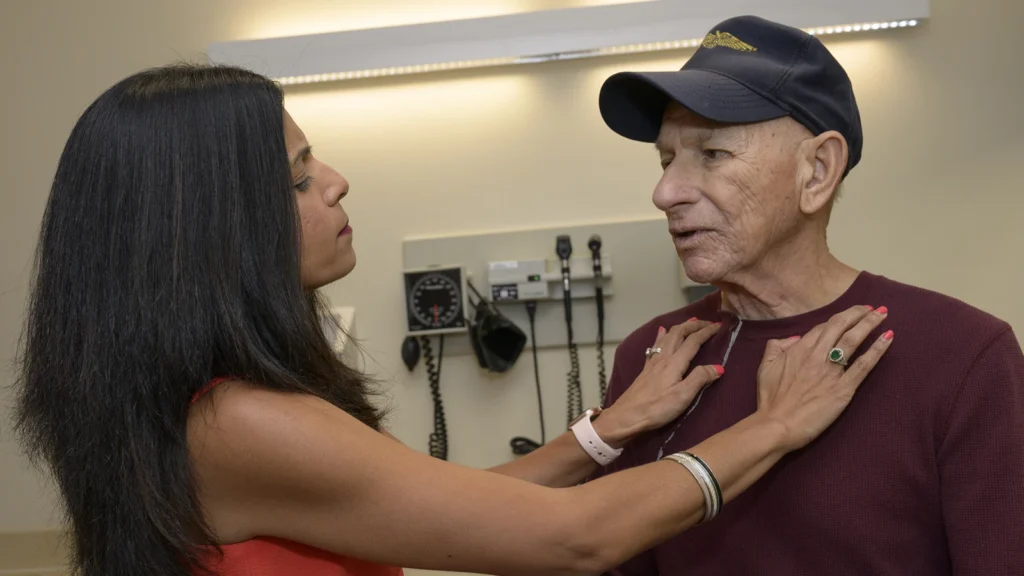
Sources: University of Arizona institutional tribute; Cancer Center life and legacy feature; ASCO remembrance; AACI award announcement; JCO: SWOG S1815; NCI treatment-trial information. Featured photograph: Kris Hanning / University of Arizona.
This is a biographical and research explainer, not individual medical advice.