Can you shave during Navratri?
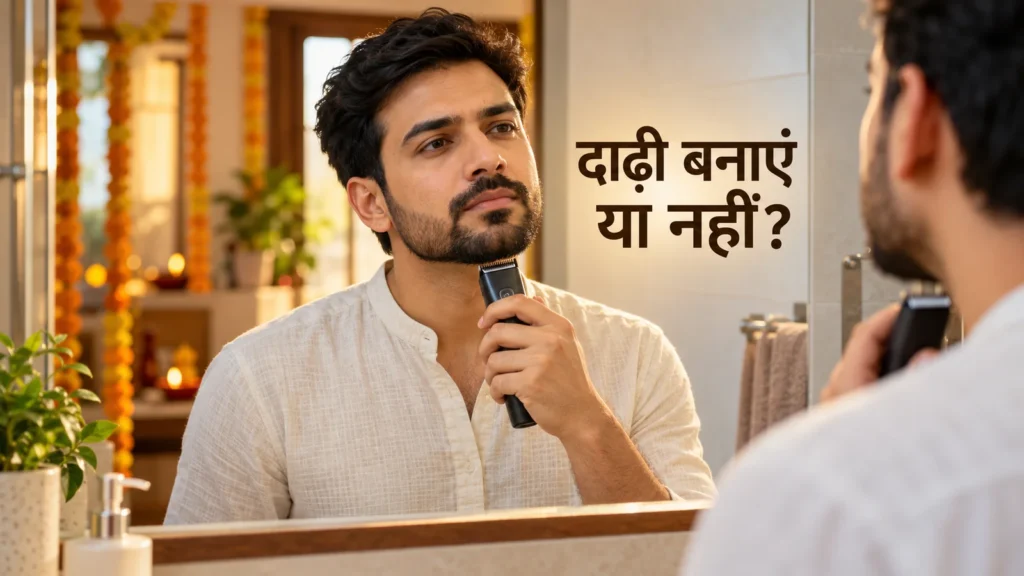
As Navratri approaches, a small grooming question can become a genuine dilemma: should you shave or let your beard grow? Some households avoid shaving and haircuts for nine days; others approach the observance differently. Your fasting commitment and family tradition are relevant to the answer.
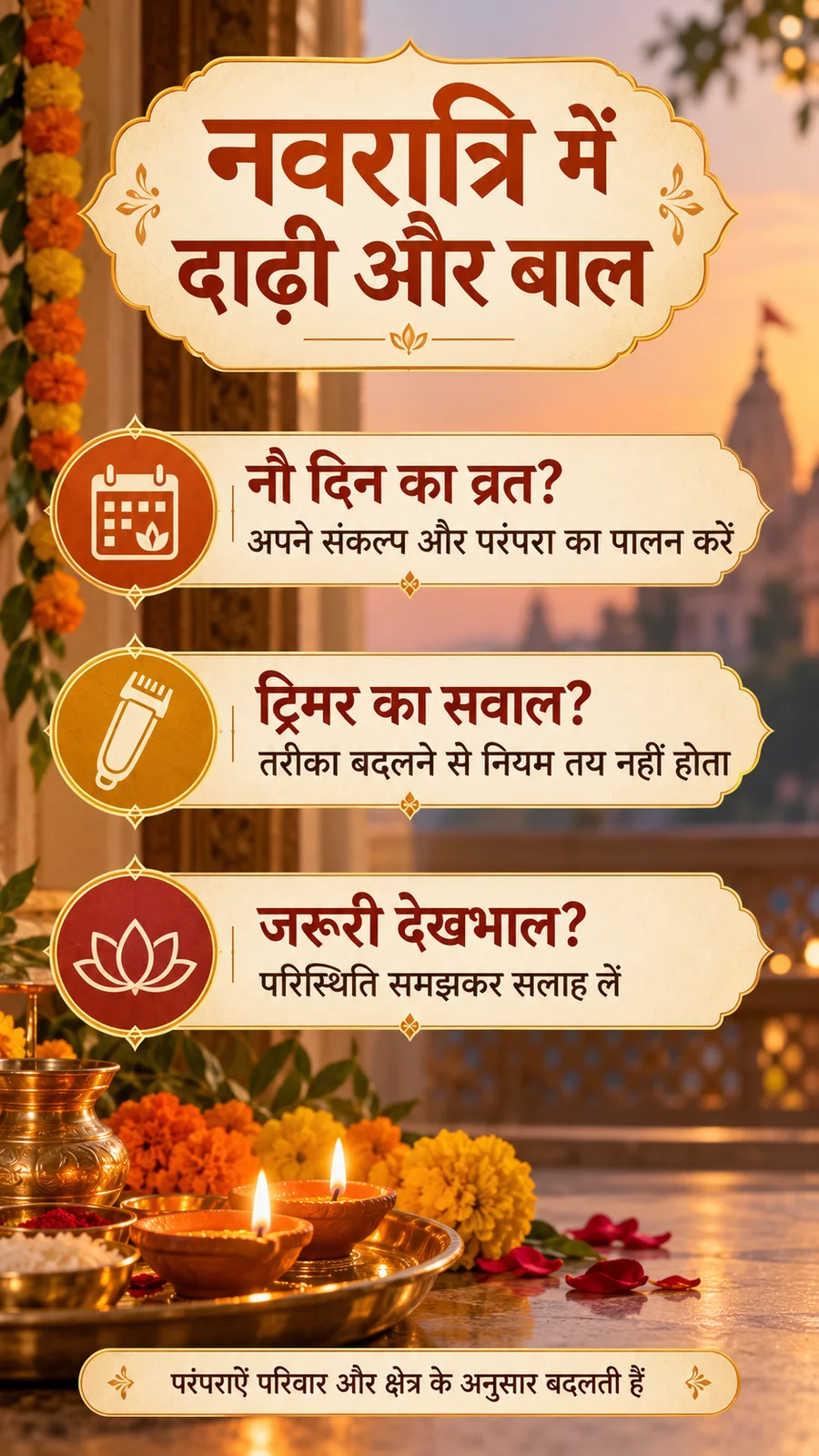
The practical starting point: if you have undertaken a nine-day fast with a tradition of avoiding shaving and haircuts, follow that commitment. It would be inaccurate to turn this into an unexplained universal rule for every person. Fasting, ordinary worship and a specific religious observance can involve different commitments.
Why do some people avoid shaving and haircuts during Navratri?
The custom is commonly understood in connection with restraint and a simpler routine during an observance. For families that follow it, setting aside grooming can form part of their devotional discipline. The practice deserves to be described respectfully.
Religious calendar publisher Drik Panchang’s Navratri FAQ advises people undertaking a nine-day fast to avoid Kshaur Karma, with hair and nail cutting among its examples. That is the guidance of a religious reference publisher. The discussion of personal circumstances below is our general practical advice.
The length of someone’s beard does not establish how devoted that person is. Respecting a family custom and judging another person’s worship are different actions.
Is shaving forbidden by scripture?
A statement that something is “written in scripture” needs an identifiable text, passage and context. In the sources checked for this article, we did not verify an original verse establishing an identical prohibition on shaving for everyone during Navratri. We therefore do not invent a verse or attach a rule to the name of a Purana.
That limitation does not prove that no tradition has such a rule. Religious practices can vary between communities and families. If you have undertaken a particular spiritual discipline, ask the knowledgeable person guiding that observance about its specific requirements.
Are the rules identical for people who fast and those who do not?
A nine-day fast, an Ashtami fast and daily prayer are not identical commitments. First identify what you have actually undertaken: its duration, purpose and rules.
Someone who is not fasting may still follow a household custom. However, guidance written for nine-day fasters should not automatically be imposed on everyone else. If members of a family disagree, discuss the practice calmly. Declaring that somebody’s worship is worthless does not resolve the question.
Can you use a trimmer or get a haircut during Navratri?
Replacing a razor with a trimmer does not automatically settle the religious question. If your commitment is to avoid cutting your beard or hair, changing the tool alone does not answer whether trimming fits that commitment. We did not find a verified universal exemption saying that a full shave is forbidden but a little trimming is always allowed.
Approach haircuts through the same consideration of your observance and tradition. If you already follow a no-haircut custom, you can plan to postpone a nonessential haircut. Nail cutting also appears in the cited religious guidance; circumstances involving necessary care should be considered separately.
FACT: tradition and scientific evidence are different
You may choose to observe a custom as an expression of faith. It does not need an invented scientific explanation. This guide is not intended to diminish anyone’s beliefs.
Advice: workplace grooming, necessary care and accidental shaving
If your job has a grooming requirement, first check whether there is a practical arrangement that respects both your work obligations and your observance. Explain the circumstances to your family or the person guiding your ritual. Do not use a random online statement to declare a religious exemption or penalty for yourself.
If treatment or necessary care is involved, explain your circumstances to the relevant professional. This article does not advise delaying essential treatment.
If you shaved by mistake, do not immediately conclude from an alarming social-media post that your worship has become meaningless. Ask an appropriate knowledgeable person about your particular commitment and how to proceed. We do not prescribe a definite religious punishment or penance here.
Frequently asked questions about Navratri shaving
Does shaving automatically break the fast? We did not verify a basis for making that conclusion universally. Check the instructions for your particular fast and tradition.
Must non-fasters also avoid shaving? A family custom may apply in your household. Instructions addressed to nine-day fasters should not be applied to every person without context.
Can I trim only a small amount? Consider your actual commitment. A different tool is not an automatic religious exemption.
When can I shave after Navratri? Follow the completion of your observance and the relevant family custom. A single Ashtami or Navami date should not be prescribed for everyone.
Understand other Navratri traditions
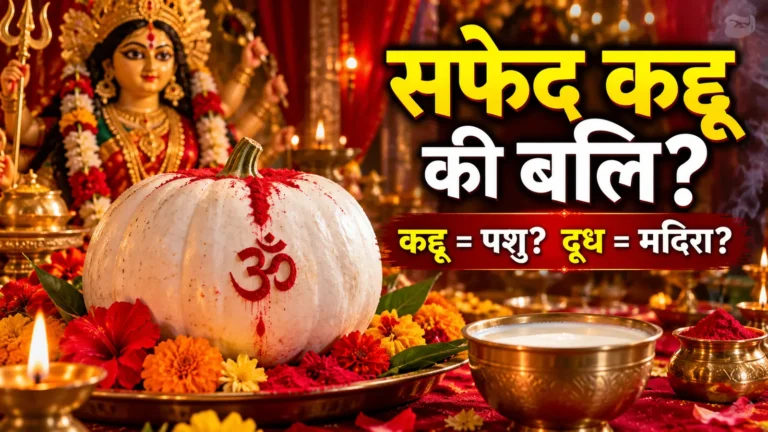
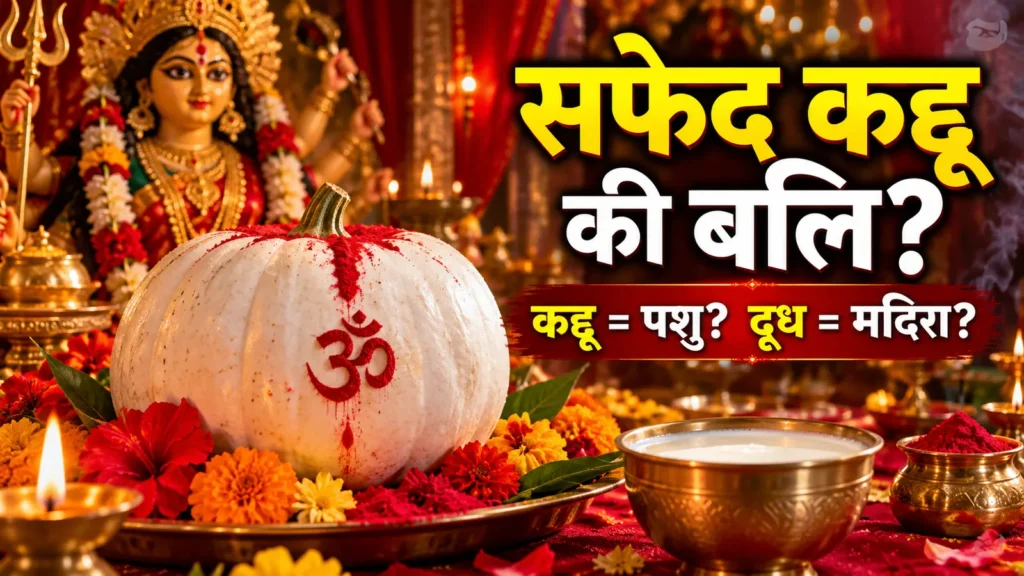
Read our guide to white pumpkin offerings during Navratri and the symbolic milk-and-liquor claim. Understanding the context of different traditions helps distinguish sweeping viral statements from the practices of particular communities.
Source and disclaimer
Source: the linked Drik Panchang Navratri FAQ. Checked on 8 October 2026. The limitation concerning an unverified original scriptural verse is stated explicitly in the article.
Disclaimer: this is general information about religious traditions, not a personal religious ruling or medical advice. Commitments and practices can differ between families and communities. Seek suitable guidance for your particular observance.