The Shanti Devi reincarnation case is one of the most discussed historical cases connected with claims of past-life memories in India. In the 1920s, a young girl from Delhi became the subject of public attention after people around her reported that she could remember details connected to another life in Mathura. The story was later written about by journalists, authors, and people who investigated the claims.
But what exactly do historical records say? Were these claims treated as proof, or were they recorded as testimonies and observations? This article looks at the documented side of the Shanti Devi case — what investigators, writers, and witnesses reported — while also explaining why believers and skeptics may interpret the same story differently.
The aim is not to declare the case true or false. It is to understand a famous historical account with respect, separating recorded claims from scientific conclusions.
Who Was Shanti Devi and Why Did Her Story Become Famous
Shanti Devi was born in Delhi in 1926. According to historical accounts, her family and people around her reported that she spoke about memories that appeared to be connected with another life in Mathura. As a child, she reportedly described details about a place, a family, and personal experiences that she associated with a previous identity.
The story attracted attention because the details she reportedly shared were unusual for a young child. People who heard about the case became interested in finding out whether the information could be connected to real individuals and locations.
Public accounts describe the previous-life identity she mentioned as Lugdi Devi, a woman associated with Mathura. Supporters of the case have highlighted similarities between Shanti Devi’s statements and information found by people who later investigated the matter.
However, historical interest and scientific proof are different things. A recorded story, testimony, or investigation report can show what people experienced or reported, but it does not automatically establish a scientific conclusion.
The Shanti Devi case became famous because it brought together questions about memory, identity, culture, and beliefs about life after death. That combination made it a subject of discussion for decades.
The Mathura Connection and Reported Investigation Details
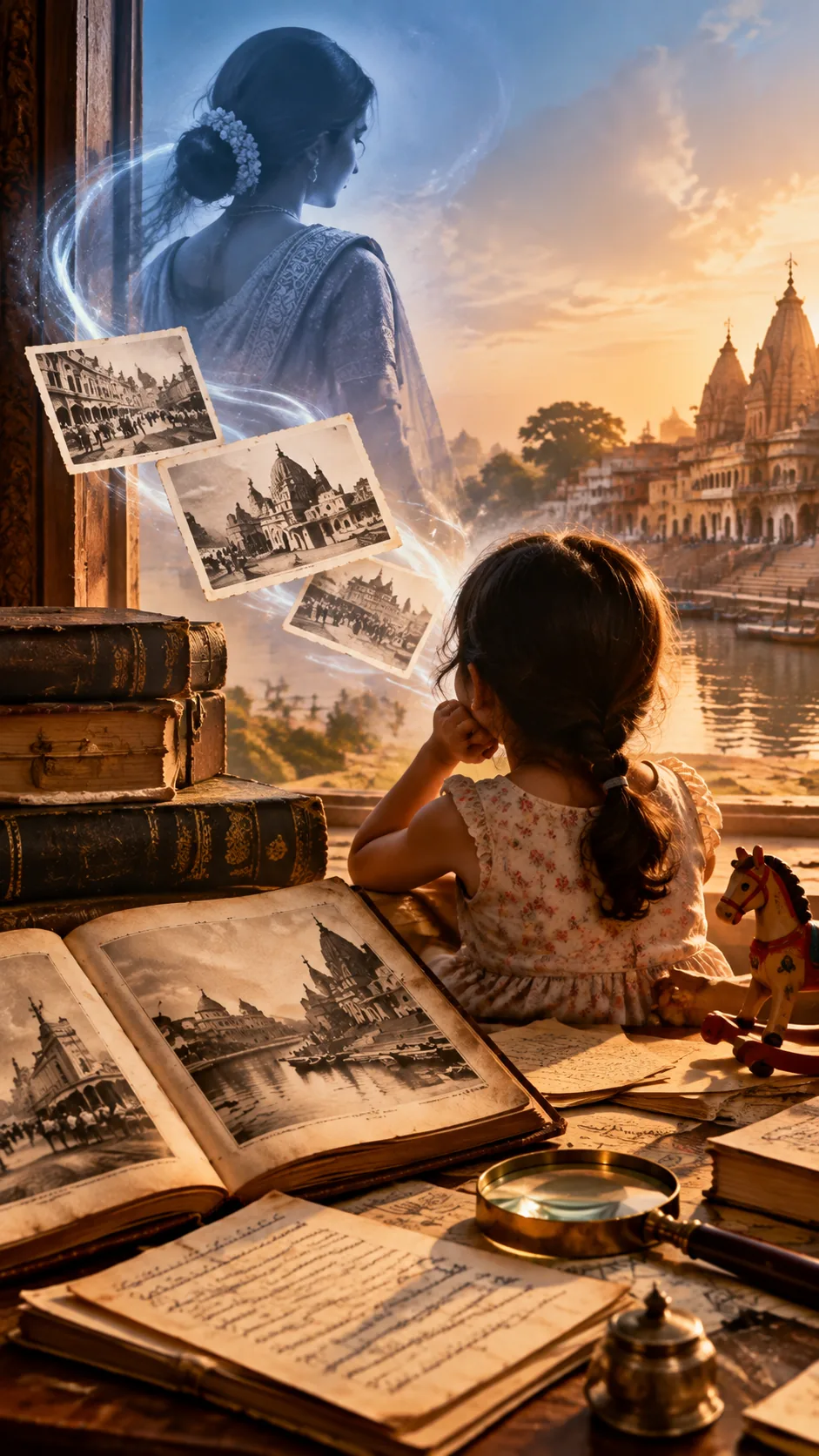
The most discussed part of the Shanti Devi case is the connection between her childhood statements and Mathura. According to published accounts, she reportedly gave information about a family and certain personal details that people later attempted to verify.
Historical descriptions mention that the case reached the attention of several public figures. A committee associated with the investigation was formed in the 1930s to examine the claims. The group reportedly spoke with Shanti Devi, her family, and people connected with the Mathura story.
The investigation records are important because they show that people made an effort to document the claims rather than relying only on informal storytelling. At the same time, these investigations were based mainly on interviews, personal accounts, and available information from that period.
They were not modern scientific experiments conducted under controlled conditions. This difference matters when discussing what the records can and cannot prove.
For believers, the case is often viewed as an unusual example of possible reincarnation memories. For others, it remains a historical account that may have different explanations involving memory, information flow, social influence, or interpretation.
What Investigators and Writers Actually Recorded
The importance of the Shanti Devi case comes partly from the fact that many people attempted to document it. Authors and investigators collected information about her statements, her family background, and the people connected with the Mathura claims.
Written accounts describe conversations where Shanti Devi was asked questions about the life she claimed to remember. Investigators compared some of her statements with information available from people in Mathura.
Supporters of the case often point to these reported matches as significant. They believe the details were unusual and difficult to explain through ordinary means. These interpretations have helped keep the story alive in books and discussions about reincarnation.
Skeptical views focus on the limits of historical investigation. They ask questions about how information may have travelled, how memories develop, and whether later interpretations may have influenced the understanding of events.
Both perspectives are part of the discussion. The documents tell us what was reported and investigated. They do not provide a universally accepted scientific conclusion about the cause of those experiences.
Understanding this difference helps readers look at historical mysteries more carefully. Records are valuable, but interpreting records requires attention to evidence, methods, and context.
How Belief and Science View the Shanti Devi Case Differently
The Shanti Devi case sits at the meeting point of religion, philosophy, psychology, and history. Many religious traditions around the world include ideas about rebirth or continuation of life beyond death. People who believe in reincarnation may see cases like this as meaningful examples of that belief.
Science approaches such questions differently. Scientific research usually depends on observation, testing, repeatable methods, and evidence that can be independently examined.
Human memory itself is a complex subject. Researchers studying memory have shown that remembering is not always like playing back a perfect recording. Human experiences can be influenced by many factors, including emotions, conversations, surroundings, and interpretation.
This does not mean that people describing unusual experiences are deliberately making false statements. It means that experiences can have multiple possible explanations depending on the evidence available.
The respectful approach is to understand both sides. Religious belief can have personal and cultural importance, while scientific investigation uses a different standard for accepting claims about reality.
Common Misunderstandings About This Historical Case
With the growth of the internet, many old mystery stories are often presented in simplified ways. Some posts may describe the Shanti Devi case as “proof” of reincarnation, while others may dismiss it completely without examining the historical details.
A careful reading shows a more complicated picture. The case includes documented statements, investigations, and public discussions. It also includes questions about evidence, interpretation, and the limits of historical records.
When studying such cases, it is useful to ask: Who recorded the information? When was it recorded? What methods were used? Were alternative explanations considered?
The story should also be remembered as the experience of a real child and family, not only as a mystery topic. Discussions about unusual childhood memories should remain respectful and avoid turning personal experiences into entertainment.
Historical mysteries become more interesting when they are studied carefully rather than exaggerated. Curiosity and respect can exist together.
Advice
Stories like the Shanti Devi reincarnation case attract attention because they raise deep questions about memory, identity, and human existence. When reading about such topics, a balanced approach can help.
First, check the source of information. A short online post may leave out important details, while books, historical records, and research discussions usually provide more context.
Second, separate belief from evidence. A person may find spiritual meaning in a story, but a scientific claim requires a different type of examination.
Third, avoid extreme conclusions. Saying that every unusual experience proves reincarnation or saying that every such story is meaningless both ignore the complexity of human experiences.
💡 Remember: Good learning comes from asking questions, checking sources, and staying open to different viewpoints without ignoring evidence.
FAQ
Q1. What is the Shanti Devi reincarnation case?
It is a famous 20th-century Indian case involving claims that a young girl remembered details connected with a previous life in Mathura.
Q2. Did the Shanti Devi case scientifically prove reincarnation?
No. It remains a historical case involving reports and investigations, but it is not accepted as scientific proof of reincarnation.
Q3. Was the case investigated?
Yes. Historical accounts describe interviews and an investigation effort involving people who examined the claims.
Q4. Why is this case still discussed today?
Because it connects with questions about memory, identity, belief systems, and human experiences.
Q5. How should people understand this story?
It can be viewed as a historical account of reported experiences, while keeping a clear difference between testimony, belief, and scientific evidence.
Disclaimer: This article explains historical records and different viewpoints about the Shanti Devi case. It does not claim to prove or disprove reincarnation.