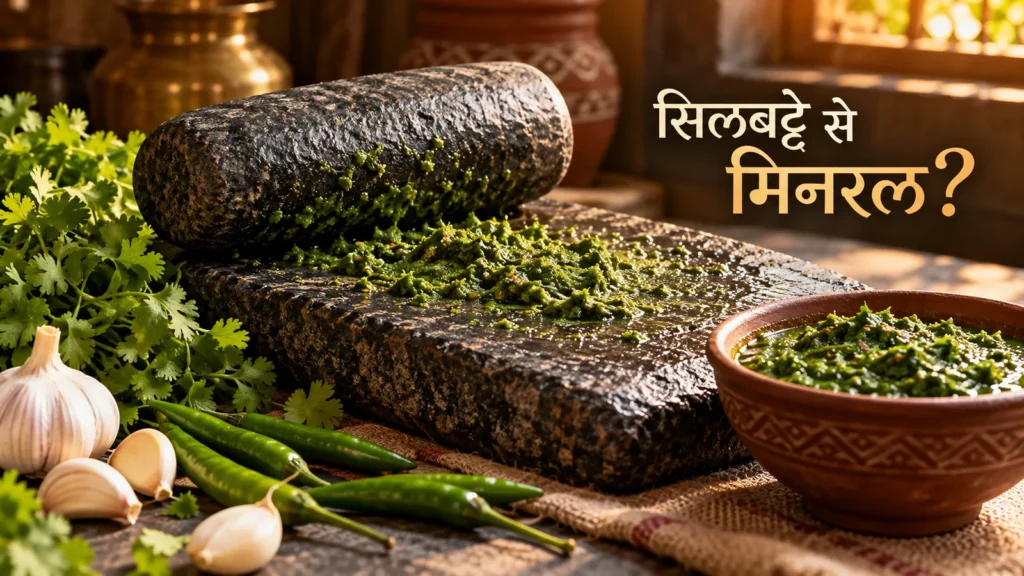
Does a Silbatta Add Minerals to Chutney?
A traditional silbatta, also called silauti in some places, can give chutney a texture that people love. But its stone surfaces rub against each other and the ingredients. Could wear release small stone particles into the food? If so, could those particles supply minerals? The answer needs a distinction between a rock’s composition and nutrition the body can actually use.
The direct answer: stone wear can release particles. Their composition depends on the rock. That does not establish that stone-ground chutney supplies a useful amount of dietary minerals. The sources reviewed for this article did not provide a direct, reliable study demonstrating that nutritional benefit.
What Is a Silbatta, and Why Can It Wear?
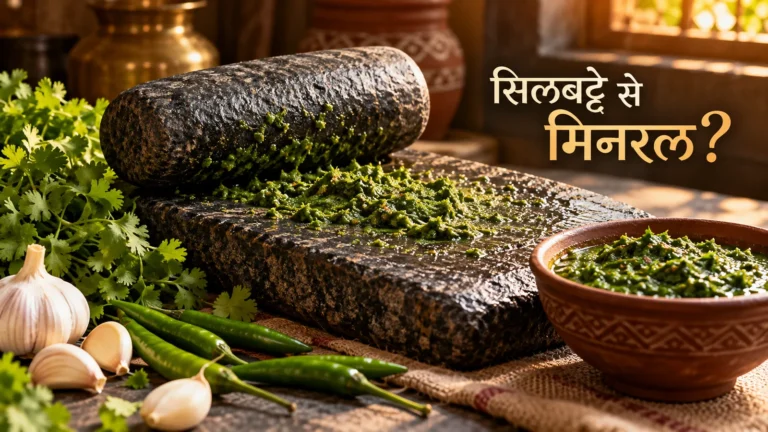
A silbatta usually consists of a flat stone slab and a smaller handheld grinding stone. Pressure and rubbing crush ingredients such as coriander, chillies and garlic into a paste. Names and shapes vary by region, but the basic idea is the same.
A durable stone is not completely immune to wear. Its material, surface condition, repeated use and grinding technique can affect particle release. A freshly worked or weak surface may shed loose grains. We cannot determine the daily quantity released by every household tool from its appearance alone.
Grittiness does not automatically come from the slab. Soil remaining on herbs, poorly washed ingredients or hard spice fragments can also contribute. Inspect both the food and the equipment. Do not interpret a gritty texture as evidence of beneficial minerals.
Which Minerals Might Be in the Stone?
Not every grinding slab is made from the same rock. Materials vary with local supply and the maker. A dark colour is not a reliable identification method. Ask the supplier what the tool is made from and whether it is intended for food preparation. A proper material test is needed for a precise composition.
The US Geological Survey distinguishes a rock from a mineral: a rock can contain one or more minerals. Granite commonly contains quartz, feldspar and mica. Other rocks contain different minerals in different proportions.
Some mineral structures contain elements such as potassium, sodium, calcium, magnesium or iron. That does not mean every silbatta contains all of them, or releases them into food in predictable amounts. Quartz contains silicon and oxygen; its presence does not make a slab a calcium or iron supplement.
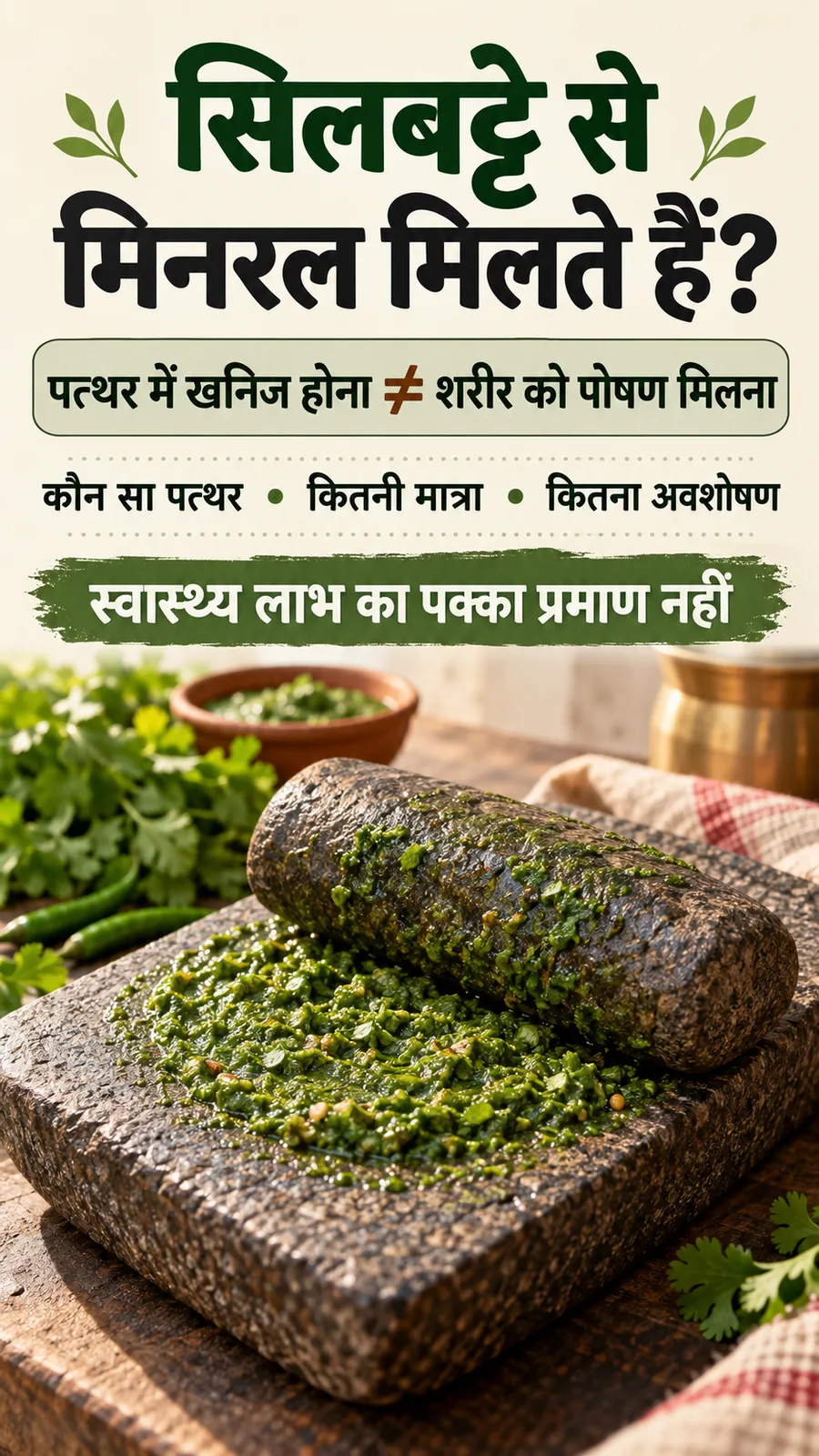
A Geological Mineral Is Not Automatically a Nutrient Source
In geology, a mineral is a naturally occurring substance with a particular composition and structure. In nutrition, “minerals” commonly refers to essential elements obtained through the diet. The shared word can make an unsupported leap sound plausible.
To demonstrate a nutritional benefit, we would need to know which material was released, how much entered the food, its chemical form, and how much the digestive system made available for absorption. Finding an element in a rock answers only the first part of that chain.
For comparison, NIH’s dietary iron guidance explains that iron absorption depends on its form and other components of the meal. That is general nutrition evidence; it is not evidence that wear particles from a silbatta provide usable iron.
FACT: a mineral being present in stone, a particle entering food, and the body receiving useful nutrition are three different steps. Do not treat a grinding stone as a mineral supplement.
A useful investigation would identify the stone, measure particles and elements in the prepared food, compare it with food made by another method, and assess availability to the body. It would also separate nutrients already present in the ingredients from anything introduced by the tool. Tradition and enjoyable flavour do not replace those measurements.
Why Can Stone-Ground Chutney Taste Different?
Hand grinding lets you control texture as you go. You can leave a chutney coarse or work it into a smoother paste, adjust the water and pause to check the result. This texture can be a major reason people prefer the traditional method.
A mixer uses rapidly rotating blades, while a silbatta crushes and rubs ingredients by hand. Differences in grinding time, water, ingredient proportions and texture can change the eating experience. A difference in flavour does not prove an effect from stone minerals.
The claim that a mixer destroys all nutrients is also too broad. Effects of temperature and processing time vary by ingredient and nutrient. Without measurements, it is not reasonable to label every blender-made chutney nutritionally inferior.
A silbatta needs no electricity and can be useful for small quantities. It also takes physical effort and time. People with wrist, hand or back discomfort do not need to force themselves to use one. Choose equipment that supports comfortable, clean food preparation.
What If You Find Stone Particles in Food?
Visible fragments and persistent grittiness should not be dismissed as a nutritional bonus. FDA guidance on hard or sharp foreign objects in food explains that such objects can cause injury. That general guidance concerns physical hazards; it does not establish that every microscopic particle causes the same harm.
If food contains clearly visible stone fragments, do not eat it. Stop using the tool and inspect the surface. Cracks, crumbling edges or continuing particle release may mean the equipment needs replacement. Removing a few visible pieces does not reliably establish that the remaining batch is free of fragments.
If a suspected fragment causes dental injury, trouble swallowing, severe abdominal pain or bleeding, seek medical care. Do not deliberately scrape stone dust into food or increase wear in an attempt to obtain minerals.
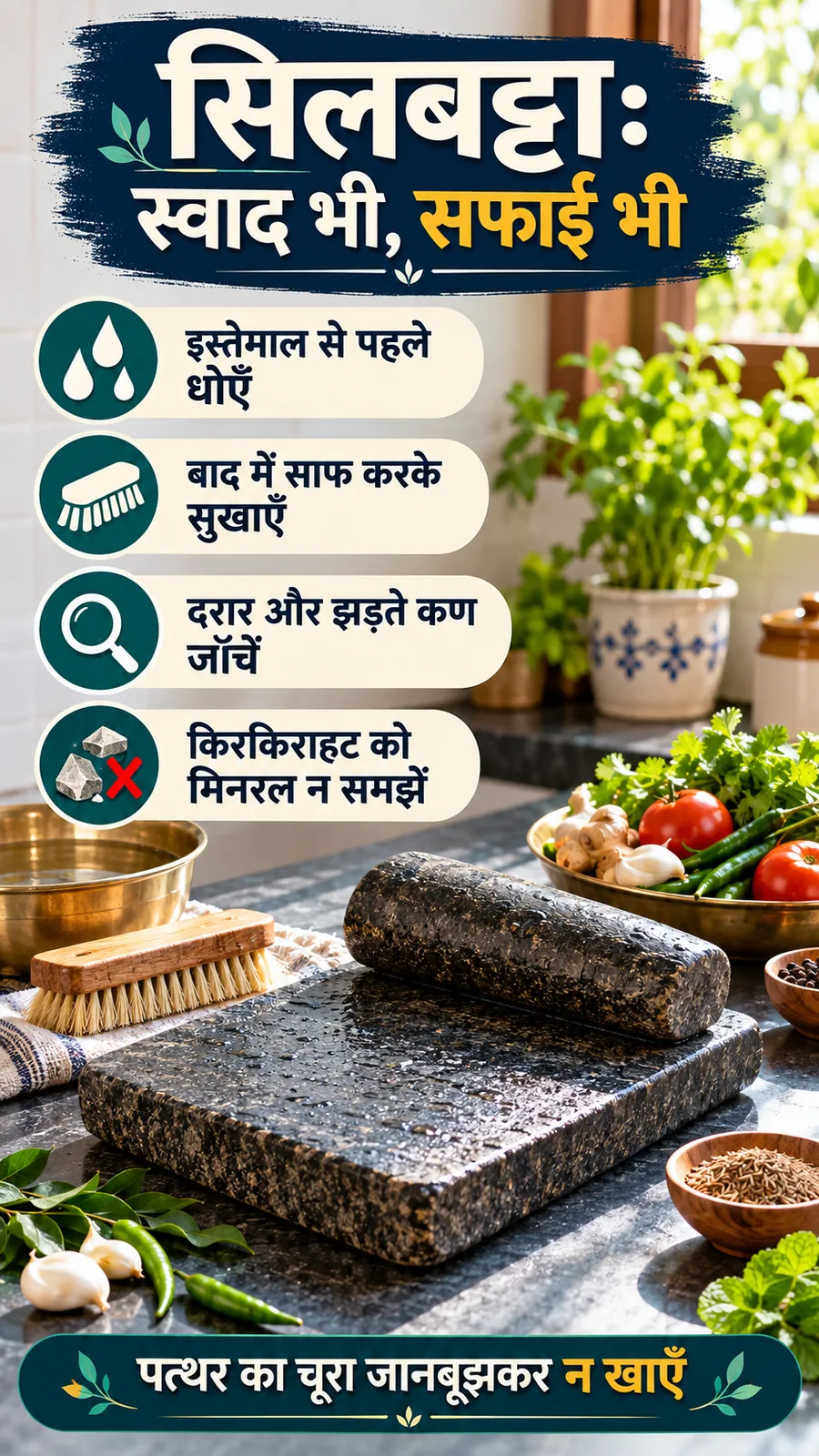
Advice: Choosing, Cleaning and Storing a Silbatta
Buy a sturdy tool intended for kitchen use. Avoid unknown decorative coatings, paint or polish on grinding surfaces. “Natural stone” alone does not establish suitability for food preparation. Ask for care instructions and inspect the slab and roller for cracks or loose grains.
Prepare a new tool according to the maker’s instructions before using it for food. If the instructions call for grinding and discarding a material during initial preparation, do not eat that material. Continuing to shed grains is a reason to stop and assess the equipment, not a reason to accept contamination.
Rinse before use. Afterwards, remove food promptly, brush residue out of grooves, rinse thoroughly and let the tool dry in a ventilated place. Use cleaning products suitable for the particular stone and rinse away their residues. Avoid improvised strong acids or chemicals on an unidentified material.
Wash herbs and other ingredients separately. Do not rub the empty stones together to create dust. If a maker resurfaces the slab, clean and inspect it again before food use. For nutrition, focus on a varied diet. Suspected deficiencies are better addressed through professional advice and appropriate testing.
FAQ
Can a silbatta release stone particles into chutney?
Wear can release particles, especially from a weak or loose surface. The amount depends on the individual tool and needs measurement. Visible fragments should not be ignored.
Does a silbatta provide calcium or iron?
The answer would depend on composition, particle quantity and chemical form. A useful dietary contribution has not been established by the evidence reviewed here.
Is black stone more nutritious?
Colour is not evidence of nutritional value. Choose equipment by suitability, durability and condition rather than a mineral claim.
Is a silbatta healthier than a mixer?
Choose by texture, convenience, effort and hygiene. Hand grinding offers texture control; a mixer saves effort. Neither method is automatically more nutritious in every situation.
Does grittiness mean useful minerals are present?
No. Soil, hard ingredients or equipment particles may be responsible. Investigate the source instead of treating grittiness as a health benefit.
Sources
- USGS: rocks and minerals
- USGS: components of igneous rocks
- NIH: dietary iron and absorption
- FDA: hard or sharp foreign objects in food
Disclaimer: This article provides general information and food safety awareness, not personal medical or nutrition advice. The composition, particle release and safety of a particular grinding stone cannot be confirmed without appropriate assessment. Do not use stone particles to treat a mineral deficiency.