Prepare for NNN: define your own goal first
A November challenge is easier to understand when the goal is clear and the plan fits real life. You do not need to eliminate sexual thoughts or prove your worth. This guide offers everyday ways to prepare for NNN, pause before an unwanted habit and restart after a missed commitment without treating yourself as a failure.
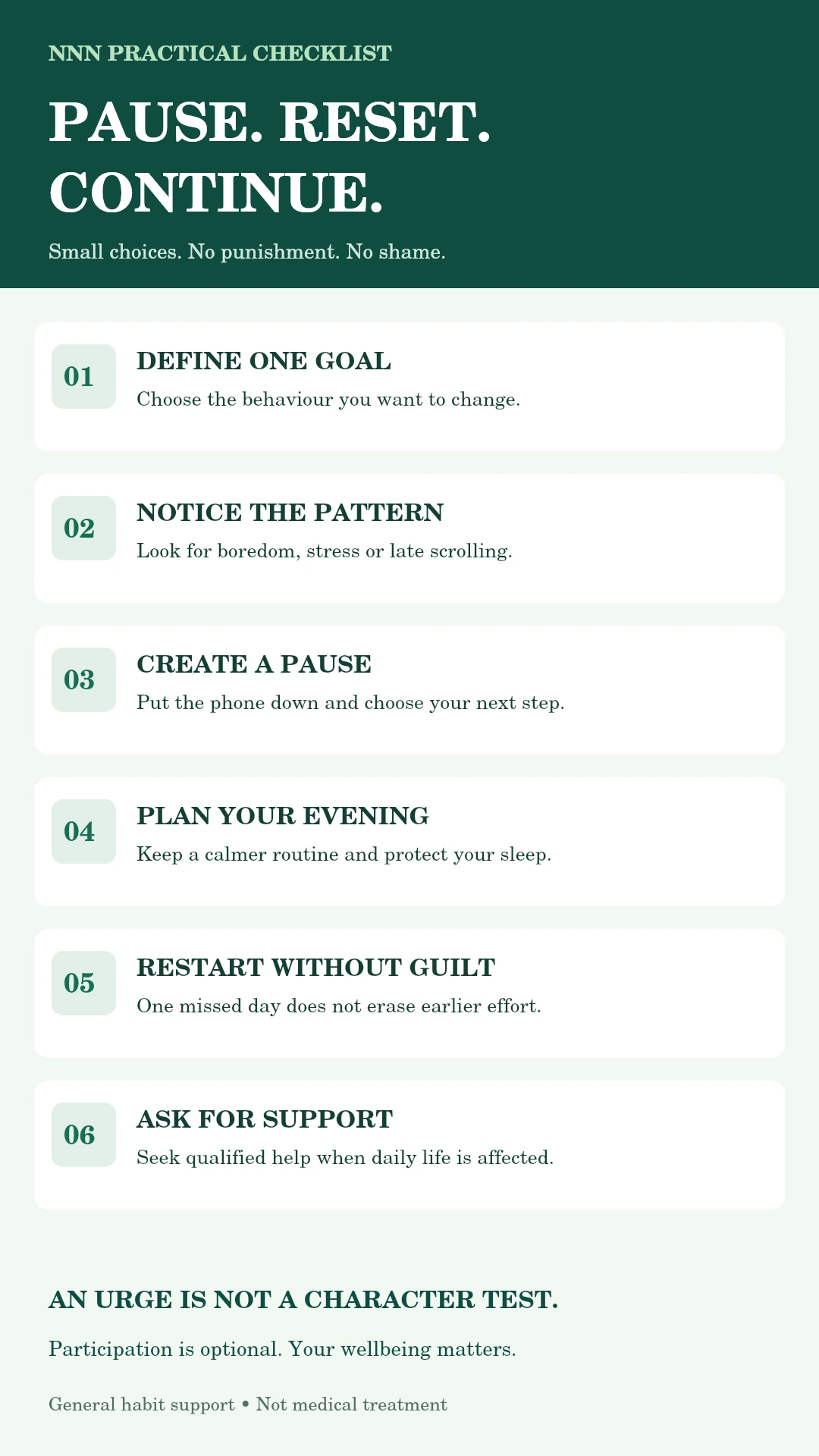
Write down the behaviour you want to change: unwanted pornography browsing, a personal abstinence commitment or a general habit. Those goals are different. Be specific about what counts as meeting your own goal instead of borrowing the strictest rules you see online.
For the calendar challenge, November 2026 runs from November 1 to November 30. A custom start date is also a valid personal choice, but it is a different 30-day plan. You can decide not to participate, or stop if tracking makes life worse.
Set up one practical change before the month begins: choose a place to leave your phone overnight, pick an offline activity or agree on a respectful check-in with someone you trust. A challenge should not become an obligation imposed on a partner.
Notice patterns without judging yourself
For a few days, notice the situation before unwanted browsing. Was it late, were you bored, worried or avoiding a task? A brief note such as “tired, scrolling in bed” is enough. You do not need explicit descriptions or a detailed sexual diary.
Clinical guidance for people with compulsive sexual behaviour includes identifying triggers. Ordinary sexual urges, however, do not by themselves mean a disorder. A checklist cannot diagnose you; repeated loss of control and effects on daily life matter. [1]
Use what you notice to make a small environmental change. If one feed repeatedly leads somewhere you did not intend, mute an account or change your evening app routine. Controls and filters can add friction, but they are not guaranteed treatment or substitutes for professional help.
When an urge arrives: a simple pause plan
Pause before making a choice. Put the device down, look away from the feed and notice what is happening: “I feel an urge; I have a choice about my next action.” An urge is an experience, not an instruction you must follow.
You can try observing the sensation and breathing comfortably without forcing it to disappear. “Urge surfing” is a mindfulness approach described in clinical craving resources; it is not a proven guarantee of completing NNN. Stop the exercise if it makes you more distressed. [2]
Then choose a small next action: move to a different room, stretch, walk briefly or return to a planned task. A short timer may create a pause, but there is no fixed number of minutes that works for everyone. Reassess rather than promising yourself that you will never feel an urge again.
How to handle urges at night
Plan for the situation, not a battle with your body. If unwanted browsing happens while lying awake, charge the phone out of easy reach and choose something calmer before bed. Keep a regular, realistic bedtime rather than staying awake to watch a streak counter.
If you are awake and restless, briefly step away from the feed and choose a quiet activity. You do not need punishing exercise, ice-cold exposure, fasting or painful methods to prove discipline. These can turn a modest goal into unnecessary pressure.
Sexual thoughts and involuntary wet dreams are not moral failures. Discuss any changes to partnered intimacy openly. Your own goal does not let you police another person’s body or demand sexual activity as a way of managing your feelings.
Missed your NNN goal? Decide the next step
First separate a missed personal rule from a medical relapse. Completing or missing an internet challenge is not a diagnosis. A single event does not erase previous choices, and it does not require self-punishment.
Write three short answers: what happened just before it, what made the situation harder, and what one thing could change next time? “After a stressful day I scrolled alone in bed; tonight I will leave the phone on the desk” is a usable plan.
You can restart, continue with an honest record, revise the goal or stop the challenge. Describe your record accurately. Avoid an all-or-nothing response such as abandoning sleep, responsibilities or the whole month because one day went differently.
Build a routine that supports the rest of your life
Keep ordinary meals, sleep, movement and contact with other people in the plan. Choose one or two manageable changes, not an overnight personality overhaul. A hobby should be something you can enjoy, not a punishment used to exhaust yourself.
Use a tracker only if it helps. A Done/Missed/Skip record can show a pattern, but a number does not measure hormones, character or health. Keep intimate data private; you do not owe a public group proof, screenshots or access to your device.
FACT: Progress can mean less unwanted browsing, better sleep or fewer missed responsibilities. It is not limited to a perfect streak. A normal sexual urge is not evidence that you have failed.
Advice: know when self-help is not enough
Self-help has limits. If a behaviour repeatedly feels beyond your control and disrupts work, relationships or other responsibilities, ask a qualified mental-health professional or clinician for support. Treatment is individual; an internet challenge is not the same as therapy. [1]
Also seek assessment for persistent pain, continuing sexual symptoms or worsening anxiety or low mood. Do not assume that a symptom is a necessary “flatline” or a sign that a reboot is working.
Choose supportive people who respect privacy and consent. If a community increases shame, pressure or conflict, step back. You can change a habit while treating yourself and others with respect.
Frequently asked questions
What is the best way to prepare for NNN?
Define one personal goal, plan for the situations that make it difficult and choose a small routine change. There is no method guaranteed to work for everyone.
How do I control urges at night?
Reduce unwanted scrolling, keep the phone out of easy reach and choose a calmer evening routine. The aim is choosing your response, not eliminating every thought.
Will an urge always pass in ten minutes?
There is no universal time limit. A short pause can help you make a choice, but it is not a guaranteed cure.
Should I restart if I miss my goal?
That is your choice. Restart, continue honestly, revise your goal or stop without punishment. Previous effort still counts.
Does having urges mean I am addicted?
No. Urges alone do not diagnose a disorder. Seek assessment for repeated loss of control and significant interference with daily life.
General educational information, not personal medical advice. Participation in NNN is optional. Sources checked 22 October 2026.
Sources
- Mayo Clinic — compulsive sexual behaviour: diagnosis and treatment
- VA Whole Health — urge surfing in general craving management; not an NNN trial