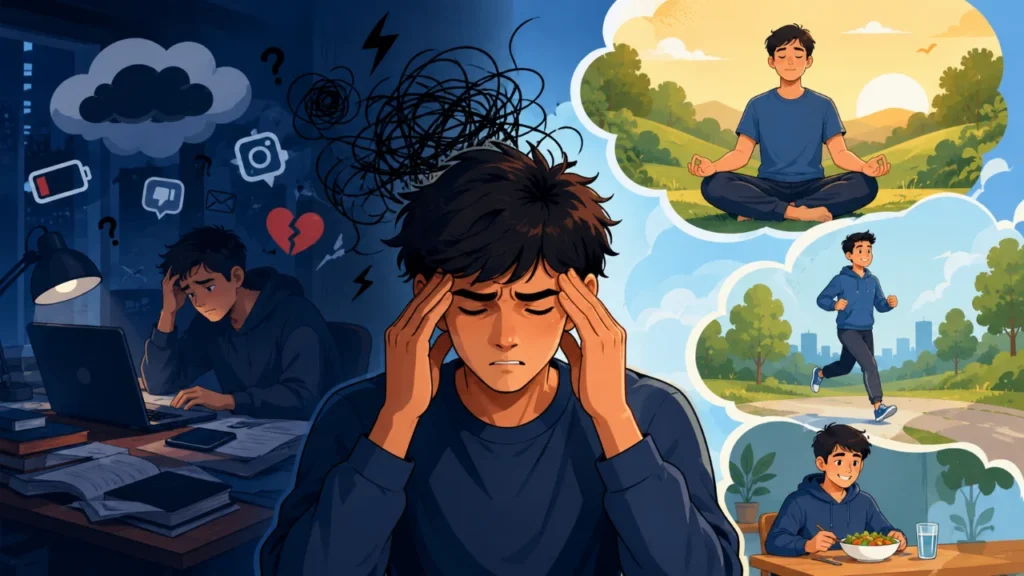
Why Today’s Youth Face Stress
In today’s fast-paced world, young people often find themselves caught in a web of stress. The constant comparison fueled by social media, where curated “perfect” lives are on display, can lead to feelings of inadequacy. The pressure to excel in academics, build a successful career, manage finances, and maintain healthy relationships all at once creates a significant burden. Stress isn’t just about workload; it’s also about losing touch with oneself. Difficulties in relationships, such as toxic dynamics or breakups, can further exacerbate feelings of loneliness and stress. If you’re navigating these challenges, our guide on moving forward after a breakup or toxic relationship might offer some support. Remember, even short breaks can make a difference in managing overwhelming feelings.
Is Stress Just a “Mind” Issue?

While some may suggest simple solutions like “go out and relax,” the impact of prolonged stress goes beyond mental discomfort. Chronic stress can significantly affect sleep patterns, appetite, and overall physical health. Relying on substances like alcohol or drugs to cope can worsen the problem, leading to addiction and further complications. It’s important to understand that when you’re under prolonged stress, your body remains in a heightened state of alert, which can impair concentration and sleep quality. While these are common effects, it’s crucial to remember that everyone’s experience is unique.
Small Steps for Better Mental Health
Taking small, consistent steps can make a significant difference in managing your mental well-being:
- Digital Detox: Set aside a few hours each day to disconnect from your phone and social media. The world won’t stop, but you might find a sense of calm.
- Talk It Out: Share your feelings with family members or trusted friends. Bottling up emotions only increases the burden. Open communication is key.
- Sleep Hygiene: Reduce late-night scrolling. If you can’t sleep, resist the urge to pick up your phone. Establish a regular sleep schedule.
- Mindful Breathing/Quiet Time: Dedicate 5-10 minutes to focus on your breath or simply sit in quiet reflection. While not a magic cure, many find this practice brings relief. Developing the habit of sitting quietly can be very beneficial.
For those struggling with racing thoughts at night, exploring strategies on how to stop overthinking can be helpful. Understanding the effects of alcohol on the brain is also important for making informed choices about substance use.
A Word of Advice

It’s important to let go of the idea that you need to be a “superman” or “superwoman.” Feeling tired or overwhelmed is normal. If your mind feels heavy, reach out to family or a healthcare professional. Seeking help is a sign of strength, not weakness. In times of crisis, avoid isolating yourself. Connect with a trusted individual or a qualified therapist. Be wary of quick-fix solutions often promoted online; they rarely offer sustainable relief.
Frequently Asked Questions (FAQ)
Can stress be eliminated completely?
Life naturally involves some level of stress. The goal isn’t to eliminate it entirely but to learn effective management techniques and to know when and how to seek support. Developing these skills is crucial for long-term well-being.
When should I seek professional help?
If your sleep, appetite, academic performance, work, or relationships are consistently deteriorating, it’s a sign that you may need to talk to your family and a doctor or mental health professional. Early intervention can prevent issues from escalating.
Does meditation work for everyone?
Meditation and mindfulness practices offer relief for many individuals, but their effectiveness can vary from person to person. If you find these practices uncomfortable or unhelpful, don’t force them. Seek guidance from a qualified professional to explore other coping mechanisms that suit you better.
How can I manage overthinking?
To manage overthinking, try techniques like mindfulness, journaling, setting aside specific times to worry, and challenging negative thought patterns. Engaging in physical activity and talking to someone you trust can also help shift your focus.
What are the effects of alcohol on the brain?
Alcohol is a depressant that affects the central nervous system. It can impair judgment, coordination, and reaction time. Chronic heavy drinking can lead to long-term cognitive deficits, memory problems, and an increased risk of mental health disorders.
Disclaimer: This article is intended for general awareness and sharing experiences. It does not constitute medical or psychological advice. If you are experiencing severe distress or mental health concerns, please consult with your family and a qualified healthcare provider.