A big number shines on the offer letter. You read that same number to your family. Then the first salary arrives, and your mind asks — how did so much get deducted? This is less of a scam and more of a difference in terminology. CTC is the total cost to the company. In-hand is the amount that actually lands in your account. Running between the two is the estimate of basic, allowances, variable, the two ends of PF, gratuity provisions, professional tax, and TDS. In this article, CTC vs in-hand salary is explained — without magic, without scaring you, and without claiming that your slip will turn out exactly like this.p>
Rules, slabs, exemptions, and rates change from time to time. Payroll varies from company to company. Professional tax depends on the state. Therefore, consider any example illustrative. Check incometax.gov.in for the latest rates, exemptions, and regimes. This article is not investment advice or tax consultancy.p>
Term
Simple Meaning
Impact on Account
**CTC**
Total annual cost to company
Full amount does not come into account
**Gross
fixed pay**
Sum of basic and fixed allowances
Salary before deductions
**Variable pay**
Part dependent on targets/performance
Adds to cash flow only when received
**In-hand
net**
Amount remaining after PF, PT, TDS, etc.
Usually closest to bank credit
table>div>
CTC, Gross, and Net — A Three-Story Househ2>
CTC means Cost to Company. Whatever expense the company considers on your name throughout the year — salary components, employer PF, gratuity provision, sometimes NPS, insurance premiums, sometimes a bonus pool — is added together to make this figure. This is often the largest number on the offer letter. It is not your pocket; it is the company’s cost card.p>
Gross is usually the portion that looks like “salary”: basic + allowances + target variable (in many places). Many companies keep employer PF and gratuity outside gross and inside CTC. Some make CTC so broad that ESOPs, cabs, and meal vouchers get shoved in. One name, different maps. So first thing: ask which boxes are inside this CTC.p>
Net or in-hand is what remains after deductions. Employee PF is deducted. If applicable in the state, professional tax is deducted. If applicable, the employee portion of ESI is deducted. The biggest thorn is often TDS — advance income tax deducted, which payroll calculates from your estimated annual income and chosen regime. If variable comes later, that month’s in-hand might jump; if it doesn’t, the dream on the offer letter remains incomplete.p>
Treating all three as the same is like considering the house price, room rent, and cash left in hand as a single figure. The house may be expensive, rent is separate, pocket cash is separate.p>
Basic, Allowances, and Variable — The Internal Map of the Sliph2>
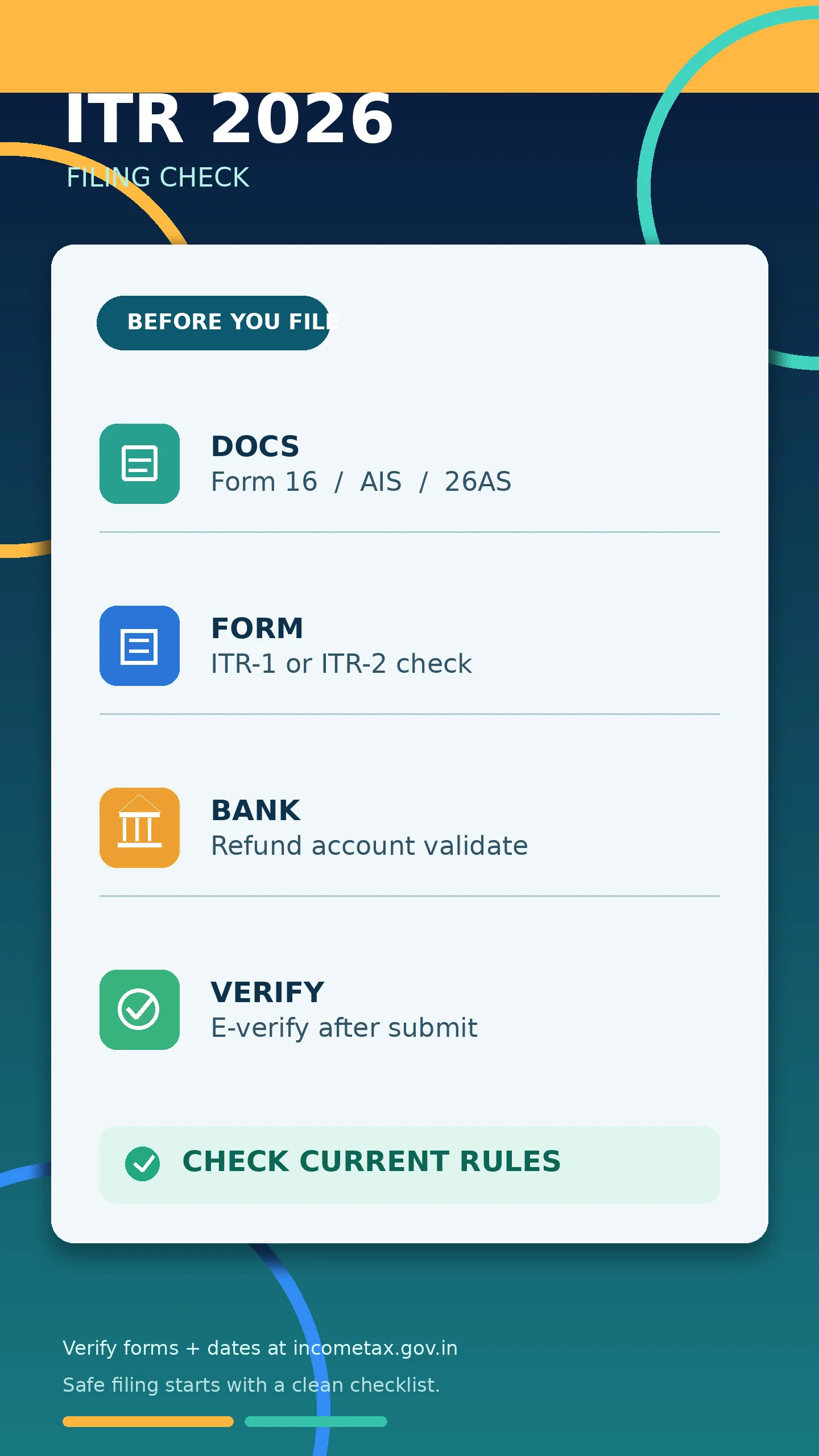
CTC map — HD info 9:16figcaption>figure>
Basic is that portion of the salary on which many statutory calculations rest. PF often runs on basic (and DA where applicable). The gratuity formula is also considered tied to basic. Many companies keep basic at a fixed percentage of CTC — some 40, some 50. The percentage is not a line drawn by law, but a policy choice. Keeping basic lower may make monthly in-hand look slightly larger, but PF deposits and some retirement benefits may lag behind. Higher basic means higher PF deduction, less in hand today, but a thicker future account.p>
Allowances are amounts added on top of basic: HRA, special allowance, conveyance, meal, children’s education — names are decided by the company. Under the old tax regime, some allowances opened avenues for tax exemptions, such as HRA. Under the new regime, most such exemptions are unavailable; then an allowance simply means money, not a tax shield. Special allowance is often the “leftover” — what remains after removing statutory and named components from CTC.p>
Variable pay has big talk, small guarantees. Performance bonuses, sales incentives, remaining installments of joining bonuses — these are counted in CTC but don’t arrive every month. If targets aren’t met, the year’s in-hand can fall significantly below the offer. So when reading CTC, ask: how much is fixed, how much is if-and-when.p>
Employee PF and Employer PF — One Name, Two Pocketsh2>
In Provident Fund, the employee usually contributes 12 percent of basic. This money is deducted from the slip; it doesn’t land in the account, but it remains your savings. The employer also contributes roughly the same amount from the CTC. In practice, the employer’s 12 percent is split between EPF and the pension scheme (EPS); statutory limits apply to the pension portion. Check EPFO’s latest rules for exact percentages and caps; do not memorize them here.p>
The essential difference is this: employer PF does not come into your in-hand; it comes into CTC. Therefore, two people with a CTC of ₹12 lakh — one with heavy PF on basic, another with a structure having lower basic — will take home different salaries. The employee share is a deduction; the employer share is a cost. Both head toward retirement; neither pays for today’s coffee.p>
Some companies cap PF wages at basic limits, while some run it on a broader wage. The policy is written in the offer or HR handbook. Don’t guess, read the fine print.p>
Gratuity — Not Today, a Promise for Later That CTC Counts Todayh2>
Gratuity is a statutory benefit received after long service; conditions depend on the Payment of Gratuity Act and company policy. In many offer letters, a gratuity provision is added inside the annual CTC — often a percentage formula of basic. This money does not land in your account every month. It is accounting for the company’s future liability. If you leave before five years, in many cases this benefit may not reach your hands; check rules and exceptions in the law and appointment letter.p>
Showing gratuity in CTC isn’t wrong, but it becomes misleading when understood as “monthly salary.” It is a reserve, not cash on the salary slip.p>
Professional Tax, ESI, and State Differencesh2>
Professional tax is not a uniform central tax. Some states deduct it, some don’t. Where applicable, slabs and months differ. The constitution caps the annual limit, but each state runs its own schedule. If working in Delhi or Haryana, PT might be zero; in Karnataka or Maharashtra, the same CTC will face a bit more deduction. Often the rule of the state where the office is located applies — not the registered head office. Ask your payroll team about the state.p>
ESI comes into play when wages fall within a specified limit. A small percentage is deducted from the employee, and the employer’s share may sit in CTC. It usually doesn’t apply to salaries above the threshold. Check ESIC for current ceilings and rates. Minor state levies like the Labour Welfare Fund also appear on slips in some places. The map is one country, but rail tracks change state by state.p>
New vs Old Tax Regime — The Exemption Trade-Offh2>
In many cases, the new regime is the default; verify status and options for your assessment year on incometax.gov.in. Slabs are different, and most old exemptions — 80C, 80D, HRA, self-occupied house property interest — do not run on the new track. In return, the slab and rebate structure is simpler. For salaried individuals, standard deduction is available in the new regime; amounts have been revised over time, so check numbers on the website rather than setting them in stone here.p>
Under the old regime, slabs are different and the garden of exemptions is open. PPF, ELSS, insurance, home loan principal, health insurance, HRA — taxable income reduces if conditions are met. The math wins only when these investments/expenses are actually happening, rather than just being papers generated for tax purposes.p>
Which regime is beneficial cannot be sold in a single sentence. Rented house, heavy 80C, home loan — the old track sometimes turns out cheaper. Plain salary, fewer exemptions — the new track is clean and often involves less paperwork. Payroll locks an option at the start of the year; in many cases, the regime can be re-selected while filing returns. Match current facilities on incometax.gov.in and with your CA. This article does not pronounce judgment on your case.p>
Certain things like employer NPS contribution can still find space in the new regime. The list is short; do not inflate it by assumption.p>
Standard Deduction, TDS, and Payroll Cavesh2>
Standard deduction reduces a fixed amount from a salaried person’s income — not a queue of investments, but a straightforward relief feature. This feature may be available on both new and old tracks; amounts and conditions can change over time, so verify current rules. Payroll factors this into annual projections to reduce TDS. If the company assumed the wrong regime or wrong estimate, either too much will be deducted each month or tax will have to be paid at year-end.p>
TDS is not the final tax bill, but tax deducted in advance. Form 16 tallies the year’s accounting. A refund comes when excess was deducted; a demand arises when less was deducted. Delayed variable pay, job changes, secondary income — projections go awry. PAN-Aadhaar linking, correct regime declaration, timely submission of investment proofs in the old regime — these small things change the month.p>
Some companies pitch food cards, cabs, and internet reimbursements as tax-efficient. Rules and limits change year by year and policy by policy. Believe the phrase “completely tax-free” only when both written policy and recent circulars are at hand.p>
> FACT BOX — What CTC counts, what in-hand doesn’t bringstrong>
Can sit inside CTC: basic, HRA and other allowances, target variable, employer PF, gratuity provision, employer NPS/insurance, sometimes paper value of ESOPs.p>
Usually comes out of in-hand: employee PF, professional tax (where state deducts), ESI employee portion (if applicable), TDS, and variable pay that hasn’t actually been received yet.p>
Remember: payroll software, state PT, and company CTC definitions are three different machines. Do not copy-paste one offer onto another company. Verify rates and exemptions on incometax.gov.in.p>
Illustrative Example — Fictional House, Fictional Sliph2>
The calculation below is based on illustrative assumptions, not anyone’s legal tax assessment. Numbers are rounded to show the path.p>
Hypothetical scenario: annual CTC ₹12,00,000. Basic 40% of CTC = ₹4,80,000/year (₹40,000/month). HRA ₹20,000/month. Remaining special + other allowances. Target variable ₹1,20,000/year — assumed in this example to be fully received over the year, but not equally every month. Employer PF = 12% of basic. Employee PF = 12% of basic. Gratuity provision roughly 4.81% of basic (many payrolls use this formula). PT in a state where roughly ₹200/month is deducted. New regime chosen. Other income zero.p>
Component (Annual, Fictional)
Amount (₹)
Reaches Hand?
Basic
4,80,000
Yes, in slip
HRA + other allowances (fixed)
4,80,000
Yes
Variable (if received)
1,20,000
When added
Employer PF (12% of basic)
57,600
No, in CTC
Gratuity provision
~23,000
No, in CTC
Rough CTC total
~12,00,000
—
Employee PF
57,600
Deducted from account, went to PF
PT (state example)
~2,400
Deducted
TDS
Payroll estimate — based on regime, standard deduction, rebate
Deducted; year-end adjustment
table>div>
A month with only fixed components will look quite thin without variable pay. In installments with variable pay, it suddenly swells. TDS may or may not be uniform every month — companies either average it or deduct more in bonus months. Under the new regime, without HRA exemption, taxable income will differ from an old regime HRA scenario. This same example could show a different picture under the old regime by adding 80C and HRA. Decide both using a calculator and current slabs, not this table.p>
The lesson is simple: ₹12 lakh CTC does not mean ₹1 lakh a month. Subtract employer cost, subtract your PF, subtract state taxes, calculate estimated tax, consider variable as “if.” Whatever remains is the true language of your passbook.p>
Why Payroll Deducts Differently Even for Twin Brothersh2>
The same CTC can yield different in-hand amounts in two cities — due to PT. The same CTC can differ across two companies — because one enthusiastically counts variable into CTC while another counts less; one keeps basic at 50 percent, another at 35; one adds gratuity, another writes “as per act” to keep displayed CTC smaller. When comparing, compare apples to apples: fixed cash, PF on both sides, expected variable, and estimated tax regime.p>
The month you change jobs brings the shock of two TDS calculations, two Form 16s, and sometimes double deductions. Submit your previous employer’s Form 16 to the new payroll to keep projections manageable. If not provided, the system assumes all income originates from here, or vice versa. Minor paperwork laziness turns into major deductions.p>
Adviceh2>
Before accepting an offer, write down three questions: how much is fixed, what is the condition for variable, and whether employer PF and gratuity are included in CTC. Fourth question: which state’s PT will payroll deduct? Fifth: what default tax regime is set? These five lines are cheaper than later regret.p>
Choosing between old vs new regime requires an evening with Excel, not YouTube Shorts. Rent receipts, actual 80C investments, home loans — if these exist, calculate the old track. If not, the simplicity of the new track is often sufficient. In both cases, open the site for standard deduction and current rebate rules. Remembering rates isn’t necessary; remembering the source is — incometax.gov.in.p>
Read your salary slip every month in four columns: earned (gross/fixed), self-saved (employee PF), advance to state/center (PT+TDS), in hand. Tally once a year with Form 16. If excess was deducted, the path to a refund is your tax return; if less was deducted, an advance estimate is better than panic.p>
Do not put variable pay into the “fixed” column of your budget.p>
No app, no relative, no HR WhatsApp message constitutes tax law. Payroll can make mistakes. PT can change when moving states. Slabs can change in the budget. Therefore, consider the tables in this article a map, not a formula. A map shows the way; your feet land on the actual effective date of the rule.p>
💡 Callout: CTC is the company’s expense; in-hand is your month. Combining both into one number is like confusing house rent with monthly salary.p>
Conclusionh2>
Salary doesn’t dwindle because someone picks your wallet at night. It dwindles because that large figure in the offer includes costs that don’t pay for today’s tea, along with deductions made by law, state, and estimates. The real key to understanding CTC vs in-hand salary is: open the box. Basic for PF, employer share in CTC, gratuity promises, variable “ifs”, state PT, TDS regime. When the language is clear, frustration drops and conversations speed up.p>
Rules keep changing. Payroll functions differently everywhere. So read, ask, and check official portals. Once the magic of the big number fades, even the smaller number becomes a plan you can work with.p>
FAQh2>
1. What is the biggest difference between CTC and in-hand salary?p>
CTC can include employer contributions and future provisions. In-hand is net of employee PF, PT/ESI (where applicable), and TDS. Variable pay adds in only when actually received.p>
2. Why doesn’t employer PF show up in my take-home salary?p>
Because it is a company cost, not a monthly credit to your bank account. The money goes into the PF structure, not your passbook that month. The employee’s 12 percent is what gets deducted from the slip.p>
3. Do HRA and 80C work under the new regime?p>
Generally, these popular exemptions are not available under the new regime. Standard deduction and a few limited items remain. Check incometax.gov.in and the latest Finance Act for the complete list and conditions.p>
4. Is professional tax uniform across all states?p>
No. Some states deduct it, others do not. Slabs and payment schedules differ. The annual cap is constitutional, but rates belong to the state. Payroll is tied to the workplace state.p>
5. Is payroll TDS the final tax liability?p>
No. TDS is an advance deduction. Final accounting occurs on your tax return after factoring in total annual income, regime, deductions, and other sources. Excess deductions lead to refunds, while shortfalls require balance payment.p>
Disclaimer: This is general information, not individual tax/legal advice. Slabs, rebates, standard deduction, PF, and PT rates are subject to change. Verify with incometax.gov.in, EPFO/ESIC, and your state’s PT rules. Examples are illustrative.p>
Disclaimer: Tax/PF rules are subject to change. Verify with incometax.gov.in and your salary slip. This is an educational guide.em>p>
Hi, I'm Vivek. Since 2014, I've been building websites, apps, and digital projects while creating practical content about technology, AI, WordPress, and everyday life. I enjoy turning complex topics into simple, useful guides backed by research and hands-on experience. Through Vista Hub, my goal is to share trustworthy content that genuinely helps people learn and solve real problems.