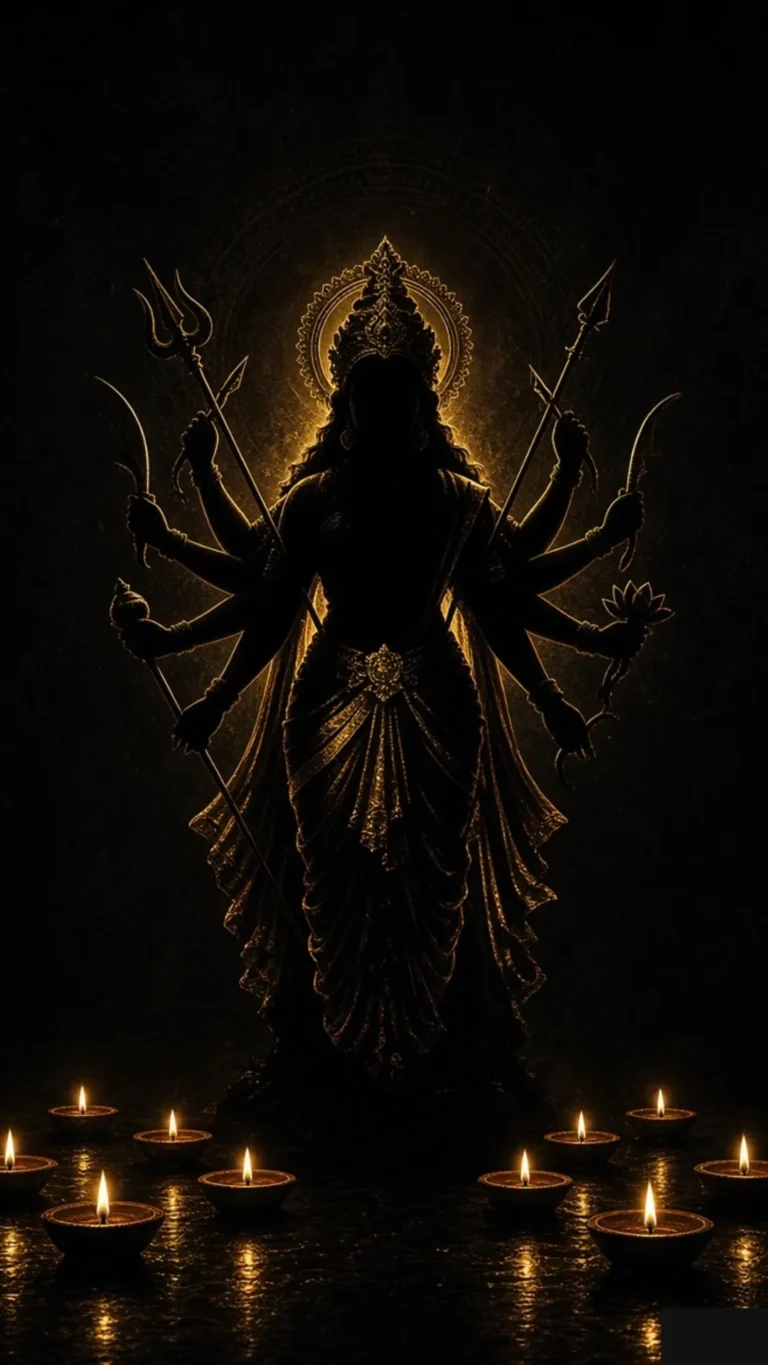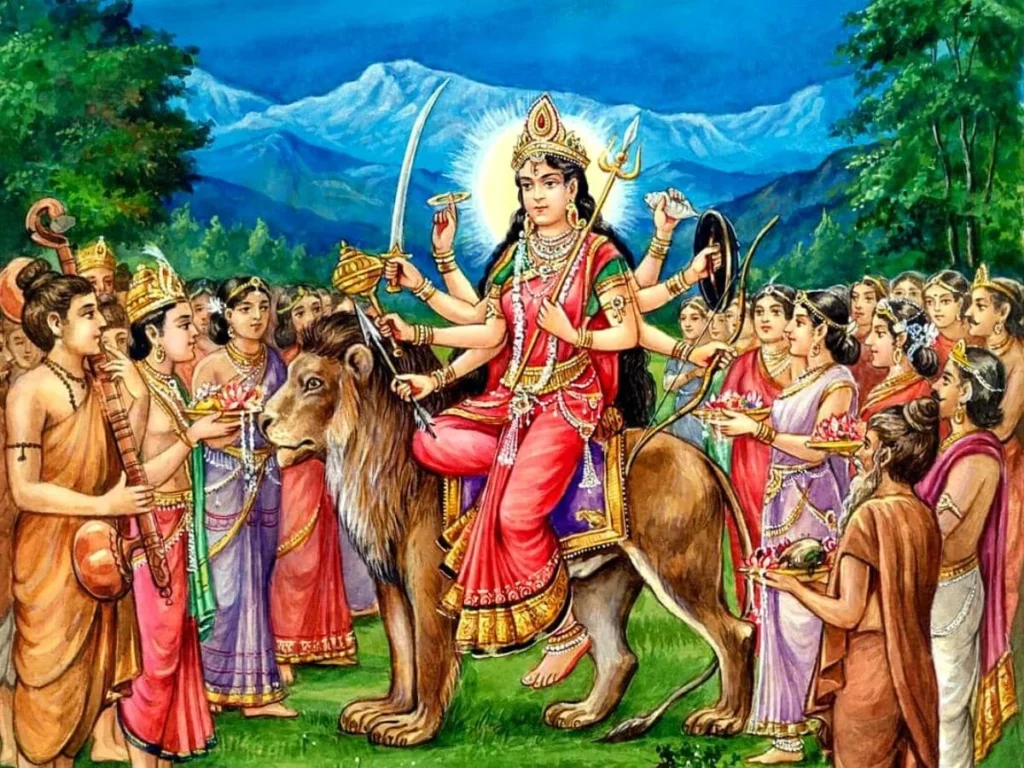
A tarnished brass lamp flickers against framed glass, casting warm amber ripples over an aged, hand-painted portrait of the Goddess. Long before digital brushes generated hyper-saturated gradients, artists spent weeks grounding mineral pigments to capture her gaze. That quiet, maternal stillness in old devotional portraits connects directly to the heart.
The Spiritual Depth of Traditional and Handmade Durga Artwork
Devotional painting across the subcontinent was never treated as mere decorative illustration. When a traditional master picked up a bamboo brush to render a Maa Durga old photo or cloth scroll, the process functioned as an act of extended meditation. The artisan began with ritual purification, mixing natural binders with charcoal, crushed stones, and vegetable extracts.
These handmade images carry a palpable sense of aliveness that modern digital renderings rarely match. Look closely at the delicate modulation around the eyes. You notice an exquisite balance: the unyielding resolve required to subdue cosmic imbalance paired effortlessly with profound maternal tenderness. Every brushstroke represents unhurried hours of focused intent.
Mechanical printing replicates lines, but it cannot duplicate the natural imperfections and devotional patience embedded in authentic hand-rendered sacred artwork.
Timeless Charm: Monochrome Prints and Vintage Lithographs
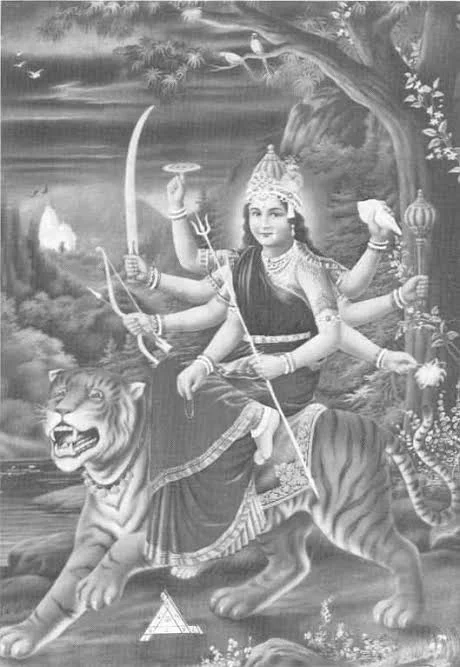
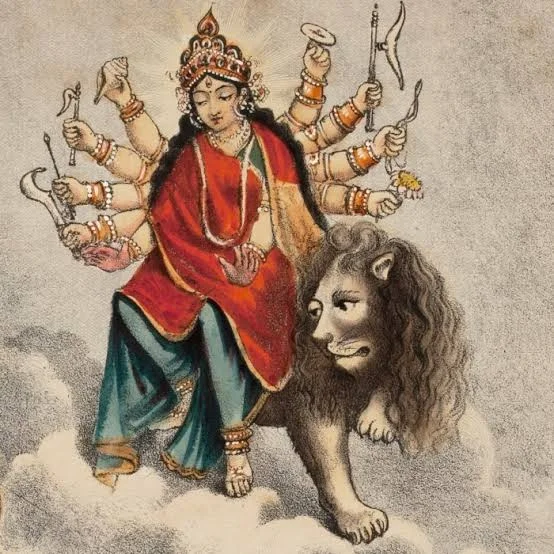
Before multi-colour commercial printing became commonplace, monochrome engravings and early lithographs established the visual grammar of Indian household shrines. Stripped of loud pigments, a black-and-white print commands attention through pure structural draftsmanship and tonal contrast.
Families considered bringing home an early lithographic print an auspicious milestone. Mounted inside hand-carved teak or rosewood frames, these pictures passed down through generations, gathering the scent of daily dhoop and camphor. The ten armed weapons appear sharply defined against soft landscape backgrounds, emphasizing poise rather than chaos.
Art historians observe that monochrome sacred imagery naturally aids meditative focus (dhyana). Without vivid colour distractions, the worshipper’s gaze settles instinctively on the calm countenance of the Devi.
Kalighat and Bengal Folk Styles: The Folk Rendering of Shakti
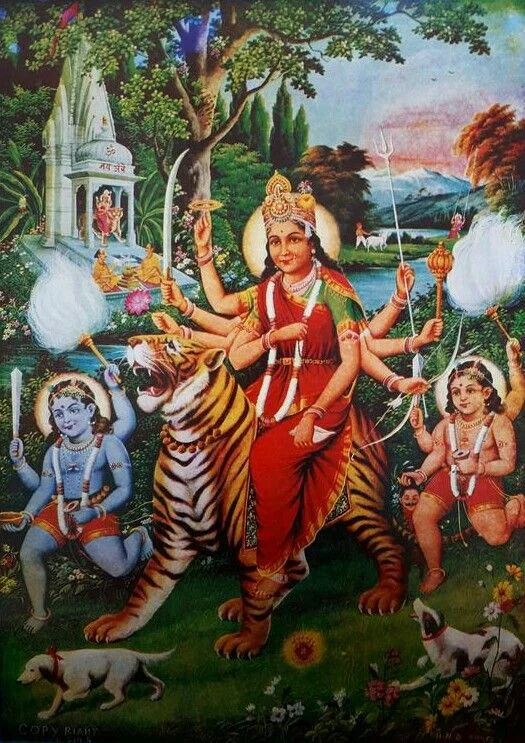
Regional folk art reimagined the supreme goddess with distinct warmth and domestic familiarity. In the nineteenth-century Kalighat style and Patachitra traditions of Bengal, the Goddess emerges simultaneously as the cosmic protectress and the beloved daughter returning home.
Characterised by bold sweeping contours, natural earth washes, and expressive almond-shaped eyes, these paintings distilled complex theological iconography into accessible visual poetry. Draped in traditional handloom folds, the Devi in these folk prints exudes relatable grace. Looking at these compositions immediately evokes the rustic simplicity of village shrines.
Working with basic handmade paper and coarse brushes, folk masters created timeless archetypes that continue to inspire modern art collectors worldwide.
Mahishasura Mardini: Classical Depiction of Cosmic Equilibrium
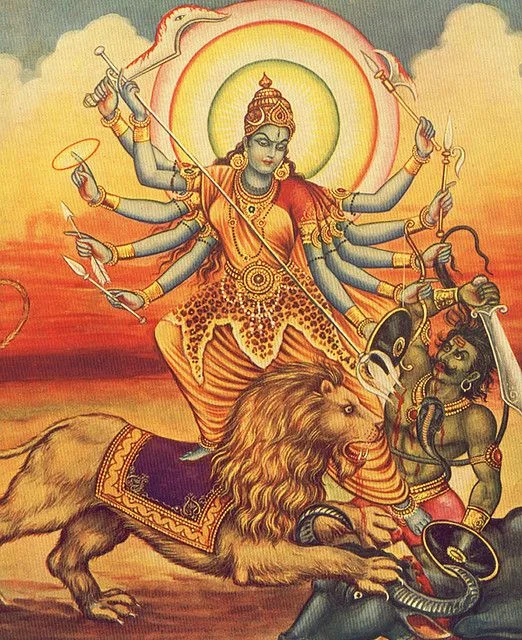
The slaying of Mahishasura remains the defining iconographic theme of Goddess Durga. Classical paintings portray this epic confrontation not merely as physical combat, but as the inevitable restoration of cosmic order over spiritual ignorance and unrestrained ego.
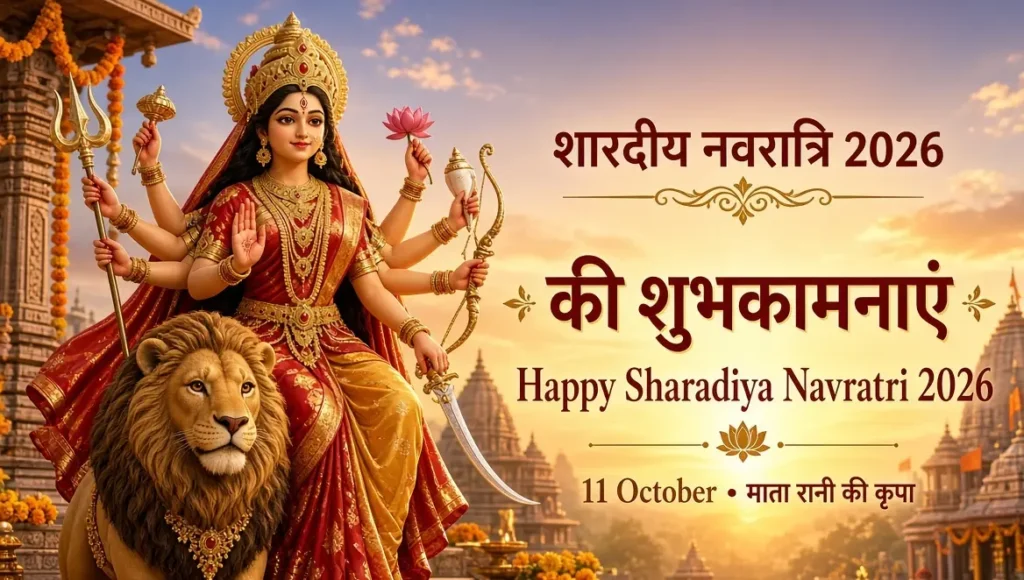
In vintage compositions, the dynamic tension is unmistakable. The radiant lion lunges forward with kinetic intensity while the Devi maintains serene, effortless grace as her trident finds its mark. The demon’s turbulent countenance contrasts sharply with the untroubled poise of the Divine Mother. Traditional colorists used vibrant vermilion and deep ochre to heighten this moral drama.
Keeping a classical representation of this victory is believed to dissolve internal fear, instilling quiet resilience against life’s recurring turbulence.
Sacred Guidelines for Placing Vintage Sacred Art in Home Shrines
Devotees frequently wonder whether inherited or antique sacred artwork can be maintained on active prayer altars. The answer is wholly affirmative, provided the surface remains intact, clean, and unblemished. Vintage portraits hold decades of ancestral reverence and serene contemplation.
When positioning traditional sacred artwork within your home altar, consider these classical recommendations:
- Position the portrait facing East or North-East (Ishanya kona) to align with natural morning light and traditional energetic flow.
- Select depictions where the Goddess wears a benevolent, protective expression (Soumya roop) rather than excessively destructive forms.
- Light a clean ghee or sesame oil lamp before the image daily and maintain the glass frame free of accumulated dust.
Treating these heirlooms with gentle care keeps the sacred space calm, orderly, and spiritually uplifting.
Preserving Rare Sacred Heritage in the Modern Digital Era
Vector art and screen displays dominate contemporary visual media, making original hand-rendered devotional art increasingly rare. Delicate paper prints and organic pigments deteriorate when exposed to humidity, smoke, and direct sunlight over long periods. Documenting and preserving them has become a matter of cultural urgency.
Digitising family heirlooms or keeping vintage devotional wallpapers creates an enduring bridge to our ancestral aesthetic roots. It honours the unnamed master illustrators who dedicated lifetimes to honing sacred proportions without seeking personal fame.
Studying these vintage portraits reminds us of a period when religious art served primarily as a doorway to inner stillness rather than disposable commercial design.
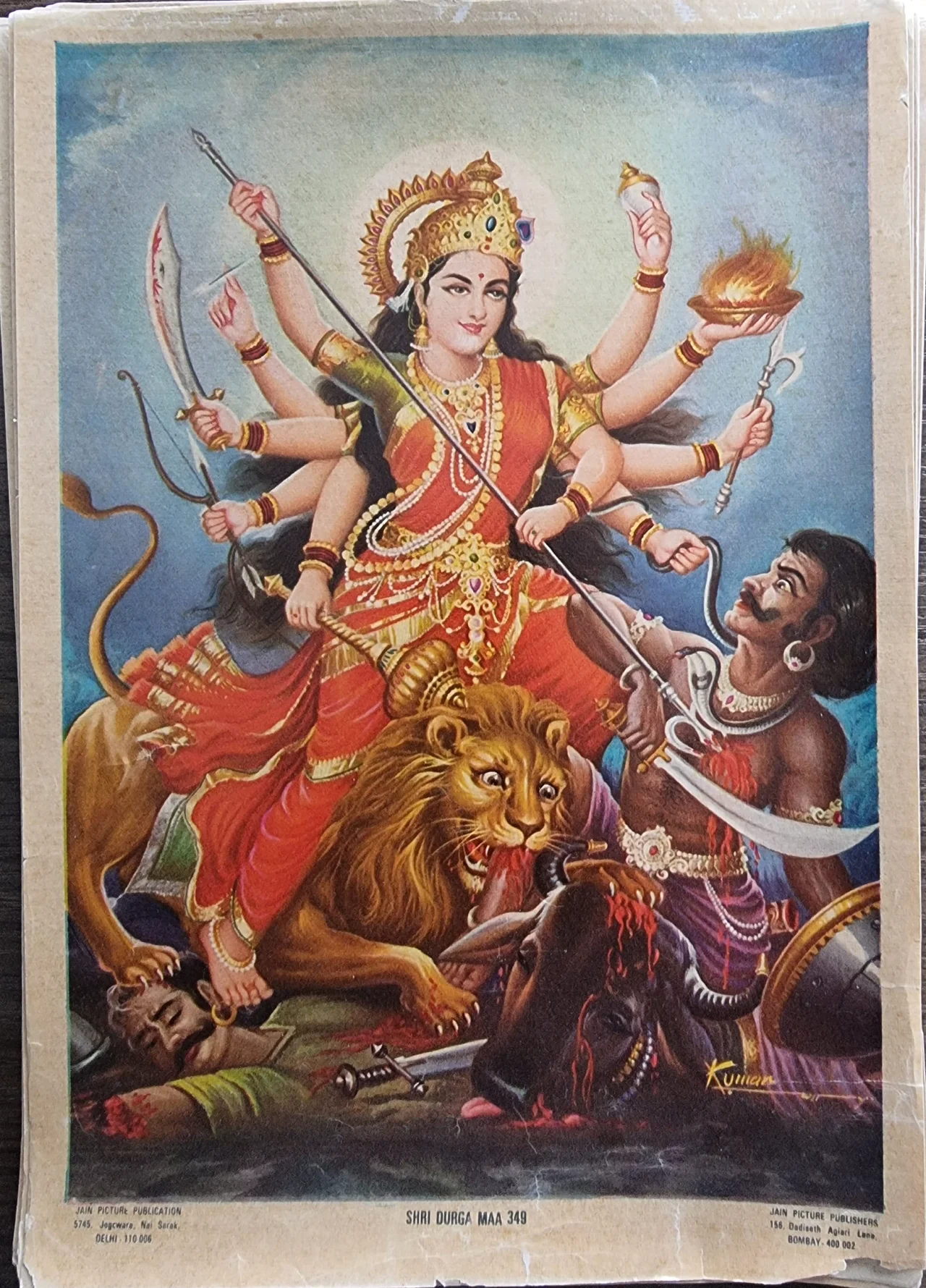
Spiritual practice thrives on inner sincerity rather than external extravagance. When you stand before an aged, hand-painted portrait of the Divine Mother, its understated charm reminds you that true devotion requires no elaborate theatrical display. The quiet grace captured in these vintage works reflects the simplicity at the heart of authentic worship.
Scriptures describe the emergence of the Devi as the collective brilliance of all benevolent cosmic forces, embodying both sovereign power and unconditional shelter. When spending a few moments at your altar, resist turning the session into an endless transaction of demands. Sit quietly, slow your breath, and ask for moral clarity, self-restraint, and mental steadiness.
Never let superstitions disturb your peace regarding inherited sacred portraits. If an old picture is preserved with respect and cleanliness, it remains an auspicious anchor in your living space. Share these heirloom treasures with younger family members so they develop an eye for traditional artistry and quiet contemplation.
Can I place an old or handmade Maa Durga photo in my home puja temple?
Yes, absolutely. As long as the paper or canvas is clean and not torn or broken, keeping an inherited or handmade picture is considered auspicious, carrying positive ancestral sentiment.
Which form of Goddess Durga is ideal for daily home worship?
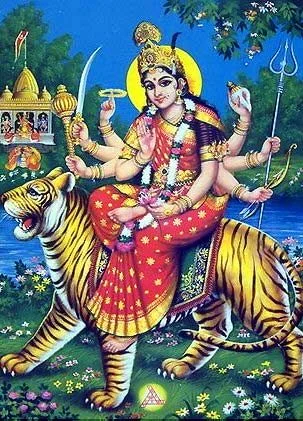
A gentle and benevolent form showing Maa Durga seated calmly on her lion with a blessing hand gesture (Abhaya mudra) is considered most harmonious for daily home prayers.
How should vintage religious paintings and lithographs be cleaned?
Keep them framed behind glass, away from direct sunlight and moisture. Dust the exterior frame gently with a dry microfibre cloth, avoiding harsh water contact with raw antique paper.
What is the most auspicious direction to place a Maa Durga photo?
According to Vastu guidelines, placing the sacred portrait on the East or North-East wall of your prayer room facilitates uplifting morning light and serene devotional focus.