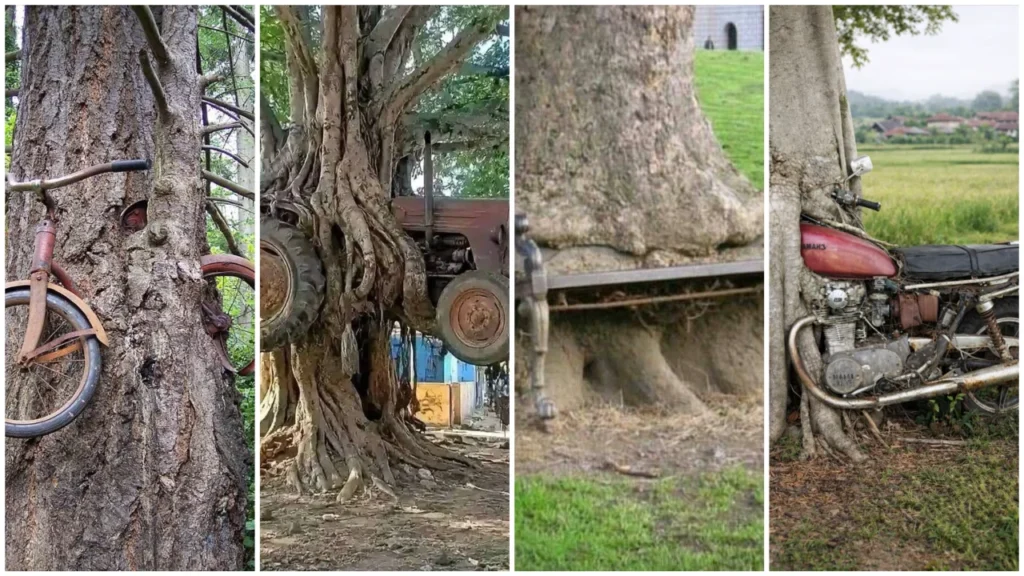
Imagine stumbling upon a vintage metal bicycle suspended feet off the ground, firmly embedded inside a living pine trunk, or a massive tractor hoisted mid-air by banyan roots. You would instinctively dismiss them as clumsy digital edits. Yet every single one is entirely authentic, proving nature always claims the final word against human engineering.
The Stubborn Tree That Slithered Through Solid Masonry
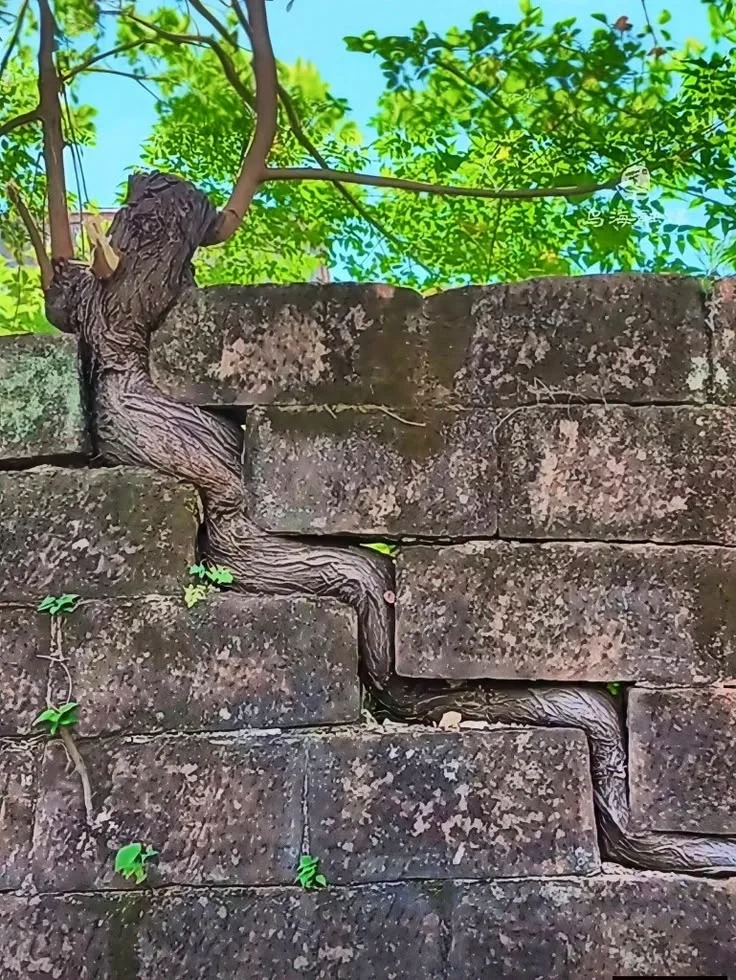
Most people assume stone foundations and mortar joints are permanent barriers to plant life. That assumption collapses the moment you see how persistent woody roots actually are. In this striking capture, a tree trunk snakes through narrow brick courses with the precision of a climbing vine, displacing solid masonry along its path.
Roots do not blast through obstacles violently. Instead, they apply steady microscopic hydraulic pressure over decades, seeking out the thinnest traces of moisture and air pockets. The wood adapts to the angular contours of the masonry, producing an effect reminiscent of deliberate modern sculpture rather than spontaneous botanical survival.
It is a stark visual reminder that rigid structures invariably fracture when confronted with relentless living pressure. Such occurrences are far more common than urban planners would care to admit.
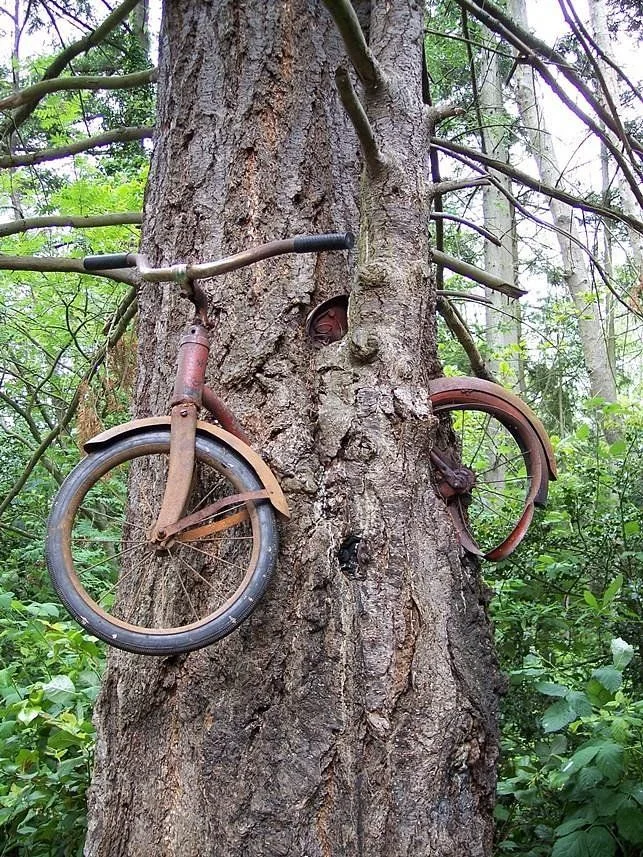
The Vintage Bicycle Swallowed by a Forest Tree Trunk
This photograph remains one of the most enduring curiosities across the web. Located on Vashon Island in Washington, a vintage child’s bicycle sits suspended mid-trunk, its steel frame completely encased by aged bark. The image routinely sparks furious debates over whether it was hoisted up or swallowed whole.
Local lore tells of a boy who abandoned his bike against a young sapling before moving away decades ago. As the trunk expanded, its woody tissue wrapped around the metal tubing. Trees grow outward in girth from the cambium layer rather than pulling lower objects upward toward the canopy. The bicycle stayed near its original height while the trunk simply enveloped it.
The result is an eerie, living time capsule. Where steel meets living timber, the wood has healed smoothly around the frame, demonstrating nature’s capacity to absorb manufactured intrusions.
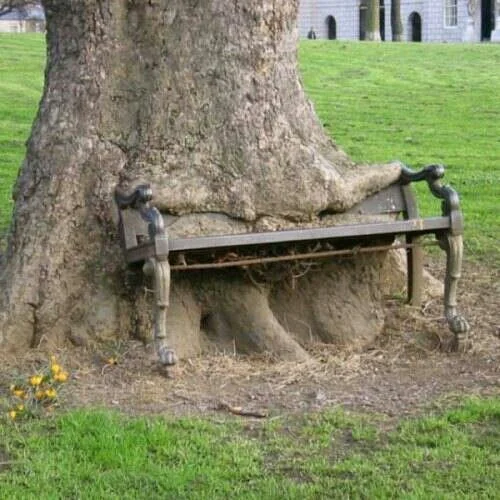
A Park Bench Slowly Consumed by an Expanding Trunk
Municipal park benches are built from heavy cast iron and treated timber to withstand public wear. They are not, however, built to withstand centuries of relentless trunk expansion. This photo shows an old bench whose backrest and iron frame have been half-digested by an ancient base.
The process happens with complete silence. Year after year, secondary woody growth rolls over the backrest slats like slow-moving lava. Rather than deflecting around the bench, the tree simply envelops the cold iron bars, sealing them into its core grain.
The seat is now entirely unusable for visitors, transformed instead into an accidental monument to botanical dominance over city planning. It shows how rapidly man-made conveniences get absorbed once regular maintenance ceases.
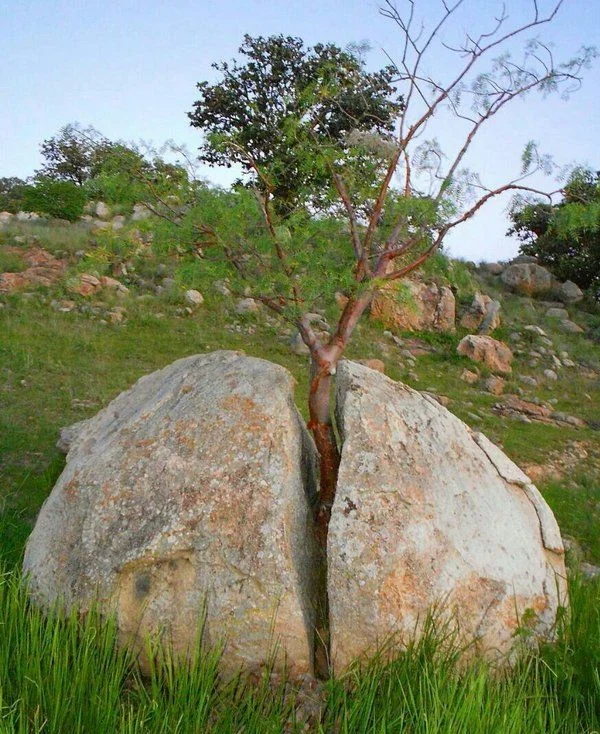
The Lone Sapling That Cleaved a Solid Granite Boulder
Stumbling across a split boulder in rocky terrain is ordinary enough until you notice a healthy sapling emerging straight out of the fissure. The massive granite rock stands cleanly bisected, with the tree trunk rising directly through the central fracture.
This is pure biomechanical leverage at work. A stray seed lands inside a hairline fracture carried by wind or bird droppings. Once it germinates, its expanding taproot exercises thousands of pounds of sustained force with each growth cycle. Over years, that constant expansion forces solid rock to yield along its natural fault lines.
Where human tools require explosive charges or heavy machinery to split stone, a single seed achieves the identical outcome through sheer, unbroken biological persistence.
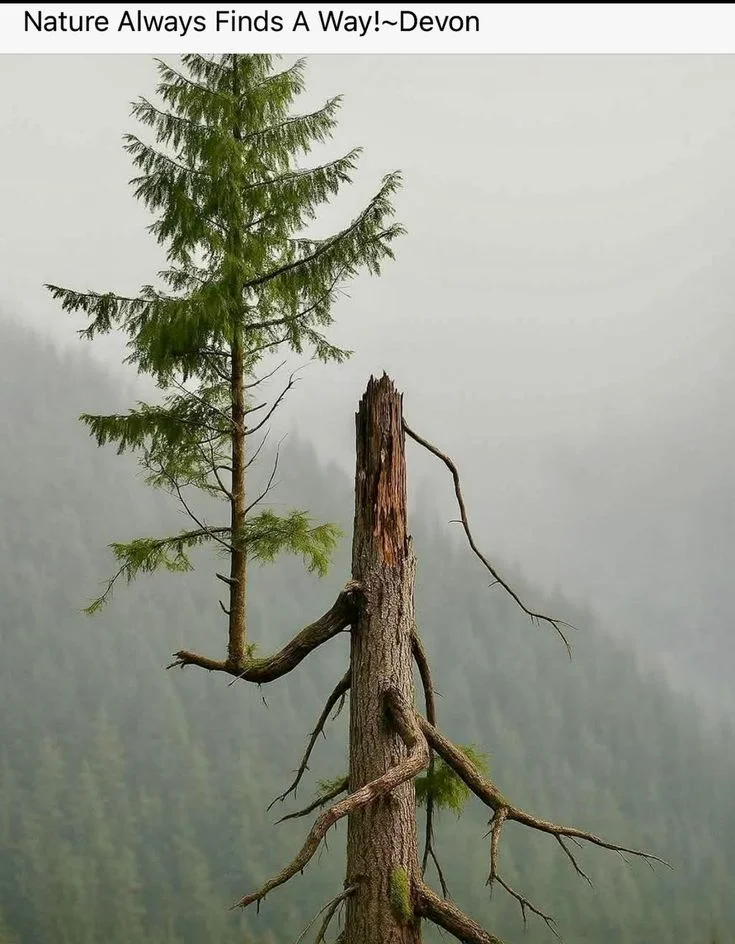
New Canopy Rising from a Dead, Snapped Trunk
Severe mountain storms and lightning strikes regularly decapitate mature conifers. Most onlookers see a shattered, barren stump and assume the organism is spent. Yet this remarkable photograph demonstrates how plant biology reroutes vitality under sudden trauma.
The main central trunk is completely broken off and weathered dry. In response, a single lateral branch took a sharp right-angle turn upward, assuming the role of the new central leader. Driven by shifts in apical dominance and auxin distribution, the side branch effectively rebuilt a brand-new tree canopy directly off the dead frame.
Set against misty mountain slopes, the silhouette looks both bizarre and defiant. It proves that structural damage rarely signals the end of growth for a deeply rooted organism.
Metal Railings Swallowed Whole and Resourceful Rural Ingenuity
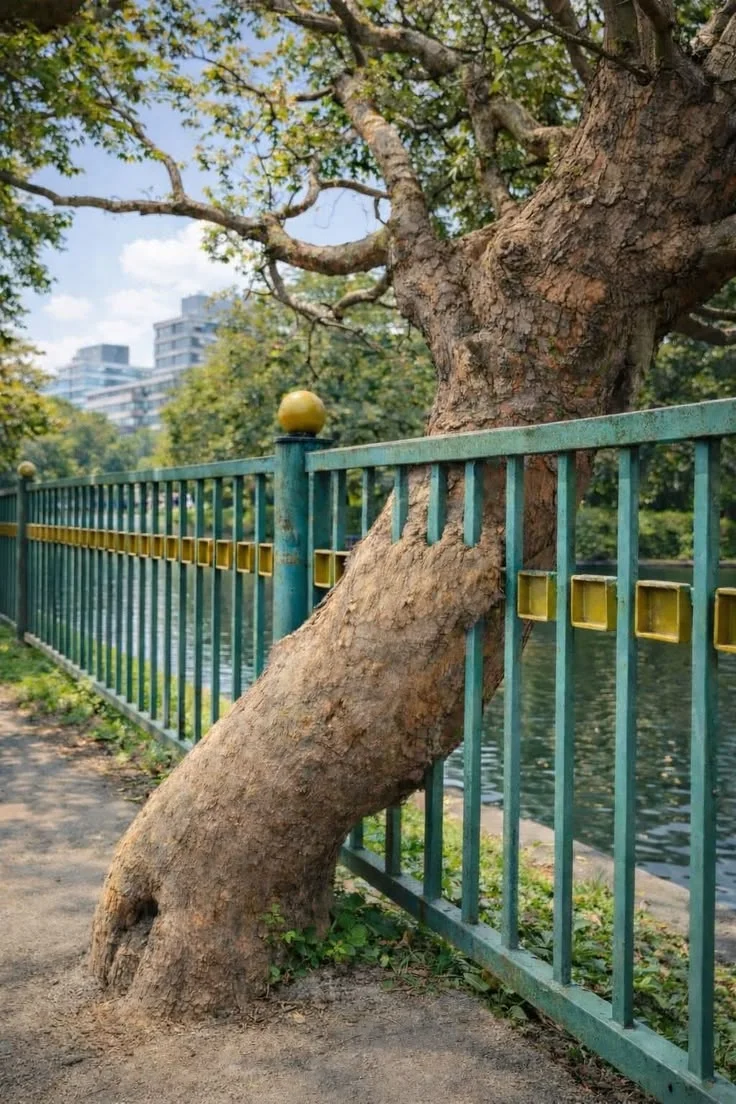
The battle between urban infrastructure and urban greenery is nowhere clearer than along roadside railings. In this scene, a mature tree has grown straight through green iron bars, the trunk wrapping around individual pickets until the metal appears embedded inside the wood itself.
| Image Type | Visual Phenomenon | Primary Cause |
|---|---|---|
| Fence Ingestion | Trunk encasing iron bars | Secondary cambial expansion |
| Bamboo Bicycle | Fully functional wooden frame | Grassroots material innovation |
| Suspended Tractor | Heavy vehicle trapped in roots | Aerial banyan root entwinement |
Human problem-solving runs parallel to these natural oddities. A viral photograph of a fully operable bicycle built almost entirely from bamboo stalks shows grassroots creativity matching nature’s adaptability. Using local materials, the builder bypassed expensive factory parts to engineer a reliable daily vehicle.
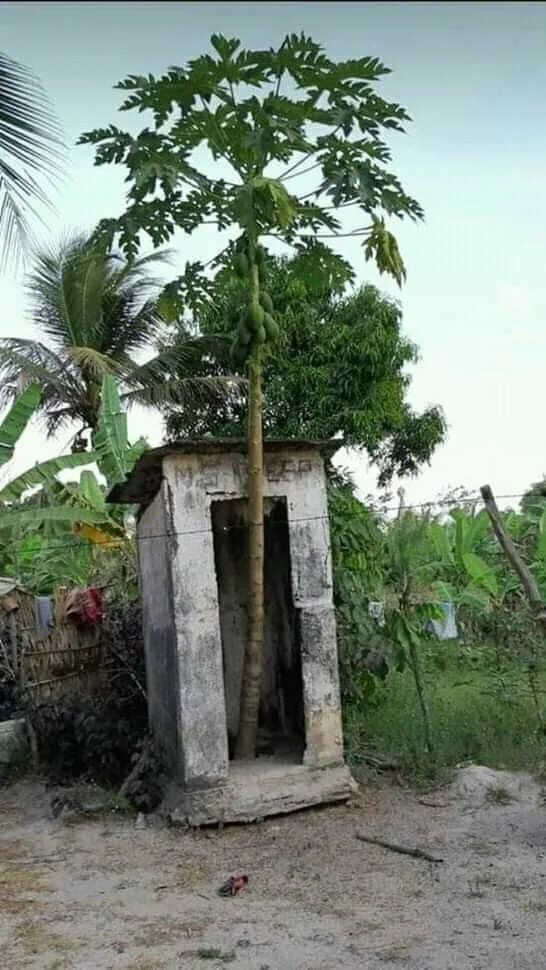
Whether it is an ambitious papaya tree puncturing an abandoned outhouse roof or a heavy tractor held airborne by banyan roots, these scenes highlight the strange friction where human objects and relentless biology intersect.

When you spend hours scrolling through synthetic digital feeds, authentic photographs of stubborn physical biology provide a much-needed grounding effect. Seeing thick iron rails fused seamlessly into a tree trunk reminds us how quietly powerful gradual adaptation really is.
Modern life pushes people toward quick, explosive fixes whenever a serious obstacle appears. But watching a seedling split granite or a severed stump reroute its canopy shows that structural resilience relies on continuous pressure over time, not sudden force. Changing your angle of approach is rarely a sign of defeat; it is how natural systems survive hostile environments.
Keep your eyes open during daily commutes and weekend walks. You will start spotting similar interactions around cracked pavements, rusted chain-link fences, and brick alleyways. Nature never stops working its way through human structures, provided you take a second to look.
Can trees really swallow heavy metal objects like bicycles and fences?
Yes. Trees undergo secondary growth where the trunk expands outward in circumference. Over decades, new layers of woody cambium tissue wrap around stationary metal objects, gradually encasing them without killing the tree.
How can a soft plant root split a solid granite rock?
Roots expand incrementally while drawing water, exerting continuous hydraulic pressure on small cracks. Combined with thermal expansion and moisture freezing inside the rock, this sustained pressure eventually splits massive boulders apart.
Are all viral photos of trees consuming objects genuine?
While manipulated images exist online, many famous examples—such as the Vashon Island bicycle tree and urban fence inosculations—are thoroughly verified physical landmarks documented by arborists and photographers.
How does a broken tree branch turn into a brand new trunk?
When a tree loses its main vertical leader, the reduction in auxin hormones releases lateral buds from suppression. A side branch bends upward toward sunlight and takes over as the dominant main stem.