Why Multiplication Tables from 2 to 20 are Crucial for Kids
Mathematics forms the foundation of many academic subjects, and multiplication tables are often the very first building blocks. For young learners, mastering tables from 2 to 20 can significantly simplify future mathematical concepts, making algebra, geometry, and beyond more accessible. A solid grasp of these basic multiplications equips children with confidence and speed in problem-solving.
This article provides a comprehensive table chart from 2 to 20, along with effective strategies and practice methods to help children learn and retain multiplication facts. We aim to make the learning process engaging and effective.
The Essential Table Chart (2 to 20)

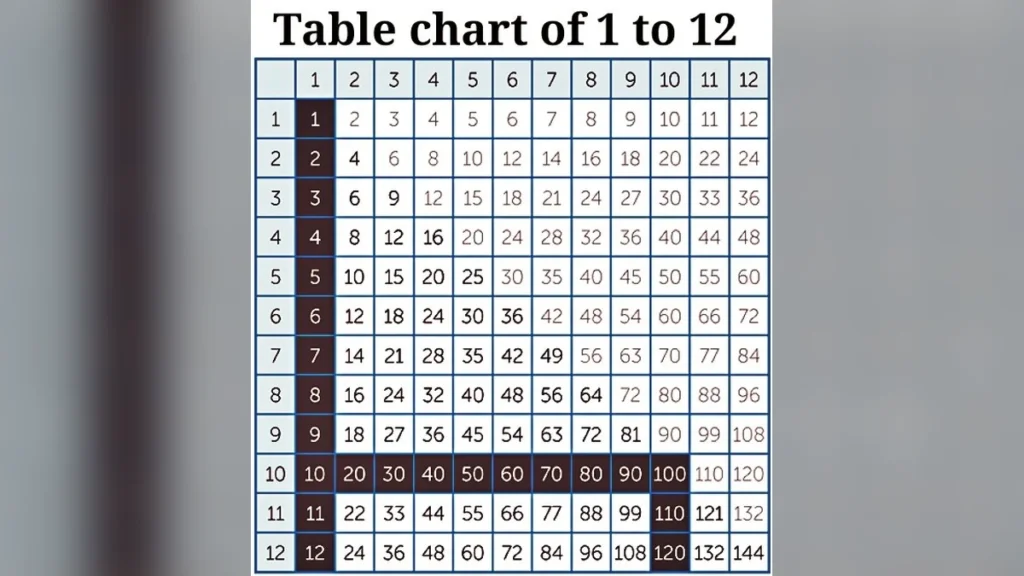
This primary chart presents all multiplication tables from 2 to 20 in a clear, organized format. Regular exposure to this chart helps children recognize patterns and internalize the multiplication facts more quickly. Seeing the tables laid out systematically aids in memorization and understanding the relationships between different numbers.
Tip: Displaying this chart in a prominent place, like a child’s study area or bedroom wall, ensures daily visibility, reinforcing learning through constant exposure.
Practice Makes Perfect: The Practice Table Chart
To solidify understanding and build speed, practice is key. The second chart is designed specifically for practice sessions. Consistent daily practice, even for just 10-15 minutes, can dramatically improve a child’s accuracy and fluency with multiplication tables. This hands-on approach helps children move from rote memorization to confident application.
Encourage children to use this chart to test themselves or to fill in missing answers. This active recall method is highly effective for long-term retention.
Effective Strategies for Learning Tables Quickly

If children find memorizing tables challenging, introducing them to effective learning techniques can make a significant difference. Here are some proven methods:
- Daily Recitation: Practice reciting tables aloud for 10-15 minutes each day. This engages auditory learning.
- Writing Practice: Encourage children to write down the tables. This kinesthetic activity reinforces memory.
- Incremental Learning: Break down the learning process. Start with tables 2 through 5, then move to 6 through 10, and so on.
- Gamification: Incorporate games and fun activities. Flashcards, online quizzes, or even creating their own multiplication games can make learning enjoyable.
- Visual Reinforcement: As mentioned, displaying charts where they are easily visible helps.
- Understanding Over Rote Memorization: While memorization is important, understanding the concept of multiplication as repeated addition can deepen comprehension.
Visual Learning: The Visual Table Chart
The third chart employs a visual approach to learning multiplication. This method helps children understand the ‘why’ behind the numbers, rather than just memorizing them. Visualizing multiplication can enhance a child’s learning speed and improve their memory retention significantly.
For instance, visualizing 3 x 4 as three groups of four items helps build a concrete understanding that goes beyond abstract numbers.
Tips for Parents and Educators

Supporting a child’s learning journey requires patience and the right approach. Here are some tips for parents and educators:
- Avoid Pressure: Create a relaxed learning environment. Pressure can hinder a child’s progress and enjoyment.
- Make it Fun: Integrate play and enjoyment into the learning process. Use positive reinforcement.
- Establish a Routine: Consistent, short practice sessions are more effective than infrequent long ones.
- Celebrate Small Wins: Acknowledge and praise effort and progress, no matter how small. This boosts confidence.
- Combine Fun and Practice: The most effective learning happens when children are engaged and actively participating.
Frequently Asked Questions (FAQs)
- What is the ideal age for children to start learning multiplication tables?
Children typically begin learning multiplication tables around the age of 5 to 6 years old, coinciding with their entry into early primary school. - Is daily practice essential for mastering tables?
Yes, daily practice is highly recommended. Consistent repetition helps in quick recall and long-term retention of multiplication facts. - Do multiplication charts make learning easier?
Yes, charts provide a structured and visual aid that simplifies the learning process. They help children see patterns and memorize facts more effectively. - How can I help my child if they struggle with memorizing tables?
Try breaking down tables into smaller sets, use visual aids, incorporate games, and focus on understanding the concept rather than just rote memorization. Patience and positive reinforcement are key. - What are the benefits of learning tables up to 20?
Mastering tables up to 20 provides a stronger foundation for more advanced mathematics, improves calculation speed, and builds confidence in problem-solving across various subjects.
Conclusion
Learning multiplication tables from 2 to 20 is a fundamental step in a child’s mathematical development. By utilizing comprehensive charts, consistent practice, and engaging learning strategies, parents and educators can help children build a strong and lasting understanding of multiplication. Remember that patience, encouragement, and making learning enjoyable are crucial for success.