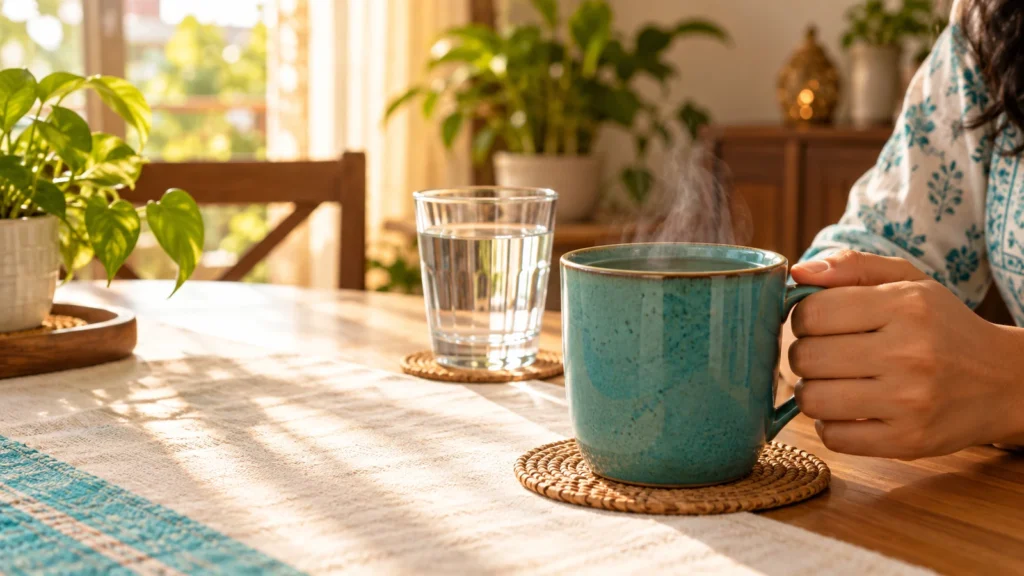
A mug of warm water every morning, a rule about an empty stomach and the hope that your belly will gradually shrink. The advice is repeated so often that it can begin to sound established. Some people follow it for months. Drinking water can be a useful habit, but every explanation attached to that habit is not necessarily true.
The clear answer: warm water is not a dependable treatment for melting belly fat. It contributes to hydration, as water at other comfortable temperatures does. If it replaces a sugary drink, it may be a useful change in your eating pattern. To understand the benefit, separate the role of water from the claim about warmth.
Why the promise sounds convincing
Warm water is inexpensive, available at home and easy to fit into a day. Advice saying “just do this” is therefore appealing. Sometimes the explanation compares it with hot water washing grease from a dish. That is an easy image to remember, but a kitchen comparison is not medical evidence for weight loss.
Cleaning cooking oil from a plate does not establish what happens to body fat. Feeling comfortable after a warm drink is also different from reducing fat around the waist. You can enjoy the drink for comfort or preference without treating that experience as proof of fat loss.
What is established about temperature?
Cleveland Clinic's dietitian guidance describes limited research supporting special health benefits of hot water compared with room-temperature or cold water. That does not provide a basis for a promise that hotter water creates faster fat loss. A confident claim about temperature still needs appropriate evidence. [1]
If you prefer lukewarm water, it can be your choice. If you prefer room-temperature water, you do not need to treat it as harmful or fattening. Weight outcomes are not decided by the temperature of one mug. Do not let a drink's warmth become a reason to overlook the rest of what you eat and drink.
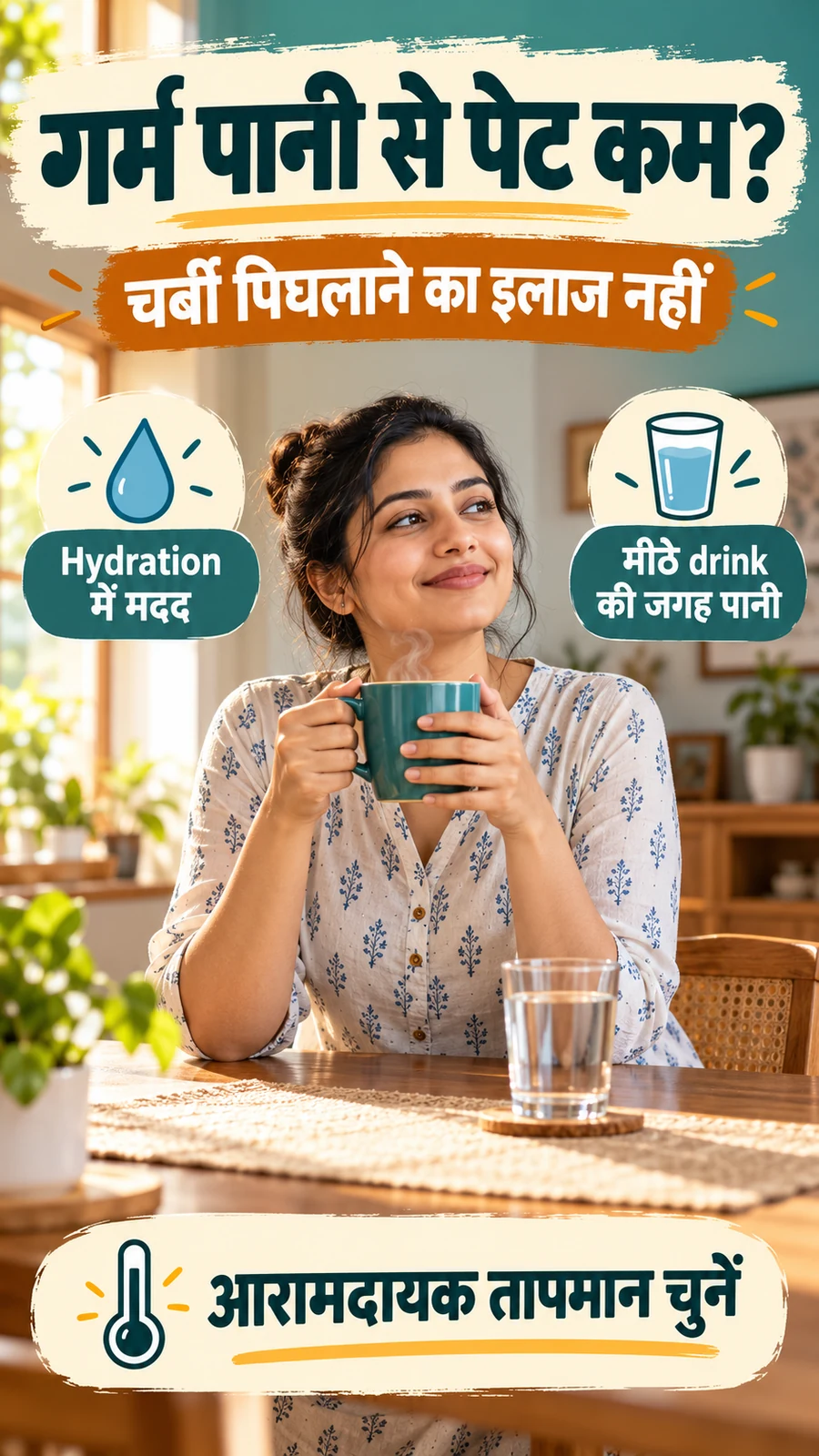
## Where water can help with weight management Plain water contains no calories. CDC explains that replacing sugary drinks with water can help reduce calorie intake. The understandable mechanism in that advice is replacement, not heat melting fat. It is a change in what someone consumes across the day. [2]
Suppose you usually have a sugary packaged drink in the afternoon and choose water instead. Something about intake changed. Having the original drink as usual and adding warm water afterwards is different. Adding water does not cancel the energy already consumed in other drinks or food.
Overall energy intake matters too. NHS explains calories as energy from food and drinks and describes the relationship between intake and what the body uses. One mug cannot replace attention to meals, portions and everyday movement. The rest of the routine remains relevant. [4]
Is an empty stomach or bedtime a secret window?
Claims that water only works on an empty stomach or burns fat through the night when taken at bedtime offer a strong promise. That timing should not be presented as a dependable fat-loss treatment. Meeting your fluid needs is a more useful question than finishing a mug at a particular minute.
If you remember water most easily in the morning, keep that habit. Carrying a bottle at work may suit you better. Choose an approach that feels comfortable and respects any medical instructions. Drinking around meals does not need to become a rigid rule based on fear or punishment.
## What about lemon, honey or spices? Adding flavour may make water more enjoyable. Enjoying a flavour is different from discovering a fat-loss formula. Lemon or spices do not create a guarantee of losing a particular number of kilos. Buying a special ingredient is not a requirement for building a drinking-water habit.
Adding honey or sugar also changes the drink from plain calorie-free water. Amount matters. A natural-sweetener label does not erase its energy content. Before collecting a new recipe every day, ask whether the drink replaces something else or is simply being added on top of existing intake.
## Advice: keep hydration simple Choose clean drinking water at a comfortable temperature. Very hot water can scald; it does not need to be hot enough to hurt in order to be useful. Ordinary safety matters more than producing visible steam for a weight-loss routine. [5]
Drinking fluids regularly across the day is a practical option. NHS gives general guidance of six to eight cups or glasses, but that is not an exact requirement for everyone. Weather, activity and other needs can change the amount. Food and other drinks contribute fluid too. [3]
If a clinician has given you a fluid limit or specific instructions, follow those. A viral plan should not lead you to suddenly force large amounts of water or ignore individual needs. Reducing water intake to change body weight is not recommended here either.
Choose one manageable adjustment: replace a habitual sugary drink with water, keep a bottle clean or make water easier to access during work. Making a safe habit repeatable is more useful than carefully tracking kettle temperature in the hope of melting fat.
How to interpret a result
A scale change after two days of warm water does not establish the cause. Short-term weight changes have several possible contributors. Rather than giving one mug all the credit or blame, look at the wider routine over time. A stranger's photograph should not become a target your body must meet.
If weight loss would benefit your health, choose a sustainable approach to food, movement, sleep and medical factors. A qualified dietitian or clinician can help when needed. Water may be part of that routine. It is not a substitute for the rest of the plan.
FAQ
Does warm water melt belly fat?
It is not an established, dependable treatment for that purpose. Warm water is a hydration option. Presenting it as a guaranteed belly-fat solution is misleading.
Does room-temperature or cold water cause weight gain?
Water temperature should not be treated as an automatic cause of weight gain. Choose a comfortable temperature and consider the whole day's eating, drinking and routine.
Must I drink it on an empty stomach?
There is no compulsory fat-loss timing given here. Keep a routine that suits your needs and any medical advice you have received.
Will adding honey make it work better?
It does not guarantee weight loss. Honey adds energy, so the drink is different from plain calorie-free water. Consider the amount rather than relying on a natural label.
Can I spend the day on warm water alone?
Do not turn that into a weight-loss plan. Your body needs food and nourishment. If a medical programme is necessary, get its instructions from the responsible professional.
Sources
- [1] Cleveland Clinic: Benefits of drinking hot water
- [2] CDC: Water and healthier drinks
- [3] NHS: Water, drinks and hydration
- [4] NHS: Understanding calories
- [5] NHS: Burns and scalds