The Peddi controversy is back in focus after Janhvi Kapoor addressed criticism of her character’s portrayal on Koffee With Karan Season 9. Reports published on October 28 and 29, 2026 describe an interview in which she acknowledged concerns about objectification and reflected on whether she should have challenged the presentation more strongly. The new development is her response to the earlier debate, rather than a newly announced film release.
For readers arriving through a trending search, the useful questions are straightforward: what was criticised, what has Kapoor said, and what remains interpretation? This explainer separates reported interview remarks from our analysis of film storytelling. It does not claim access to private production discussions, an unpublished script, or the complete decision-making process behind every scene.
What is the Peddi controversy about?
NDTV’s report on the interview describes criticism of the sexualisation and objectification of Kapoor’s character, Achiyamma, in the Ram Charan film directed by Buchi Babu Sana. The concern is about how the character is presented within the film, including the narrative treatment and camera choices. Those are related creative questions, but they are not identical.
A character’s dialogue may suggest independence while the visual presentation gives the audience a different emphasis. Equally, a viewer can dislike a scene without establishing what every person on the production knew beforehand. Keeping those distinctions visible makes the discussion more precise and avoids turning a criticism of the finished work into unsupported claims about private events.
The controversy should therefore be understood as a debate about portrayal, consent within the story, and creative responsibility. This article does not present the interview as an allegation that a named filmmaker committed a real-world criminal act. Criticism of a fictional narrative and a report of an actual offence require different evidence and should not be collapsed into one headline.
What did Janhvi Kapoor say in the new interview?
According to 123telugu’s October 29 account, Kapoor said she had hesitated to speak because many people had worked hard on the film. She nevertheless accepted responsibility for her own part and said the possible social impact of the portrayal troubled her. The report also describes her acknowledging that she could have intervened more firmly.
The same account reports her explanation that understanding how a scene will ultimately look is complicated by the information available during production, including camera angles. She also recognised that her position in the industry gave her room to speak up. These are her reported reflections, not an independent audit of the working practices of an entire film industry.
That distinction matters when reading a short viral clip. A person can acknowledge personal responsibility while also explaining the conditions in which decisions were made. Readers should assess the complete explanation rather than assume that one sentence either settles every production question or cancels everything else said in the conversation.
What was reported about the director’s response?
NDTV reports that Buchi Babu Sana had issued an apology after the earlier criticism and that the relevant portions were removed or edited in the theatrical cut. This is reported background to the present interview. The article does not independently compare every released version, streaming copy, or regional edit of the film, so it cannot promise that each version contains identical changes.
An apology and an edit also answer different questions. An apology expresses a response to criticism; an edit changes some part of the work. To judge a particular revision, viewers would need to know which version they are watching and what was actually changed. A general report of alterations should not be expanded into a scene-by-scene claim without that comparison.
For the latest news context, ThePrint’s October 29 report also places Kapoor’s comments in her appearance on the chat show alongside Varun Dhawan. The renewed attention follows this public discussion. The fact that a controversy is trending again does not by itself indicate a fresh legal case, a new ban, or a new official sanction.
FACT box: the verified news context
Film: Peddi.
Actor responding: Janhvi Kapoor.
Character discussed: Achiyamma.
Director: Buchi Babu Sana.
New context: Reported remarks on Koffee With Karan Season 9.
Central issue: Criticism of the character’s portrayal and Kapoor’s reflection on responsibility.
Checked: October 29, 2026.
Limit: This explainer relies on linked public reporting, not private production records.
Analysis: why camera framing and character agency matter
The following is editorial analysis, rather than an additional claim about an unseen scene. Character agency means that a person in a story has meaningful choices, goals, and reactions. A useful viewing question is whether the character’s decisions change the action, or whether the character mainly exists to motivate someone else. This can be examined without judging the performer’s appearance.
Camera framing is another layer of meaning. A scene communicates through what the camera includes, how long it stays there, and whose perspective the audience is encouraged to share. Dialogue alone cannot explain all of that. Two scenes with similar words can feel very different because of editing, music, reaction shots, and the balance of attention between characters.
Consent in a fictional story also requires attention to context. Does the narrative recognise a refusal? Does it show the other character responding to it? Does the scene invite viewers to laugh at discomfort, or acknowledge it? These are critical questions for analysing a work. They do not require graphic descriptions or the repeated circulation of imagery that viewers already find troubling.
Finally, disagreeing about a film need not become a contest over who may enjoy it. A viewer can appreciate acting, music, or sports sequences while questioning another creative choice. Specific criticism is usually more useful than declaring the whole audience virtuous or immoral. It identifies the storytelling decision under discussion and leaves room for an evidence-based response.
Analysis: what accountability can mean in filmmaking
A finished film is collaborative, but collaboration should not make responsibility impossible to discuss. The practical question is which people can review a proposed scene, raise an objection, explain the intended effect, and reconsider it. This article does not assign private contractual authority to any individual; it offers a framework for understanding the public debate about creative choices.
Clear communication before filming can reduce mismatched expectations. A written scene description is useful, yet visual treatment can still change its meaning. Discussing framing, performance boundaries, and the intended edit gives collaborators more concrete information than a broad assurance that a scene will be tasteful. This is a general production principle, not a claim that a specific meeting did or did not happen on Peddi.
Accountability after criticism also benefits from specificity. What concern was heard? What change was made? What will be reviewed differently next time? A public statement may begin that process, but audiences are entitled to evaluate later work as well. At the same time, readers should avoid inventing promises that the statement itself never made.
Advice: how to follow the story without spreading misinformation
Start with the date and the full source. A clip uploaded today may be taken from an earlier interview, while a headline about an apology may refer to the original release period. Check whether a report is describing the initial criticism, the director’s response, or Kapoor’s new comments. Treating those stages as one simultaneous event creates unnecessary confusion.
Next, distinguish direct remarks from a headline writer’s summary. Strong words in a headline may capture only one aspect of a longer answer. If a post claims a new allegation, announcement, or admission, look for the exact context in the linked interview or a reliable account. Do not fill gaps with claims from anonymous fan pages.
Keep criticism focused on the film and the public statement. Personal abuse, fabricated quotations, and unrelated rumours do not explain a creative controversy. They also make it harder to see what is actually supported. For other film and television coverage, visit our Movies section, checking each article’s date and sources.
Frequently asked questions
Why is the Peddi controversy trending again?
New reports describe Janhvi Kapoor discussing the earlier criticism of her character on Koffee With Karan Season 9. Her response is the current news development.
What was criticised about her character?
The linked reports describe concerns about objectification, sexualisation, and the narrative treatment of Achiyamma. This is a debate about the film’s portrayal, not proof of an unrelated real-world allegation.
Did Janhvi Kapoor accept responsibility?
Reports quote her reflecting on her own part and acknowledging that she could have challenged the portrayal more firmly. Her explanation should be read in its complete context.
Were changes made to the film?
NDTV reports an earlier apology and alterations to the theatrical cut. This article has not independently compared every available version and does not claim they all contain identical edits.
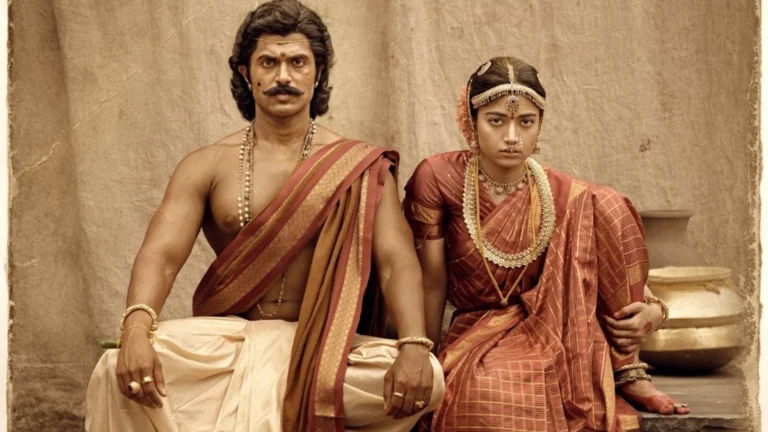
Are the images here actual scenes from Peddi?
No. Both are labelled AI-generated editorial illustrations of cinema equipment and an empty theater. They do not depict the actors, the interview, or a real film scene.
Editorial note: Updated for public reporting available on October 29, 2026. Interview remarks are attributed to the linked reports. The sections labelled Analysis present our interpretation of film storytelling, not additional reporting from the production.