What is Dopamine and How Does it Work?
Before diving into phone addiction, it’s crucial to understand dopamine. Dopamine is a neurotransmitter in our brain, often called the ‘happiness chemical.’ Its primary role is to motivate us to repeat actions that feel good or are essential for survival. For instance, dopamine is released when we eat delicious food, achieve a goal, or connect with loved ones. It aids in learning, motivation, and seeking rewards, acting as a powerful driving force. Problems arise when this system becomes overstimulated by activities detrimental to our long-term well-being, such as excessive mobile use.
The Deep Connection Between Mobile Phones and Dopamine
Smartphones and social media apps are engineered to maximally activate our brain’s dopamine system. Every notification, like, new message, and even the act of scrolling provides a small dopamine boost. Notifications create anticipation of something new and exciting, triggering dopamine release. Social media likes and comments offer social validation, leading to an immediate dopamine hit. Infinite scrolling on social media feeds keeps us engaged with the uncertainty of finding something more interesting, compelling us to continue. In-app rewards, new levels, and constant updates in games and apps also provide regular dopamine doses. This creates an environment where our brain constantly seeks the ‘next reward,’ with the mobile phone becoming the easiest and quickest source.
The Phone Addiction Dopamine Loop: A Vicious Cycle
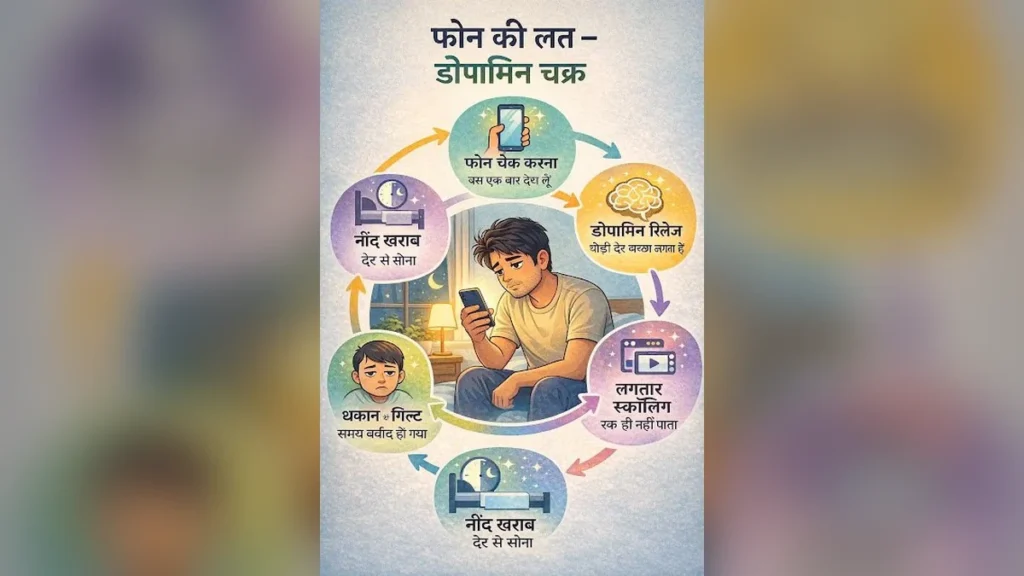
This dopamine loop functions like a vicious cycle, trapping many unknowingly:
- Trigger: Boredom, stress, loneliness, or simply habit prompts the desire to pick up the phone.
- Action: You pick up your phone and start scrolling, checking messages, or playing a game.
- Reward: You receive a new like, watch an entertaining video, or find interesting news. Your brain gets a small dopamine boost, making you feel good.
- Craving: This feeling of well-being teaches your brain that checking the phone is rewarding, leading to a craving to check it again.
This cycle repeats. The more you engage in this loop, the more dependent your brain becomes on the phone. Over time, you may need to use your phone for longer periods to achieve the same ‘good feeling.’ This often results in fatigue, guilt, reduced concentration, and sleep problems. Poor sleep can make the next day challenging, perpetuating the cycle.
Why Do We Get Stuck in This Loop?
Several psychological factors contribute to falling into this loop:
- Instant Gratification: We often seek immediate results for everything. Mobile phones offer this instant satisfaction most readily.
- FOMO (Fear Of Missing Out): The anxiety of missing something important or fun keeps us constantly connected to our phones.
- Escapism: When stressed or bored, the phone becomes an easy escape, offering a temporary reprieve from our problems.
- Social Pressure: The desire to know what friends are doing or what’s being posted also keeps us engaged with our phones.
Practical Ways to Break Free from the Dopamine Loop
Understanding this loop is key to making small, sustainable changes. This is not an overnight transformation but a continuous process.
1. Awareness and Self-Observation
The first step is recognizing when and why you use your phone. Track your screen time to understand patterns of unintentional phone usage. Are you bored? Stressed? Or just acting out of habit?
2. Control Your Notifications
Notifications are major triggers for the dopamine loop. Turn off all non-essential notifications. Keep them only for apps that are absolutely critical to you.
3. Create Phone-Free Zones and Times
Designate specific areas or times in your home where phone use is prohibited. For example, avoid using your phone at the dining table or in the bedroom before sleeping.
4. Modify Your Bedtime Routine
Keep your phone away at least an hour before bed. Instead, read a book, listen to music, or spend time with family. The blue light from phones disrupts sleep.
5. Adopt Real-Life Hobbies and Activities
Instead of using your phone to combat boredom or stress, engage in other activities. Take up a new hobby, exercise, meet friends, or spend time in nature. These activities also release dopamine but in a healthier manner.
6. Attempt Digital Detoxes
Periodically try short digital detoxes, ranging from an hour to a full day or week. This helps reset your mind and experience life without constant phone access.
7. Make Your Phone Less Appealing
Set your phone screen to grayscale mode. Colorful apps appear less attractive. Also, remove time-consuming apps from your home screen.
Conclusion
The phone addiction dopamine loop is a genuine challenge, but understanding and managing it is possible. It’s not about abandoning your mobile phone entirely but about building a healthy, balanced relationship with it. By making small changes and being mindful of your habits, you can break free from this cycle and reduce the negative impacts of mobile phones on your life. Remember, your mind is your most powerful tool, and you are in control.