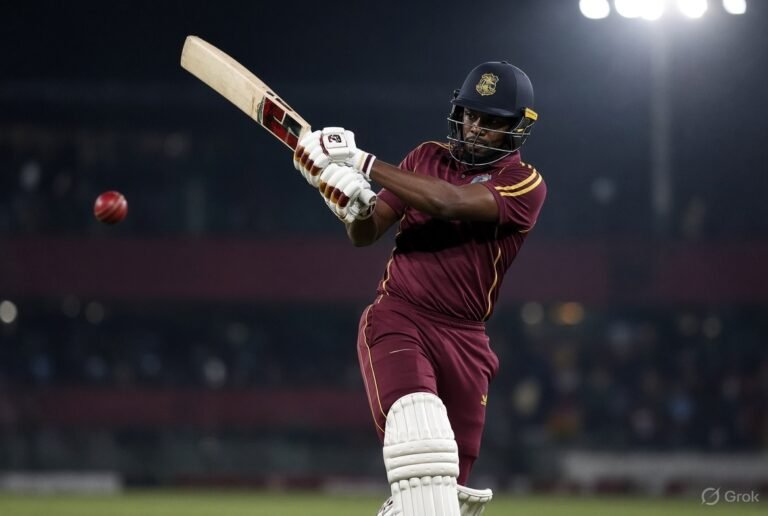
Updated: 30 October 2026. New Zealand beat India by 87 runs in the fourth T20 international at Eden Park, Auckland. The hosts made 259 for seven before India finished on 172 for nine. Glenn Phillips scored 107 and Michael Bracewell contributed 65. India nevertheless retain a 3–1 lead in the five-match series after winning the opening three games.
Searches for New Zealand versus India, Mayank Yadav and Prince Yadav are different entry points into the same match. The useful explanation is not simply a list of names or a replay of one delivery. It is how New Zealand moved from early wickets to a commanding total, and how India’s chase became difficult before a settled partnership could form.
The result in context
India chose to field after winning the toss. New Zealand’s completed innings reached 259 for seven, giving the visitors a target of 260. India’s reply ended at 172 for nine. The margin reflects a gap across both innings, rather than one isolated mistake that can fairly be attached to a single player.
The date and venue matter when searching for the score. Hong Kong Sixes fixtures involving an Indian team are also being discussed, but they are a separate competition. Their squads, performances and results must not be mixed into this international match. A final scorecard is also more useful than an old live screenshot that stopped updating halfway through an innings.
How the batting partnership changed the pressure
Phillips and Bracewell provided the substantial innings that New Zealand needed after losing wickets. Their contributions allowed the hosts to attack through an extended phase rather than relying on scattered boundaries. Once both ends are producing runs, a fielding captain has to balance boundary protection against the need for a breakthrough.
This is why a partnership is more than the sum of two individual scores. One batter’s momentum changes what the other is able to attempt. A bowling side that cannot create a quiet passage loses opportunities to force risk on its own terms. That is a reading of the match situation, not a claim to know the team’s private tactical instructions.
FACT: Three wickets for Mayank Yadav did not prevent a large opposition total. Wickets and run control describe different parts of a bowling performance, and both belong in an assessment.

Mayank Yadav’s return brought wickets
Mayank’s completed figures were three for 48 from four overs. His dismissals included Tim Seifert, Daryl Mitchell and Bevon Jacobs. Taking three wickets on his return gave India meaningful breakthroughs, but the runs conceded remain part of the same spell. A balanced reading does not erase either side of that record.
The attention around a fast delivery to Mitchell is understandable, yet one speed reading cannot establish a player’s long-term fitness or future selection. The full spell involves control, variation, match situation and the quality of the response from the batters. Medical conclusions need official information rather than an interpretation of a highlight clip.
Reading the other bowling figures
Prince Yadav returned one for 49 from four overs, while Nitish Kumar Reddy conceded 64 for one wicket in his four. Axar Patel’s three overs cost 43 for one wicket. Arshdeep Singh finished with one for 38 from four. These are scorecard facts; they do not reveal every tactical instruction or the difficulty of each particular delivery.
Equal wicket counts therefore do not mean equal impact. The stage of an innings, boundary prevention and pressure created at the other end can matter. A high total makes it tempting to rank players through a single number, but a useful review distinguishes the available figures from a broader tactical interpretation.
Why the chase became difficult immediately
Jacob Duffy removed Sanju Samson and Ishan Kishan in the opening over. Against a target of 260, the required scoring rate was already demanding. Losing two wickets before a partnership settled meant the remaining batters had to rebuild and accelerate at the same time. Those aims can pull an innings in different directions.
Abhishek Sharma made 27, Naman Dhir 28 and Tilak Varma 35. They offered contributions, but India did not obtain the extended, decisive innings the target demanded. In a very large chase, several starts can keep a scoreboard moving without bringing the target under control. The final total shows the difference between useful individual moments and a successful collective pursuit.
What the defeat changes in the series
India had already won the first three matches, so this result does not reverse the series outcome. The scoreline becomes 3–1. At the same time, an established lead does not make performance review pointless. Bowling plans, combinations and responses under pressure can still be assessed before the remaining game and later fixtures.
The fifth T20I is scheduled for 1 November in Hamilton. Use the official fixture to confirm the start time and any programme changes. The T20 and ODI phases should also be kept separate when discussing squad availability. A report about a player’s fitness for one format is not automatically evidence about another match’s playing eleven.
Advice: look at phases rather than a scapegoat
Three simple questions help explain a match: what happened with the new ball, where did the biggest partnership form, and when did the chase lose its ability to control risk? These questions produce a more useful discussion than deciding one player must explain the entire result. Cricket outcomes develop through connected passages of play.
The same restraint applies to predictions. A high-scoring game at one venue is not a guarantee that the next pitch will play the same way. A good spell does not promise another wicket haul, and a difficult evening does not prove permanent decline. This article explains the completed match; it does not offer betting advice or private information about selection.
Frequently asked questions
Who won the fourth India–New Zealand T20I?
New Zealand won by 87 runs in Auckland. They made 259 for seven and restricted India to 172 for nine.
Did Glenn Phillips score a century?
Yes. Phillips made 107, while Bracewell’s 65 was the other major contribution to the hosts’ innings.
How many wickets did Mayank Yadav take?
He finished with three wickets for 48 from four overs. Both the breakthroughs and the conceded runs are relevant to his performance.
Did India lose the series?
No. India won the opening three matches and remain 3–1 ahead after the fourth. The remaining game does not change the fact that the series was already secured.
When is the fifth T20I?
It is scheduled for 1 November in Hamilton. Confirm local and Indian start times through the official match programme rather than an unlabelled screenshot.
The central story is the contrast between New Zealand’s sustained batting surge and India’s immediately disrupted chase. Mayank supplied wickets, but India could not turn those moments into sustained innings control. That combination explains the result more clearly than any single viral delivery.
Sources: BCCI match centre, PTI scoreboard, Reuters report. Disclaimer: Completed-match analysis, not a live score feed. Images are conceptual AI sports illustrations and do not depict actual match footage.