Listen — Full news in just 1 minute
Seeing fasting sugar cross 200 in the morning report makes the tea cup drop right out of hand. Thinking every day about what to eat and what to avoid exhausts a person mentally. But believe it, even without giving up your favorite desi thali, blood sugar can be kept fully under control.
Diet Misconceptions in Diabetes and the Bitter Truth
As soon as someone finds out they have diabetes, family members first banish taste from their thali. Boiled vegetables, bland tea, and tasteless food are assumed to be the truth of life. People think that giving up sweet items alone will control sugar, whereas the real villain is the refined carbohydrates that we eat comfortably day and night.
White rice, refined flour (maida), husk-removed flour, and repeatedly fried food flood glucose directly into our blood. When you only remove sugar from your diet but keep eating other wrong things, pressure on the pancreas does not decrease. Truly, a diet plan does not mean starving yourself at all, but creating the right balance and timing in meals.
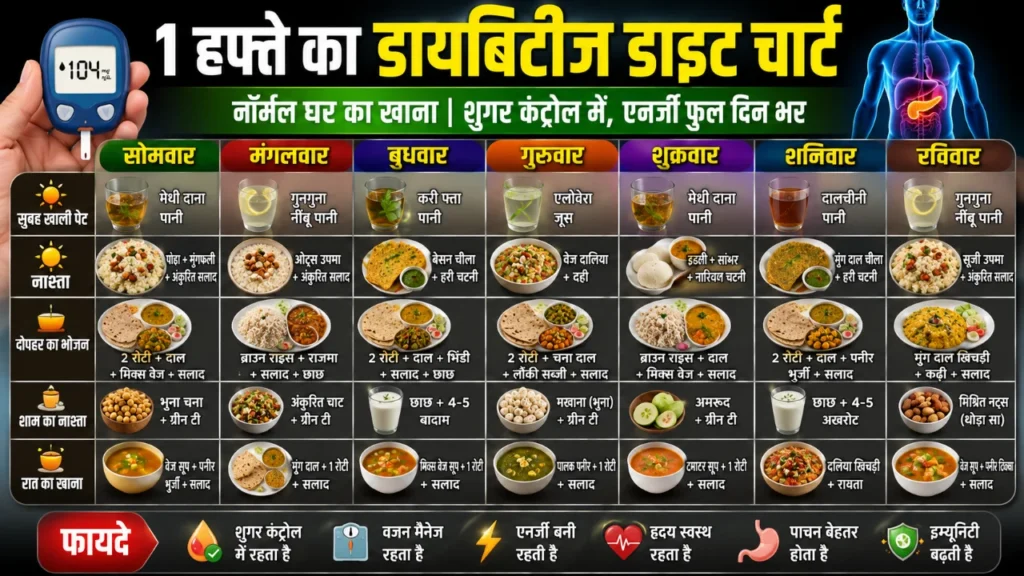
Indian food contains many such gems that can increase insulin sensitivity in the body even without medication. All that is needed is for us to understand what and how much should be on the plate at what time. Let us understand how to start a week.
Monday to Wednesday: Give Your Body a Dose of Fiber at the Start of the Week
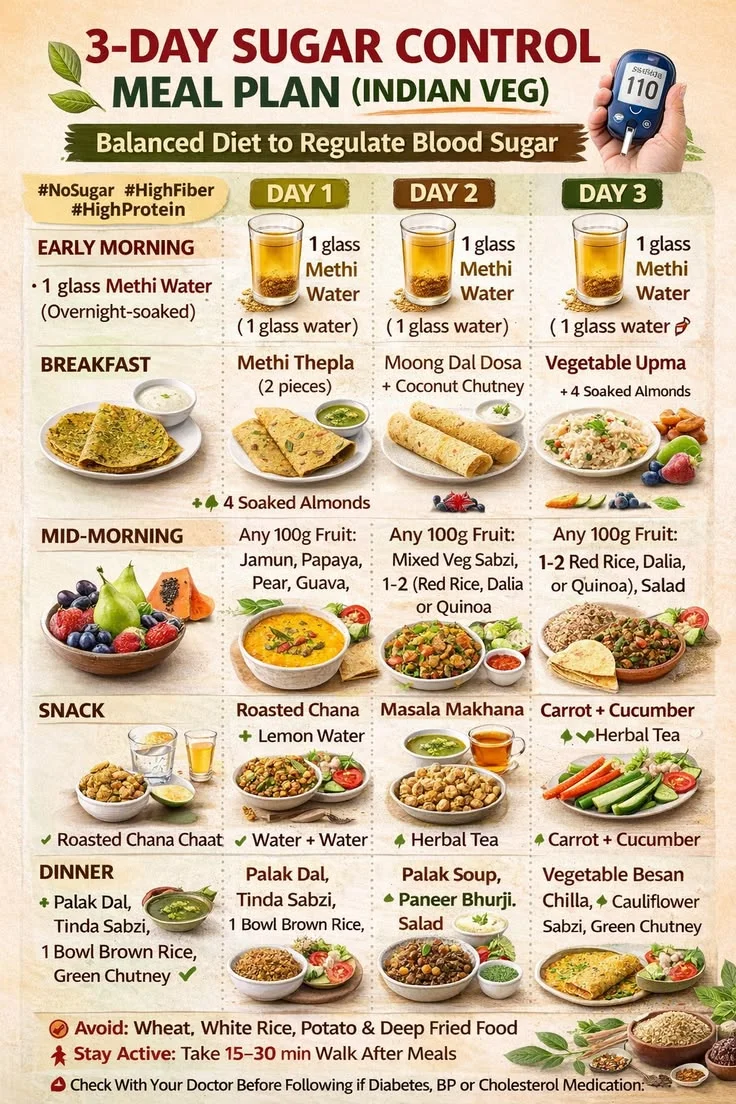
Start Monday morning with a glass of fenugreek seed (methi) water. Half an hour later, have besan and suji cheela or moong dal cheela for breakfast, mixed with plenty of finely chopped vegetables. For lunch, take two multigrain rotis, a bowl of chana dal, green vegetables, and a large bowl of fresh salad. Always make a habit of eating salad right before meals so a fiber base forms in the stomach.
On Tuesday, have oats or daliya mixed with boiled sprouted moong for breakfast. In the afternoon, boiled black chana chaat or bajra roti with spinach-paneer curry can be taken. Coarse grains like bajra and jowar are slow-release carbs, which release glucose slowly into the blood and prevent sudden sugar spikes.
Keep Wednesday a bit light. For breakfast, take two boiled eggs (if non-vegetarian) or a methi-palak missi paratha with no oil or a nominal amount of desi ghee. For lunch, include arhar dal, bottle gourd (lauki) vegetable, and a small bowl of brown rice or red rice. Dinner should always be light; one roti with bottle gourd, ridge gourd (torai), or apple gourd (tinda) vegetable is enough.
Thursday to Saturday: Focus on Protein and Micronutrients
Start Thursday with lukewarm cinnamon water. For breakfast, have roasted makhana along with a few pieces of papaya or apple. Rajma or chole can be eaten for lunch, but replace rice with jowar roti or a larger portion of cucumber-tomato raita alongside them. Legumes like pulses and beans provide ample protein and soluble fiber to the body.
On Friday, have paneer bhurji with a multigrain toast or a ragi dosa for morning breakfast. Ragi is an excellent source of calcium and fiber, which is considered a boon for sugar patients. For lunch, take a light gravy of katla or any local fish, or for vegetarians, soybean curry and moong dal roti. The right amount of protein in meals improves insulin response.
On Saturday, have vegetable upma or vermicelli for breakfast with higher amounts of peas, carrots, and beans. For lunch, eat kadhi (with less besan) and mix veg along with mixed bajra-wheat roti. In the evening when hunger strikes hard, instead of eating biscuits with tea, take a small handful of roasted chana or walnuts and almonds. This healthy evening snack prevents overeating at dinner.
Sunday’s Special Plan and the Right Remedy for Evening Hunger
On Sunday, a slightly favorite yet healthy meal can be enjoyed. For breakfast, take gobi or methi paratha with curd, just ensure that instead of frying, apply half a spoon of raw butter or desi ghee on top after roasting it. For lunch, enjoy missi roti with mixed dal, jackfruit (kathal) curry, or grilled paneer. Even on Sunday, do not make the mistake of lying down immediately after eating.
Most people make the biggest mistake between 4 PM and 6 PM. During this time, savories (namkeen), samosas, or bakery biscuits are eaten with tea. This habit ruins the hard work of the entire day. Instead, take makhana, roasted flaxseeds, or boiled chana with green tea, buttermilk, or lemon water.
Great Options for Evening Snacks:
- Roasted chana (unsalted)
- Light sprouted moong chaat
- Roasted pumpkin and sunflower seeds
- One cup of sugar-free cinnamon tea
Plate Method: Know the Most Accurate Way to Serve Food
Knowing what to eat is not enough; knowing how much space each item should occupy on the plate is equally important. Medical science calls this the Diabetic Plate Method. Mentally divide your 9-inch dining plate into three parts. Half the section, meaning 50% space, should be filled only with non-starchy vegetables and raw salad.
Divide the remaining half into two equal parts. One-quarter (25%) section should have lean protein like dal, paneer, egg, fish, or curd. The final one-quarter (25%) section should have carbohydrates like roti, rice, or bajra. When you start eating in this proportion, the stomach gets completely full without creating excessive glucose in the body.
This method is so simple that you do not need to count calories daily for it. Just change the layout of your plate and feel a major difference in your energy levels within a few days.
Dinner Rules and Essential Pre-Bedtime Habits
Dinner is most sensitive for diabetes patients. After sunset, our body’s metabolism slows down, so dinner should be completed before 8 PM. Avoid eating heavy grains or large amounts of rice at night. Daliya, vegetable soup, or light moong dal cheela is considered most suitable for dinner.
Going straight to bed after eating spikes blood sugar levels overnight. After finishing meals, definitely do a 15-20 minute Shatpawali (slow walk) 15 minutes post-dinner. This light walk helps muscles absorb glucose directly from the blood, preventing extra pressure on the pancreas.
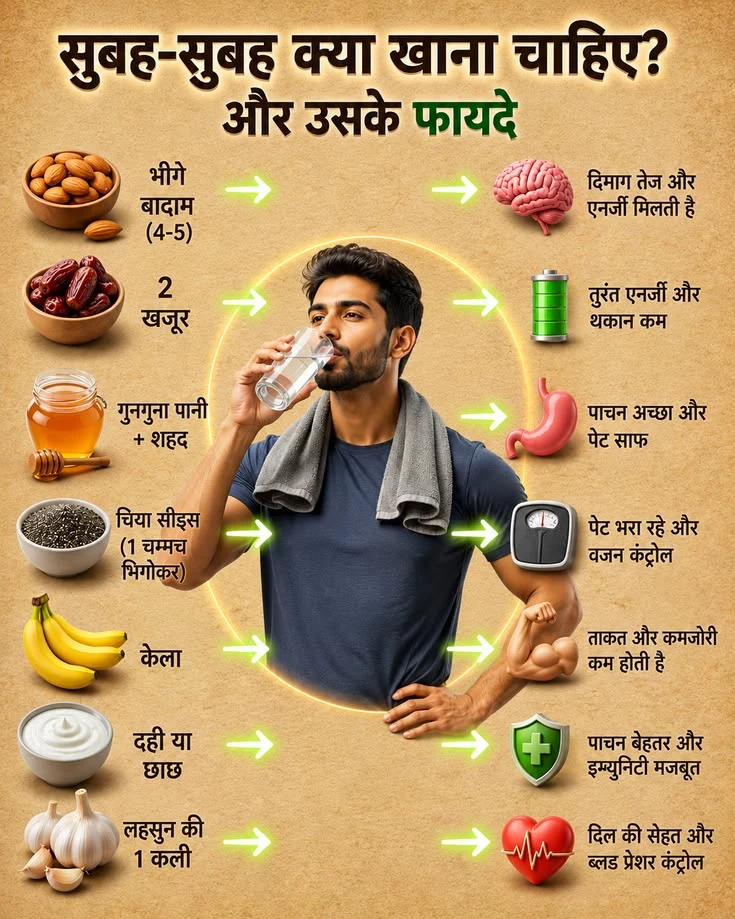
If there is a fear of blood sugar dropping suddenly at night (hypoglycemia), 4-5 soaked almonds or half a cup of lukewarm turmeric milk (without sugar) can be taken 30 minutes before sleep. This keeps sugar levels stable throughout the night.
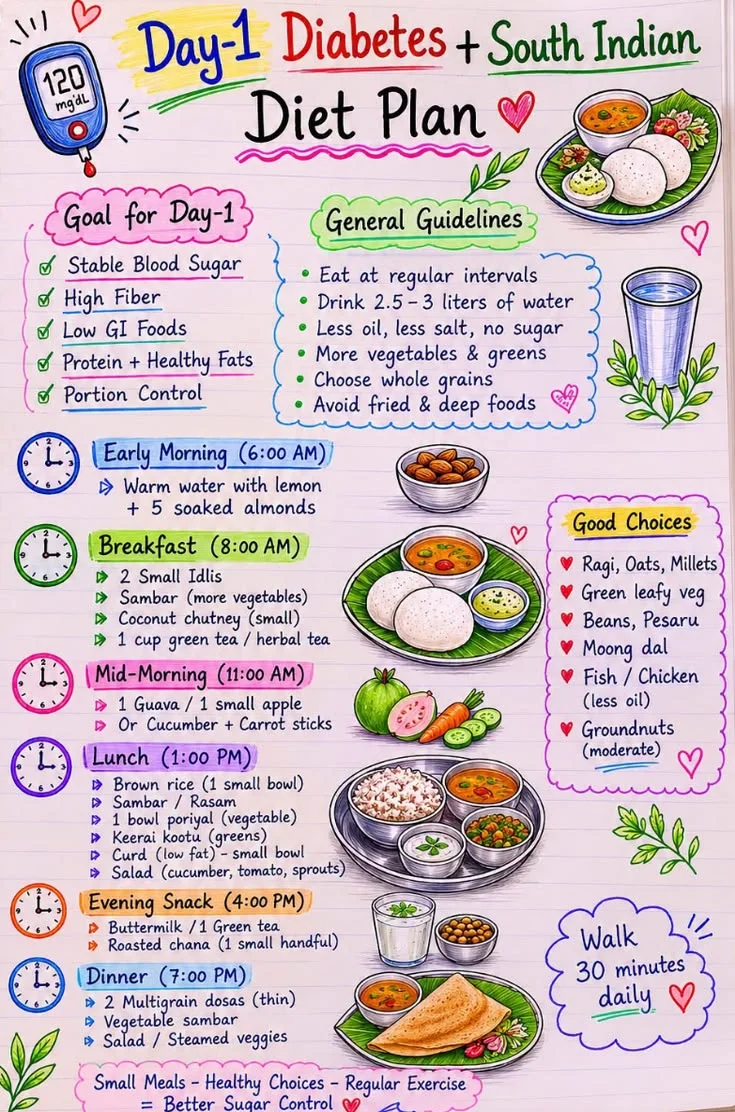
Vivek Bhai’s Advice
Diabetes is not a punishment after which all fun leaves life. The real problem is not the disease, but our irregular routine and ignorance. When you start organizing your plate wisely, reliance on medicines starts decreasing automatically.
Do not fall for any magical remedy found on the internet or claims promising to cure sugar overnight. It takes time for the body to change. Follow this diet chart honestly for 7 days of the week and see the difference yourself.
Look brother, it is simple. Relying on pills while continuing to eat your favorite items is deceiving yourself. Take control of your plate into your own hands, walk 30 minutes daily, and stay stress-free. Remaining healthy is your own responsibility.
Frequently Asked Questions
Can diabetic patients eat rice at night?
Eating rice at night should be avoided because physical activity is lower at night, raising the risk of a sugar spike. If you must eat it, consume a small portion of brown rice or hand-polished rice during lunch along with dal and plenty of salad.
Which fruits should not be eaten in diabetes?
Hyperglycemic fruits like mangoes, sapodilla (chikoo), grapes, and bananas contain very high natural sugars, so they should be eaten minimally. Instead, consuming guava, apple, papaya, and jamun is considered safe. Eat the whole fruit by chewing rather than extracting juice into a glass.
Can drinking fenugreek (methi) water daily cure sugar completely?
Fenugreek seeds certainly help improve insulin sensitivity, but it is not a permanent cure or magical remedy for diabetes. It works as a supportive measure along with the right diet and exercise.
What should be the fasting sugar level in the morning?
For a normal person, morning fasting blood sugar should be between 70 to 99 mg/dL. If it is 100 to 125 mg/dL, it indicates pre-diabetes, and 126 mg/dL or higher is considered diabetes.
Disclaimer: The information provided in this article is for general awareness only.