 Vista
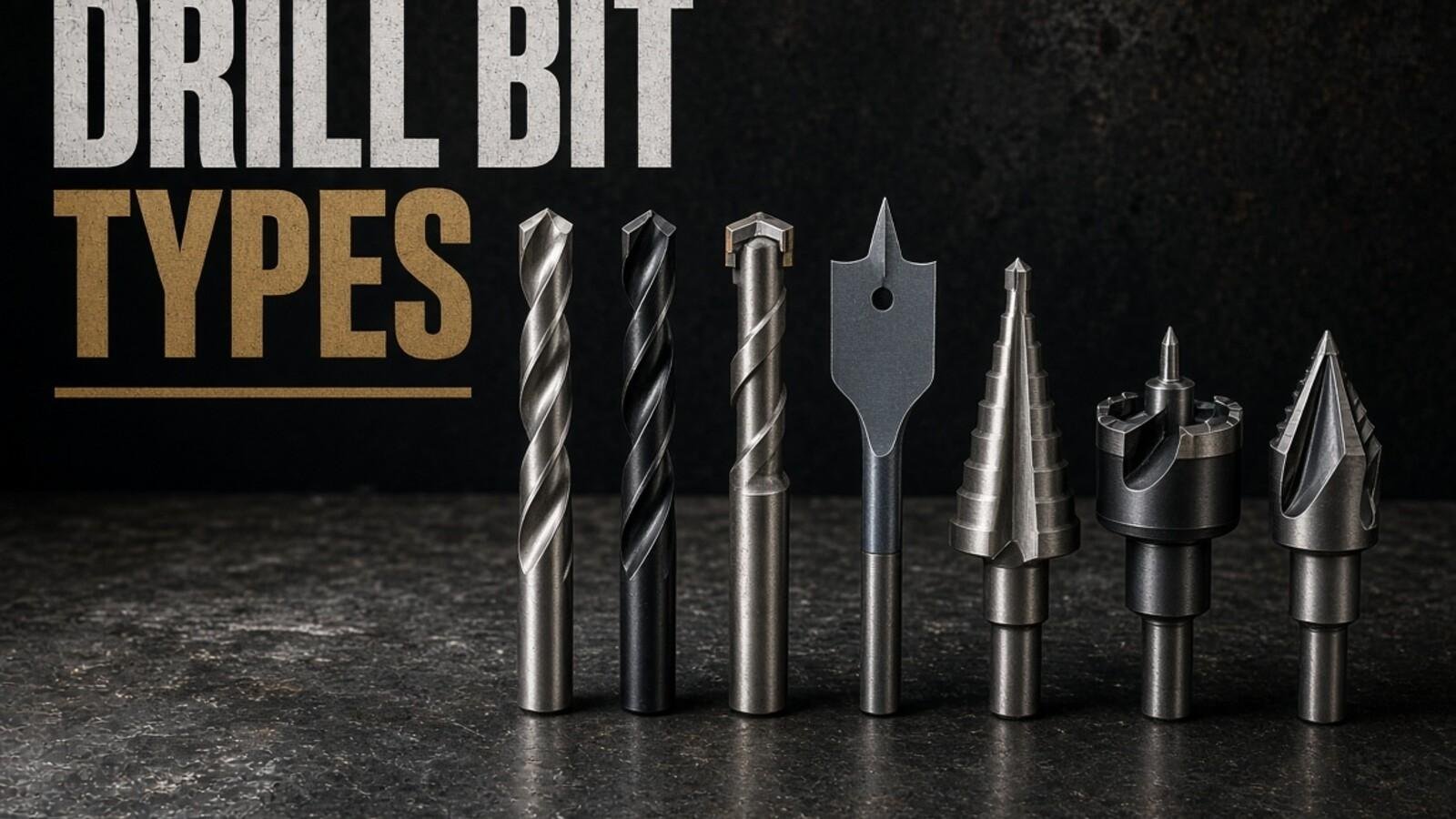
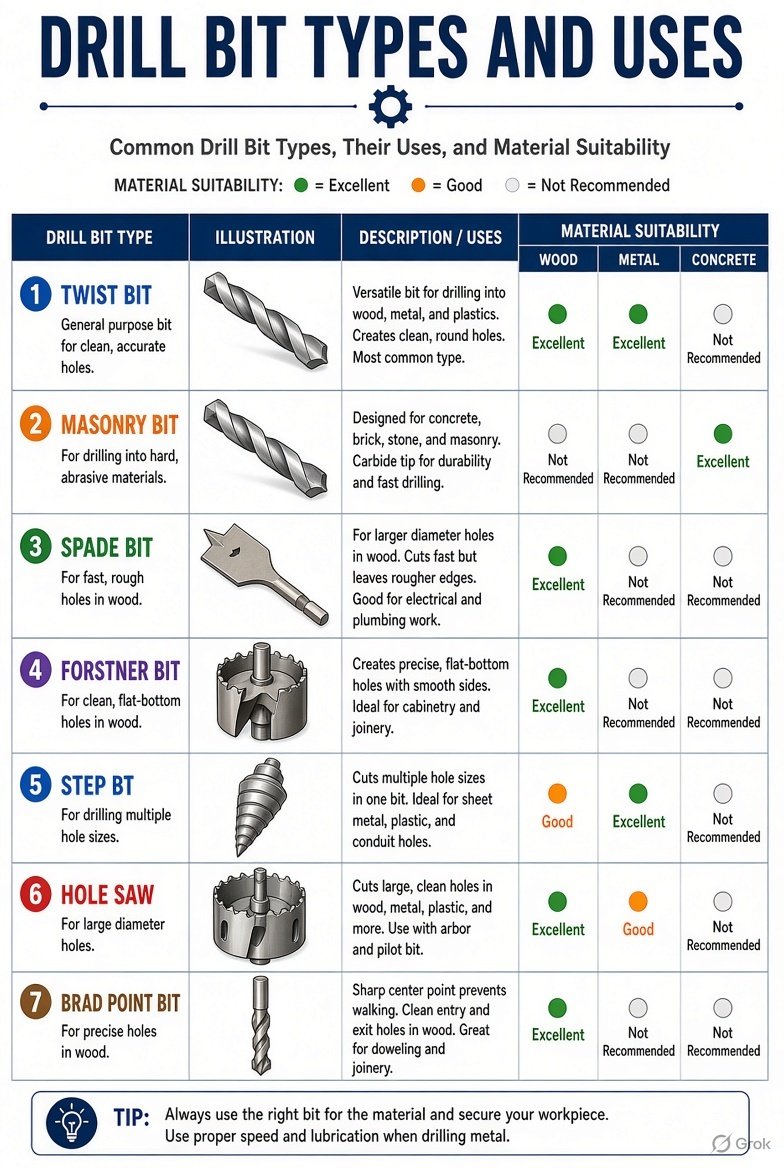
सीधा जवाब: Drill Bit Types Chart में HSS Twist metal के लिए, Brad Point/Spade/Forstner wood के लिए, carbide masonry bits concrete और ईंट के लिए, जबकि tile और glass में specialised cutters काम आती हैं। सही shank और drill mode भी जरूरी है।
अपडेट: 21 नवंबर 2026। हर tool के लिए manufacturer की specific instructions देखें।
Drill Bit Types Chart किस काम आता है?
ड्रिल मशीन में लगाने वाली हर bit का आकार, नोक और उपयोग एक जैसा नहीं होता। लकड़ी में साफ hole बनाने वाली bit, लोहे की sheet में कटिंग करने वाली bit और concrete wall में छेद करने वाली bit अलग design की हो सकती हैं। सामान्य twist drill, brad-point, spade, Forstner, masonry, SDS, step drill और hole saw जैसे कई प्रकार मिलते हैं। सही चयन के लिए सबसे पहले workpiece की material, hole का diameter और आवश्यक depth तय करना चाहिए।
बहुत से लोग केवल यह देखते हैं कि bit drill chuck में फिट हो रही है, फिर उसी से wood, steel, tile और cement सब काटने की कोशिश करते हैं। ऐसा करने से bit खराब, material crack या operator घायल हो सकता है। Drill Bit Types Chart आपको tip और shank की shape पहचानने में मदद करता है, पर असली operating mode और compatible material निर्माता के instructions से तय होते हैं। किसी tool पर “multi-material” लिखा हो तो भी उस product की actual limitations पढ़ें।
HSS Twist Drill Bit क्या होती है?
Twist drill के शरीर पर घुमावदार flute होती है, जो कटे हुए material के chips बाहर निकालने में मदद करती है। HSS यानी High-Speed Steel वाली drill bits लोहे और कई धातुओं में सामान्य उपयोग के लिए बनाई जाती हैं। कुछ HSS bits उपयुक्त लकड़ी या plastic में भी इस्तेमाल हो सकती हैं। Cobalt alloy या अन्य premium variants कठिन metal drilling के लिए मिलते हैं, लेकिन उनका सही चयन cutting tool की grade और product specifications पर निर्भर है।
Metal drilling के समय workpiece को अच्छी तरह clamp करना जरूरी है। छोटी धातु की sheet हाथ से पकड़कर drill करने पर bit फँसने से sheet अचानक घूम सकती है। उचित speed, cutting fluid जहाँ निर्माता recommend करे, eye protection और chip control आवश्यक हैं। बहुत तेज speed पर heat बढ़कर bit की cutting edge खराब कर सकती है। अगर bit बार-बार अटक रही है तो जोर बढ़ाने की बजाय material, speed और tool condition जाँचें।
Brad Point, Spade और Forstner Wood Drill Bits
Brad-point bit की नोक पर सामान्यतः छोटा center spur होता है, जिससे लकड़ी पर hole की शुरुआती position स्थिर रखना आसान होता है। Spade bit अपेक्षाकृत चौड़ी और flat होती है, जिसकी मदद से बड़े utility holes बनाए जाते हैं। Forstner bit में ऐसी cutting geometry होती है जो कुछ woodworking operations में साफ और लगभग flat-bottom recess बनाने के काम आती है। Auger bits भी लकड़ी में लंबे या गहरे holes के लिए उपयोगी हो सकती हैं।
लकड़ी और plywood में काटते समय exit side पर splintering हो सकती है। नीचे scrap wood का support देने और सही feed से फिनिश बेहतर मिल सकती है। बड़े Forstner या spade cutter में काफी torque पैदा हो सकता है, इसलिए board को मजबूती से पकड़ने के बजाय clamp करना सुरक्षित है। Drywall या polished furniture के लिए सिर्फ “बड़ी hole वाली bit” खरीदने से काम नहीं चलेगा। Hole का shape, depth और finish देखने के बाद उपयुक्त bit चुनें।
Concrete और ईंट में Masonry Drill Bit
Masonry drill bits में अक्सर carbide tip का इस्तेमाल होता है। इनका design ईंट, cement-based substrate या concrete जैसी कठोर material के लिए होता है। कुछ bits सामान्य hammer drill के साथ compatible होती हैं, जबकि SDS-plus और SDS-max shank वाली bits उपयुक्त rotary-hammer machines में उपयोग की जाती हैं। सभी concrete bits एक ही grade की नहीं होतीं और उनकी cutting capacity भी अलग है।
Concrete, पुरानी कमजोर ईंट और hollow brick को एक जैसा material न मानें। Hammer action ठोस concrete में उपयोगी हो सकती है, लेकिन किसी नाजुक hollow block में दरार पैदा कर सकती है। Manufacturer का सही drilling mode देखें। Concrete dust में respirable silica जैसी health hazards हो सकती हैं, इसलिए dust extraction और उचित respiratory protection की जरूरत पड़ सकती है। दीवार में छिपे wires, pipes या reinforcement की जाँच किए बिना छेद न करें। Heavy installation में professional help जरूरी हो सकती है।
Tile और Glass में किस Drill Bit का प्रयोग करें?
Ceramic tile, porcelain और glass brittle materials हैं। इनके लिए कुछ विशेष spear-point cutters, diamond-grit bits या अन्य manufacturer-approved cutting accessories इस्तेमाल होते हैं। हर साधारण masonry bit इन पर अच्छा परिणाम नहीं देती। Tile के ऊपर hammer mode चला देने से surface crack हो सकती है। अगर tile के पीछे concrete है तो संभव है कि पहले tile को सही rotary method से काटना पड़े, फिर पीछे की wall के लिए अलग bit तथा method चुनी जाए।
कुछ diamond accessories water cooling के साथ काम करती हैं, लेकिन बिजली वाले drill के पास पानी इस्तेमाल करते समय tool की rating और approved setup अत्यंत महत्वपूर्ण हैं। किसी सामान्य electric drill पर अपनी तरफ से पानी डालना खतरनाक हो सकता है। Tile के पीछे मौजूद plumbing और electric circuits की संभावना जाँचें। छोटे hole से शुरुआत करने के तरीके भी material के अनुसार बदल सकते हैं। महंगी tile या glass sheet में drilling करने से पहले निर्माता की guidance या अनुभवी installer से सलाह लेना बेहतर है।
Step Drill, Hole Saw और Countersink का उपयोग
Step drill bit पर अलग-अलग diameter के क्रमिक steps बने होते हैं। यह कुछ thin sheet materials में अलग sizes के holes बनाने के लिए उपयोगी हो सकती है। Hole saw गोल cutter होता है जो किनारे से circular kerf काटकर बीच का material plug निकालता है, इसलिए बड़े गोल openings के लिए इस्तेमाल होता है। Countersink bit screw के conical head को बैठाने के लिए तिरछी recess बना सकती है, जबकि counterbore आम तौर पर cylindrical recess से जुड़ा होता है।
Hole saw में bit फँसने पर drill अचानक झटका दे सकती है। सही arbor, pilot drill, side handle, suitable speed और stable workholding की जरूरत होती है। Step drill को केवल वही thickness और material पर चलाएँ जिसके लिए वह बनाई गई है। Countersink को बड़े straight hole बनाने का विकल्प न मानें। Large-diameter drilling में kickback और workpiece movement के जोखिम अधिक हो सकते हैं। Tool की सुरक्षित operating instructions किसी छोटी infographic से ज्यादा विस्तृत होती हैं।
SDS Plus, SDS Max, Hex और Round Shank में फर्क
Shank bit का वह हिस्सा है जो drill machine में फिट होता है। Round cylindrical shank सामान्य drill chucks में मिलती है। Hex shank कुछ quick-change holders और tool systems में उपयोगी है। SDS-plus और SDS-max अलग rotary-hammer interfaces हैं। इनके नाम मिलते-जुलते हैं लेकिन shank sizes, locking system और intended tools अलग हो सकते हैं। हर SDS bit किसी भी SDS machine में फिट नहीं होगी।
Adapter की सहायता से कोई bit physically लग जाए, तब भी machine की शक्ति या impact system उस bit के लिए सुरक्षित हो, ऐसा जरूरी नहीं। Chuck ठीक से lock हुआ है या नहीं, इसकी जाँच करें। टूटे हुए shank या worn holders का इस्तेमाल न करें। साधारण drill में rotary hammer की सारी क्षमताएँ नहीं आ जातीं। Tool खरीदते समय drill chuck system, maximum bit diameter और operating modes को ध्यान से पढ़ें।
Material के हिसाब से Drill Bit कैसे चुनें?
लकड़ी में clean positioning चाहिए तो Brad-point जैसे suitable woodworking bits देखें। Metal में manufacturer-approved HSS twist bit उपयोगी हो सकती है। Concrete में suitable masonry bit और सही impact tool चाहिए। Tile में विशेष cutter और सावधानी से rotary mode आवश्यक हो सकता है। बड़े opening के लिए appropriate hole saw या step bit चुनी जा सकती है। यह एक selection framework है, हर situation का fixed recipe नहीं।
ड्रिल करने से पहले चश्मा, उचित dust control और सुरक्षित workholding रखें। घूमती bit के पास ढीले कपड़े, बाल या हाथ न आने दें। Metal chips को bare hand से निकालने की कोशिश न करें। Drilling के तुरंत बाद bit गरम हो सकती है। अचानक vibration, burning smell या machine jam होने पर tool रोककर वजह जाँचें। दीवार का work है तो hidden cables और pipes की जांच सबसे पहले करें। अगर काम structural या safety-critical है, तो qualified technician की मदद लें।
अक्सर पूछे जाने वाले सवाल
लकड़ी के लिए कौन सी drill bit अच्छी है?
काम के अनुसार brad-point, spade, auger या Forstner bit उपयुक्त हो सकती है; desired hole shape देखें।
लोहे में HSS bit लग सकती है?
Suitable HSS bits अनेक धातुओं के लिए होती हैं, लेकिन grade, speed और metal hardness जाँचना जरूरी है।
टाइल में hammer mode लगाना चाहिए?
सामान्यतः brittle tile के लिए hammer/percussion से बचें और approved rotary method अपनाएँ।
SDS Plus और SDS Max में क्या अंतर है?
दोनों अलग rotary-hammer shank systems हैं, जिन्हें matching machine चाहिए।
क्या एक ही drill bit लकड़ी और कंक्रीट दोनों में चलेगी?
कुछ विशेष multi-material bits कई substrates के लिए rated हैं, लेकिन सामान्य bits को universal न मानें।
निष्कर्ष
Drill bit खरीदते समय hole का प्रकार, substrate और machine compatibility देखें। गलत mode में drilling करने से bit, workpiece और operator तीनों को नुकसान हो सकता है। Diagram को reference रखें, पर काम निर्माता के सुरक्षित नियमों से करें।
स्रोत
- Bosch Professional — Drill Bits by Material
- Bosch — Multi Construction Drill Mode Advice
- Screwfix — Types of Drill Bits
सुरक्षा: बिना सही प्रशिक्षण के दीवार की hidden services या load-bearing हिस्सों में drilling न करें।












Share Your Opinion
Comments are closed on this post.