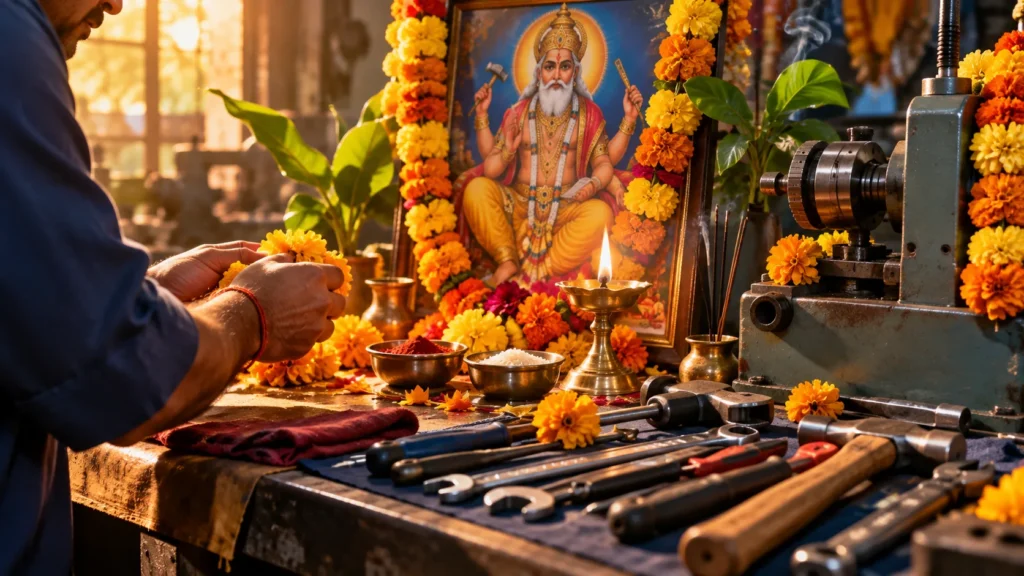
This year, Vishwakarma Puja falls on Thursday, 17 September 2026. It is not just a date on the calendar — it is a solar festival associated with Kanya Sankranti, when artisans, mechanics, engineers, and factory workers light a lamp before their tools and machines. Below are the date, auspicious time windows, and simple puja rituals; always verify the exact muhurat with your local panchang.
Vishwakarma Puja 2026: Date and Day
Vishwakarma Puja 2026 is observed on Thursday, 17 September. In many households, workshops, and industrial hubs across North India, this is the dedicated day for worshiping tools and equipment. The festival’s nature is tied more to the movement of the Sun than the lunar tithi — specifically, the day the Sun enters Kanya Rashi (Virgo). Therefore, do not panic if different panchangs show the date slightly off by a day; the exact timing of Sankranti is the backbone of this festival.
In Delhi and general reports, Kanya Sankranti is noted around 07:58 AM IST. The auspicious window for puja is often cited from this time until noon — roughly 07:58 AM to 12:40 PM. Abhijit Muhurat is reported between approximately 11:51 AM and 12:40 PM. Reports regarding Punya Kaal vary, with some sources mentioning up to 02:22 PM or 02:31 PM. Hence, rather than claiming a rigid exact time, it is best to consult your local panchang.
The exact minute of Sankranti can shift as you change cities. Mumbai, Kolkata, Chennai, Patna — same Thursday, slightly different clock times. If your workshop operates in shifts, the morning shift can handle cleaning and decor, while the afternoon shift performs the aarti around Abhijit Muhurat. This festival does not wait for a Sunday holiday; performing puja on a working day is its defining feature.
The day is Thursday — many households already observe Thursday fasts and kathas, but do not forge new rules by mixing Vishwakarma Puja with other fasts. Devoutly follow the simple rituals that your family or factory has been practicing for years.
Kanya Sankranti: Why It Is Called a Solar Festival
Kanya Sankranti marks the entry of the Sun into Virgo (Kanya Rashi). Many panchangs and folk traditions view Vishwakarma Puja as a solar festival rather than just a lunar date festival. This is why people get confused seeing its reference on pages of Bhadrapada or Ashwin in different calendars. The date is tied to solar transit.
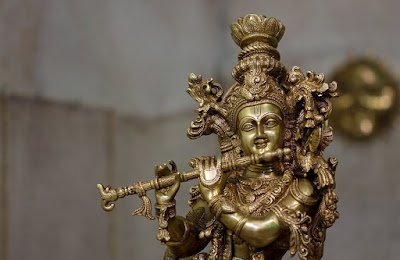
In scriptural lore, Lord Vishwakarma is known as the divine architect of the gods — symbolic of creating cities, chariots, weapons, and grand structures. Today’s meaning is simple: the hand that holds a tool, operates a machine, or drafts a blueprint honors that very creative force. A carpenter’s plane, a mason’s square, a driver’s steering wheel, an engineer’s drawing, a factory’s lathe machine — all fall under the umbrella of this devotion.
Panchangs mention ritual baths, charity, and Punya Kaal on Sankranti. In Vishwakarma Puja, charity is usually simple — distributing sweets, giving prasad to workers, and keeping tools clean. There is no need to invent a new list of ritual offerings. Whatever lies within your means is sufficient.
Because it is a solar festival, the morning hour is considered special. There is no need to rush and conclude the puja in pitch darkness; the window after Sankranti is quite broad. Still, make arrangements before shift or school hours so that the aarti isn’t left incomplete amidst afternoon noise and rush.
Muhurat Windows: Sankranti, Auspicious Period, Abhijit, Punya Kaal
Reported timings according to Delhi/general panchangs are as follows — treat these as estimates and rely on your city’s local panchang for final figures.
Kanya Sankranti: Around 07:58 AM IST. In many places, puja begins right after this. The auspicious puja window is frequently listed from roughly 07:58 AM to 12:40 PM. Abhijit Muhurat is noted around 11:51 AM to 12:40 PM — if the office or factory is busy in the morning, this short window is convenient for the aarti.
Reports on Punya Kaal are not uniform. Some mentions extend until around 02:22 PM or 02:31 PM. The difference stems from varying panchang calculation methods and city latitudes. Therefore, imposing a single exact minute across the entire country would be incorrect. Confirm with a local panchang or your priest on that morning.
Night worship does not feature in general discussions for this festival. Washing tools and putting them away at night, and worshiping during the morning-afternoon window is the practical path. If a machine runs 24 hours, briefly stopping it safely during shift change to apply flowers and roli is common practice in many families and factories. There is no need to invent a new “night muhurat”.
Remember: Muhurat is a facilitator, not a source of fear. Being five minutes late does not lessen your devotion. A clean place, clean tools, and simple prasad — these three things matter far more than strictly timed ink.
**FACT**
>
**Vishwakarma Puja 2026:** Thursday, 17 September. Kanya Sankranti (Delhi/general report) around 07:58 AM IST. Frequently reported puja window: approximately 07:58 AM–12:40 PM; Abhijit around 11:51 AM–12:40 PM. Punya Kaal reports vary (some mention up to ~02:22/02:31 PM) — check local panchang. This is a solar festival (Kanya Sankranti), not strictly a lunar tithi.
Who Is This Day Special For and Why?
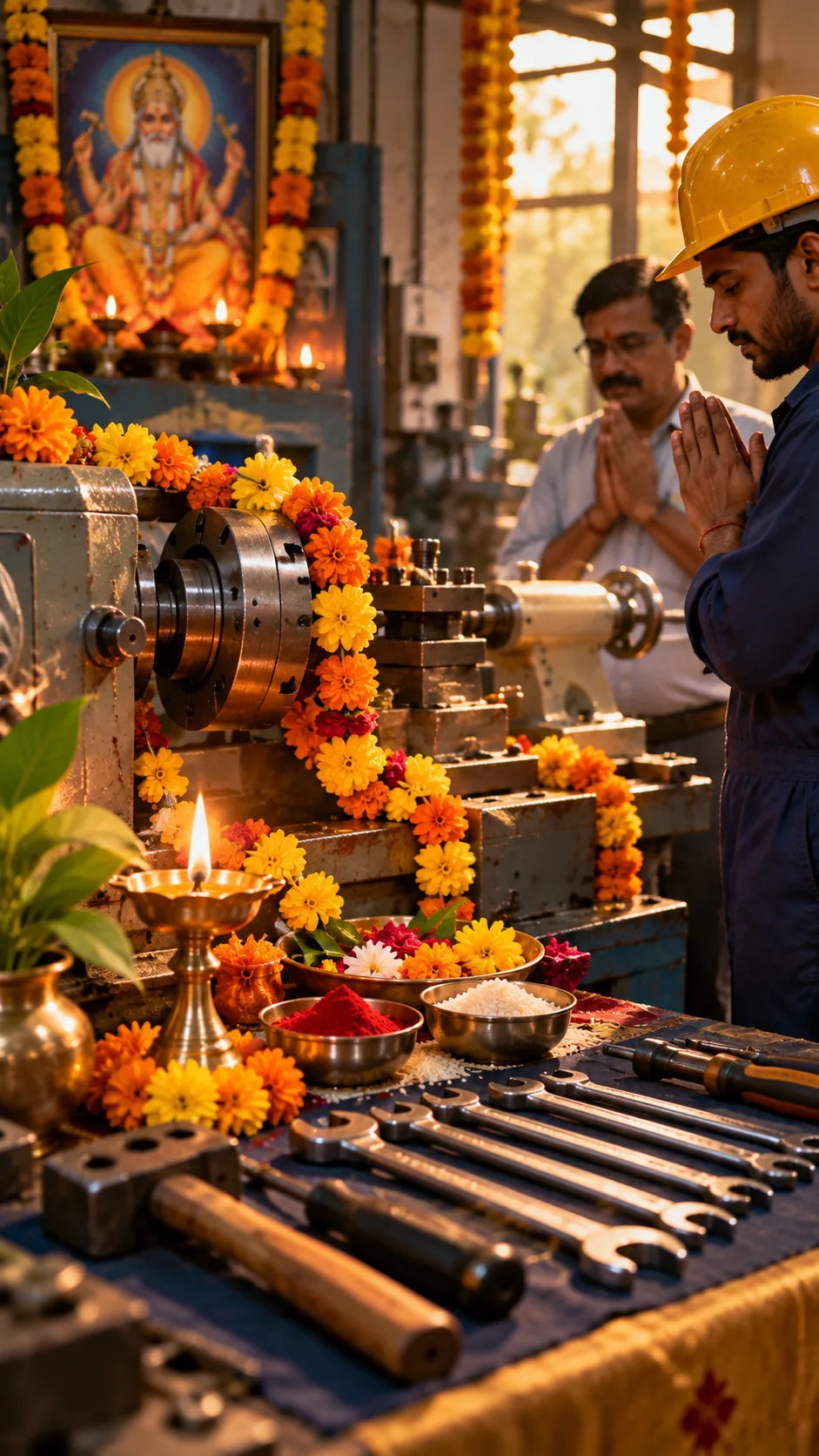
Artisans, mechanics, goldsmiths, blacksmiths, drivers, printers, tailors, masons — these names lead the traditional list. Alongside them today stand engineers, architects, factory workers, IT hardware specialists, and workshop supervisors. For anyone whose livelihood depends on tools and machinery, this day is a day of thanksgiving.
The spirit of the puja is less about “treating tools as God” and more about “giving respect to tools”. The hammer that protects hands from injury daily, the machine that earns bread — washing it once a year and offering flowers is an expression of gratitude. If children are home from school, let them see the lamp near their father’s tools — learning shouldn’t just come from textbooks, but from home.
In factories and workshops, this day also teaches discipline. Wrenches lying in oil and grime for a month shine that morning. May accidents decrease and work run smoothly — this is the blessing hidden in the aarti. No medical or legal claims are tied to this; it is a reminder of faith and clean work.
Vehicle worship is also seen in many households on this day — flowers on the bonnet, sacred thread (mauli) on the steering wheel. Do not invent new rules; follow what has been practiced in your region for years. Imitating or forcing customs from neighboring states isn’t necessary.
Simple Puja Items (Samagri)
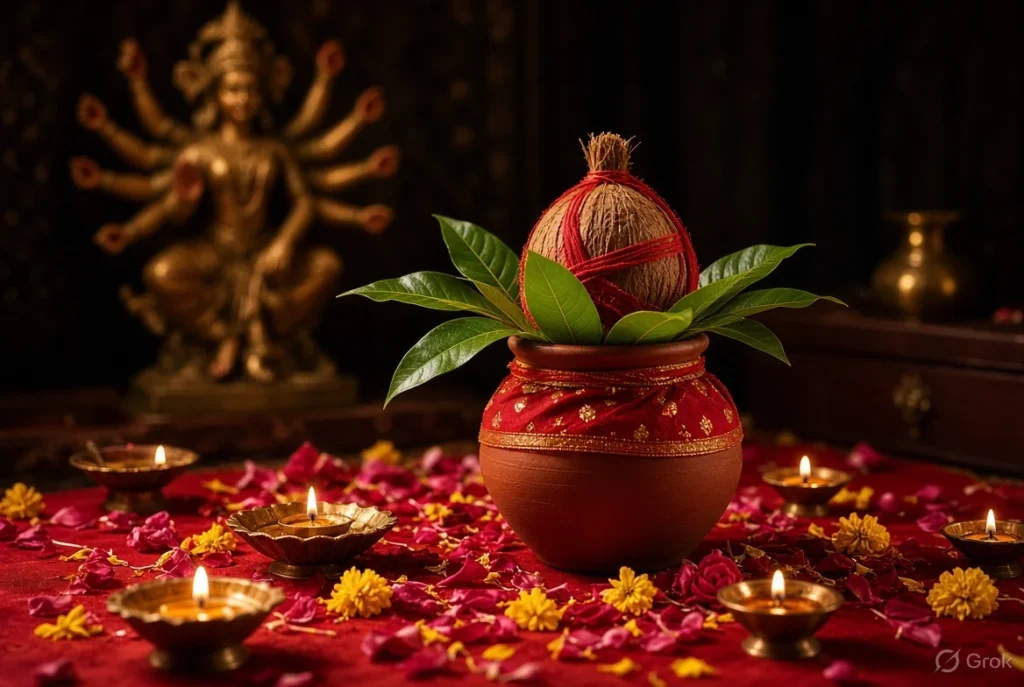
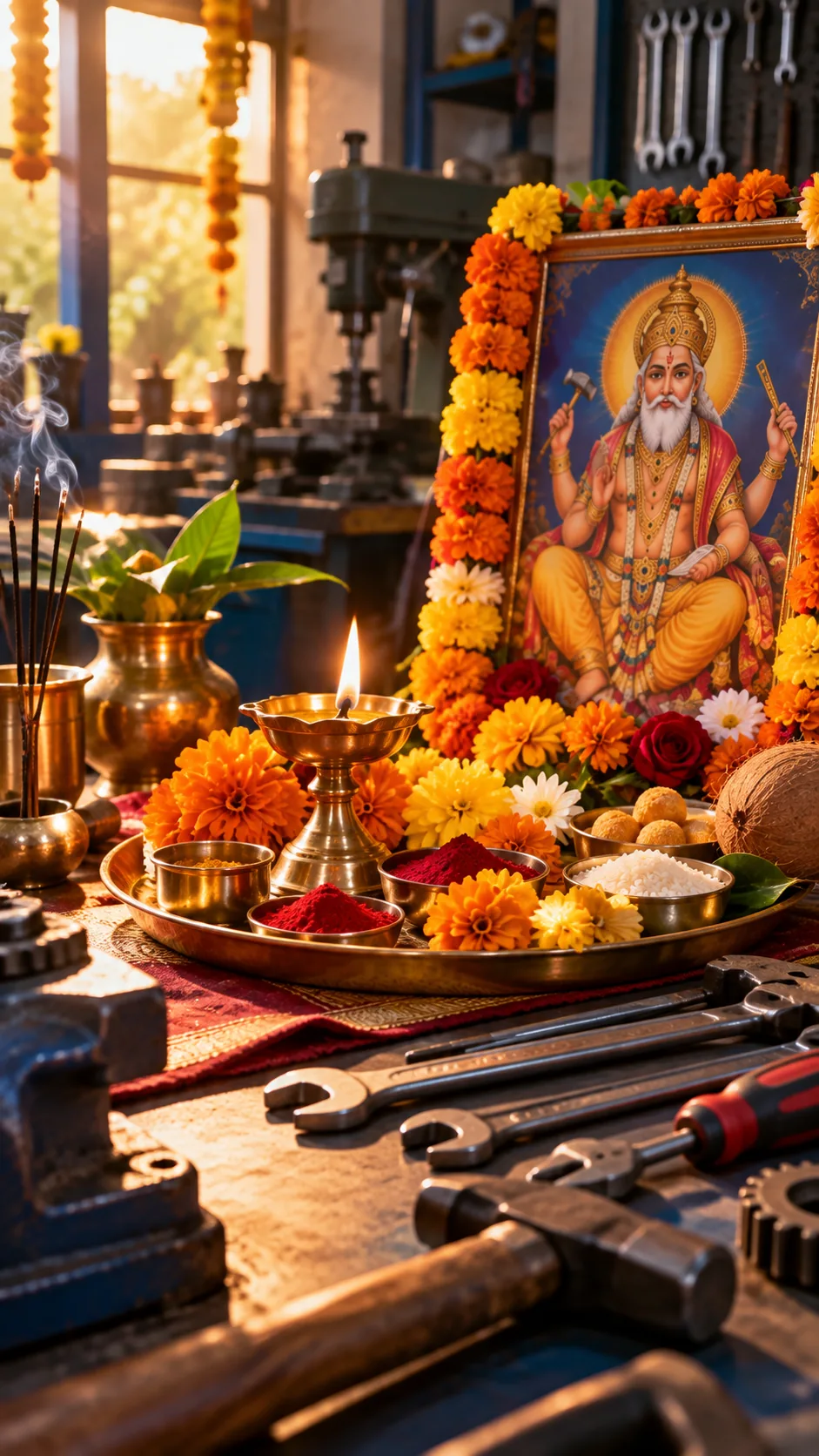
No need to fill large thalis from big markets. Clean water, a bit of Gangajal if available, flowers (marigold is common), roli (vermilion), turmeric, akshat (unbroken rice), incense sticks or dhoop, an oil or ghee lamp (diya), mauli (sacred thread), and sweet or fruit offerings (prasad). Some families make jaggery-chana or halwa. Offer whatever is prepared.
Wipe down tools and machines beforehand. Oil and grease should not mix with puja flowers. For laptops, printers, sewing machines, scooters — wiping with a dry cloth is enough. Do not pour water on electrical appliances; faith never goes against safety.
Ensure clean clothes, sweep the area, and spread a small mat or red/yellow cloth under the tools — a habit in many homes, though not a mandatory scriptural requirement. If you have an idol, you can place an image or calendar of Lord Vishwakarma in front. If there is no idol, the tools themselves are the focal point.
For chants, common general mantras are sufficient: Om Vishwakarmane Namah. Simple bows surrounding this are fine. No new, lengthy, or “special secret” mantra will be prescribed here. Repeat whatever your priest or family taught you. Do not skip the puja out of fear of mispronunciation; keep your intention straightforward.
Puja Vidhi: Step-by-Step for Home, Workshop, and Factory
Take a bath in the morning and put on clean clothes. Sweep and clean the puja area or machine shed. Arrange your tools in one place — hammer, plane, calipers, laptop, keychain, whatever forms the pillars of your work.
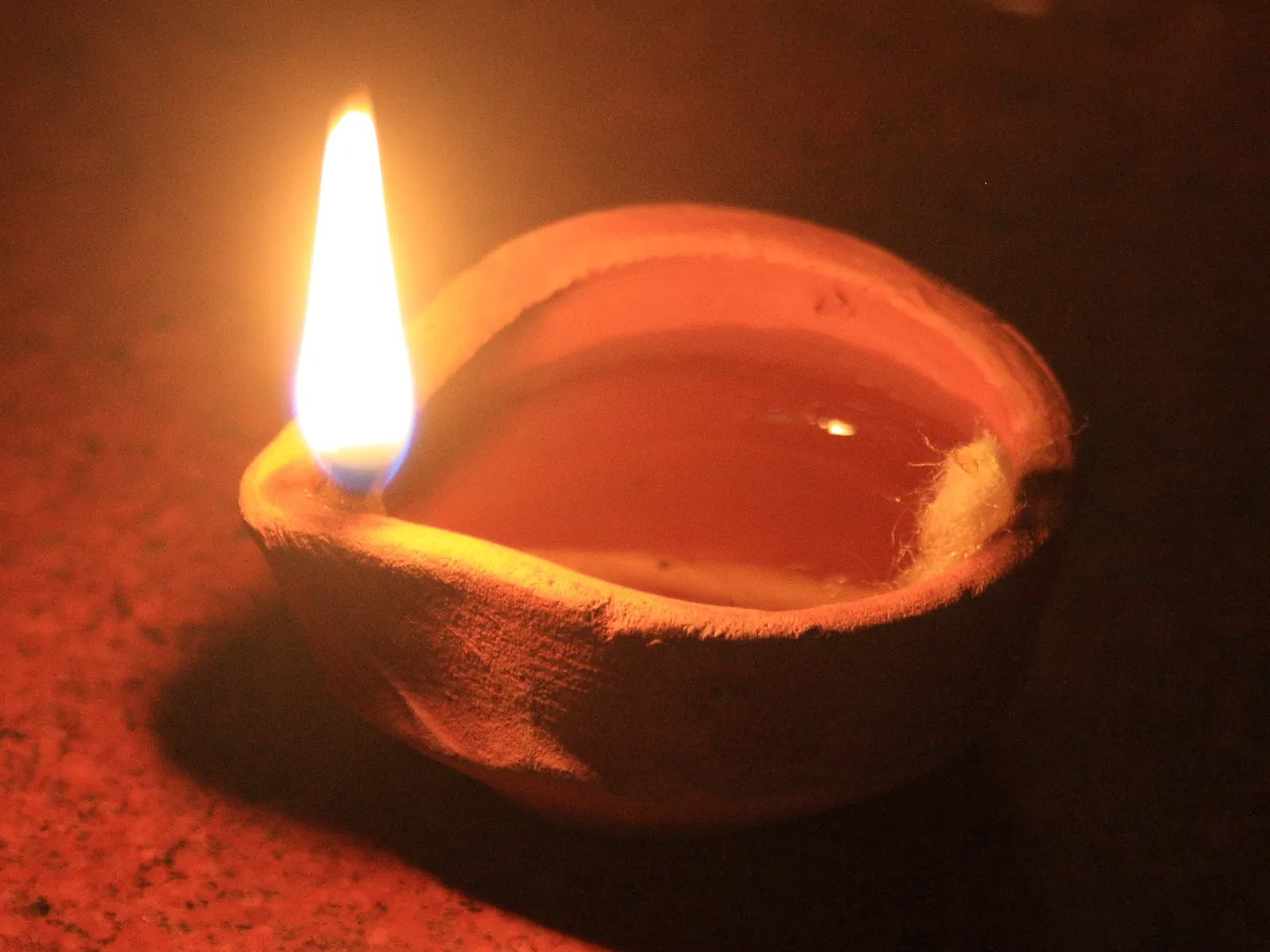
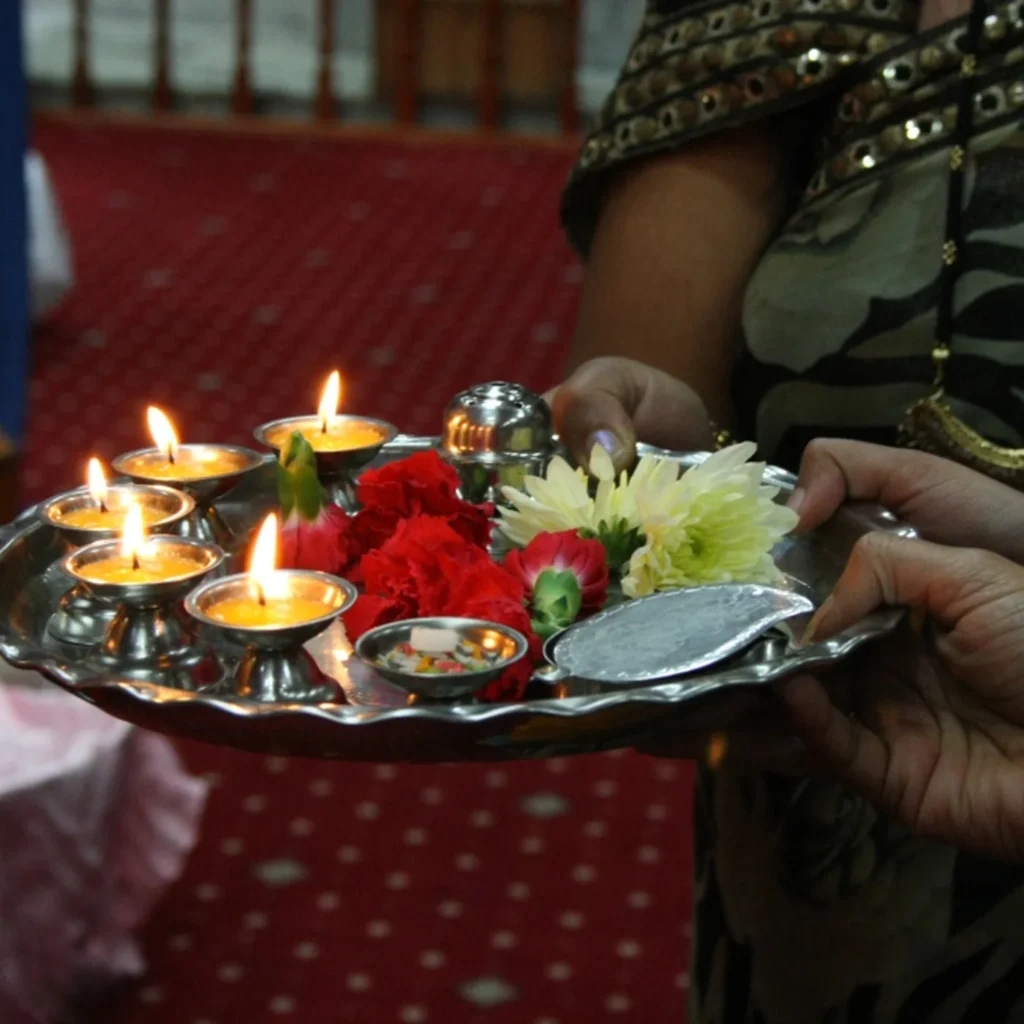
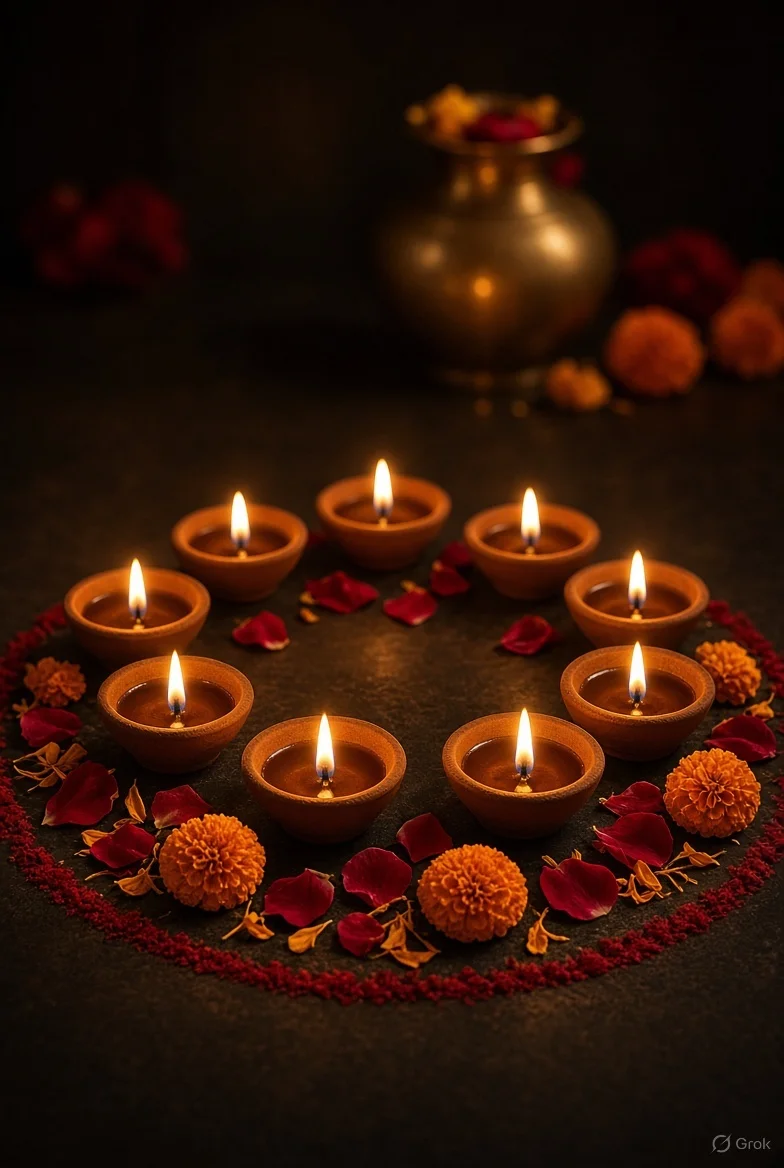
Light a diya. Apply a tilak of roli, turmeric, and akshat to the tools and on your forehead. Offer flowers. Chant Om Vishwakarmane Namah peacefully as many times as feels comfortable. Rotate a small diya for aarti. Offer prasad, then distribute it among family members or co-workers.
In workshops, it is good to see owners and artisans standing together. Five minutes of peace, phones set aside. If a machine needs to be shut down, keep safety lockout procedures in mind — no carelessness in the name of worship. In large factories, short shift-wise aartis can be conducted so production isn’t entirely disrupted while faith is honored.
Families tying flowers and mauli on vehicles should clean the bonnet and keep the diya in a safe place at a distance; if the engine is hot, ensure flowers or plastic don’t melt on it. Do not leave children unattended near lighted lamps.
Conclude the ritual with a bow and a seek for forgiveness — for any omissions made. After this, tools return to being tools, and work resumes. No universal restriction like “touching tools is prohibited” needs to be imposed after the puja; if it is an old custom in your household, follow it, but do not forge new strict rules.
Factory, Garage, and Office: Faith Amidst Work
In industrial areas, Vishwakarma Puja presents a distinct atmosphere. Torans on the gates, garlands in the sheds, prasad in the canteen. An engineer places a flower on the drawing board, a welder removes his mask/cap and stands quietly for two minutes. This sight is not drama; it is a respectful bow to a year’s hard work.
When shift workers come off night duty in the morning, the puja is not meant to disrupt their sleep. The short Abhijit window serves them well. If supervisors post a schedule note a day prior, chaos is avoided.
In offices, computers and printers are also tools. No water on screens — a single flower and a roli tilak are enough. If there’s a team, a small circle of five people and a sweet box — no extravagant mandap is required.
Worth remembering: This festival belongs to the person operating the tool, not just the owner. Prasad should first reach the hands that wipe grease daily. Devotion is measured not by the cost of a garland, but by shared participation.
FAQ
When is Vishwakarma Puja 2026?
Thursday, 17 September 2026. Kanya Sankranti in Delhi/general reports is noted around 07:58 AM IST.
What is the auspicious time for Puja?
A window from roughly 07:58 AM to 12:40 PM is frequently cited. Abhijit Muhurat is around 11:51 AM–12:40 PM. Punya Kaal reports vary — check your local panchang.
Is this a festival of Tithi or Sankranti?
In general understanding, this is a solar festival linked to Kanya Sankranti. It should not be viewed purely as a lunar tithi festival.
Who should perform the Puja?
Artisans, mechanics, engineers, factory workers, drivers — families whose livelihoods run on tools, machines, and vehicles. A simple procedure at home is sufficient.
Which mantra should be chanted?
The commonly recited salutation: Om Vishwakarmane Namah. No new or fabricated mantra is required. Repeating old family chants is perfectly fine.
Disclaimer: Muhurat timings may vary according to city and panchang. This article provides general faith-based information and does not constitute unique regional customs, medical, or legal advice.
Also Read
Disclaimer: Verify exact muhurat with your local panchang.