पहले research question तय करें
Sample size निकालने से पहले तय करें कि आप किस सवाल का जवाब चाहते हैं। Survey में किसी proportion का अनुमान लगाना और दो groups के average की तुलना करना अलग काम हैं। इस calculator में दोनों के अलग modes हैं, ताकि margin of error को statistical power समझने की गलती न हो। Survey mode normal approximation से completed responses निकालता है। Two means mode बराबर आकार के दो independent groups में हर group का target देता है। Result एक planning aid है। यह study protocol approve नहीं करता और meaningful effect size आपकी ओर से तय नहीं करता।
Survey के inputs कैसे भरें
Survey sample size चुनें। Confidence 80% से 99.9% के बीच रखें। Expected proportion और margin of error भरें। Margin percentage points में है: 5 का मतलब लगभग plus या minus पाँच percentage points है, आपके proportion का पाँच प्रतिशत नहीं। Prior data न हो तो इस formula में 50% एक सामान्य conservative assumption है। Population size खाली रखने पर large-population formula चलता है। Known population हो तो कम से कम दो का whole number डालें। सिर्फ completed responses चाहिए तो nonresponse zero रखें। बनाएँ दबाने पर base calculation, final target और आपके assumptions साथ मिलेंगे।
Survey formula को समझें
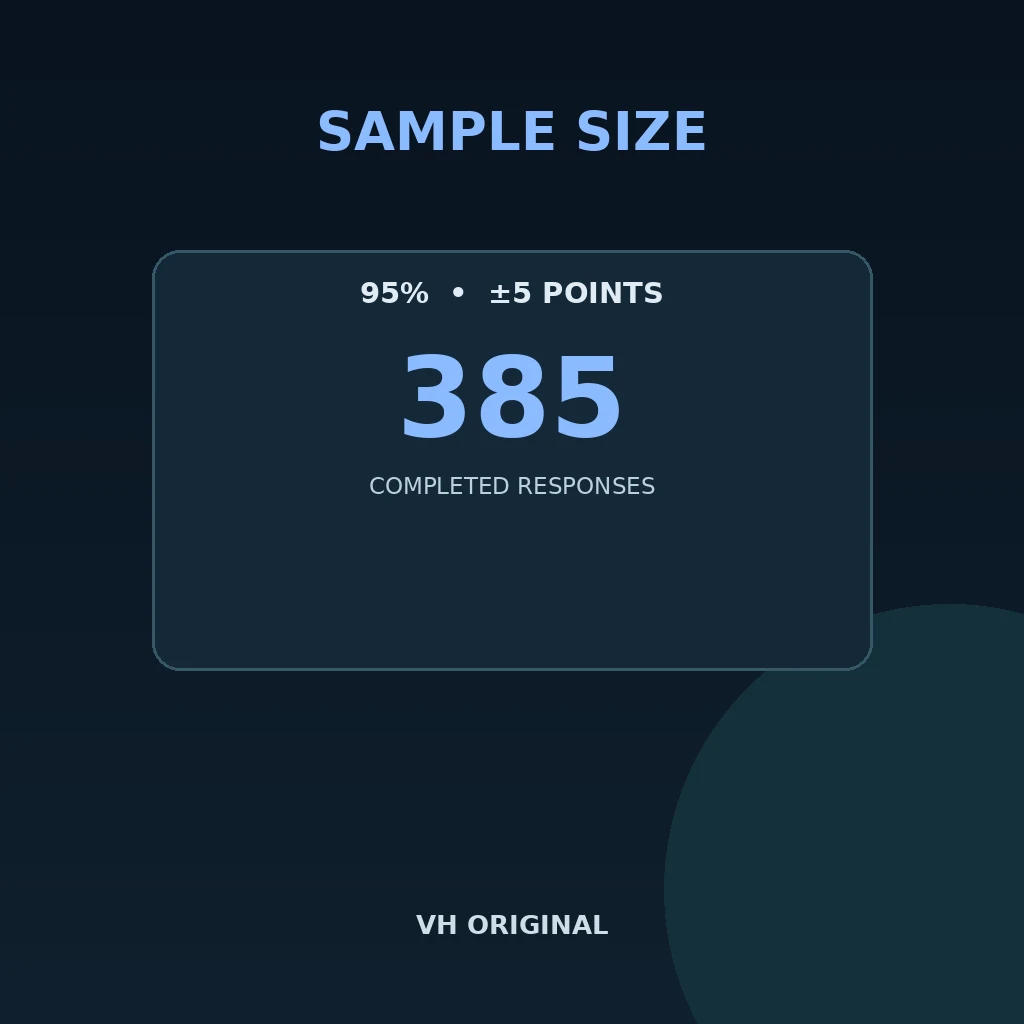
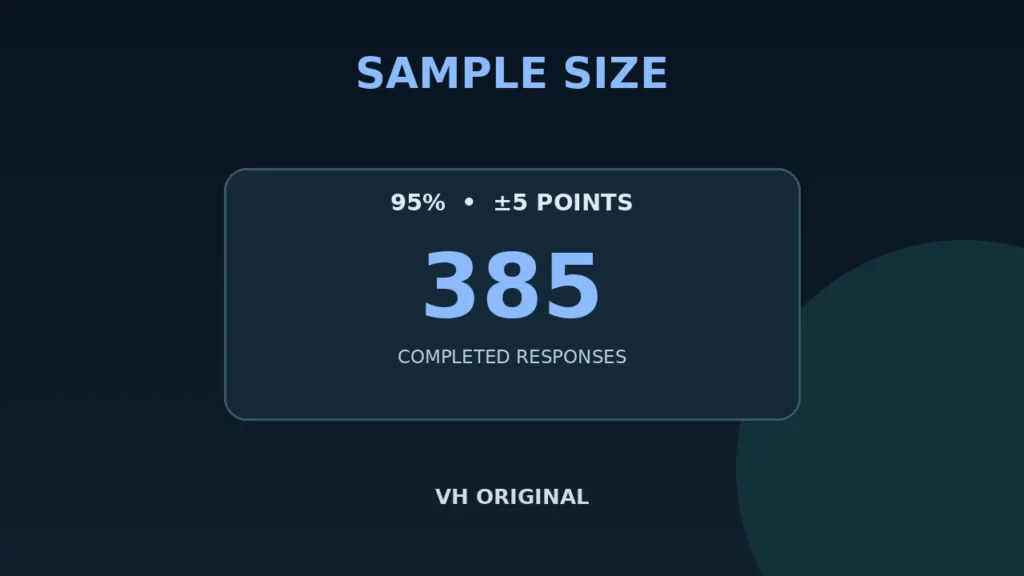
पहला formula n0 = z² p(1 − p) / e² है। इसमें p और e fractions हैं। Population N देने पर finite-population correction n = n0 / [1 + (n0 − 1)/N] लगती है। Completed-response target ऊपर की ओर round होता है। 95% confidence, 50% proportion और पाँच percentage-point margin में large-population target 385 है। Population 1,000 रखने पर target 278 होता है। ये assumptions simple random और independent sampling के हैं। केवल online poll में इतने responses मिल जाना representative sampling का प्रमाण नहीं है। Sample चुना कैसे गया, इसका असर संख्या से अलग रहता है।
दो means और target power
Two means mode में standardized effect size d दें। यह mean difference को assumed common standard deviation से divide करने वाला effect है। d positive होना चाहिए। इसे reliable prior data या justified research objective से तय करें; मनचाही sample संख्या पाने के लिए बदलना ठीक नहीं। Target power 50% से 99.9% तक दें। Confidence से two-sided alpha निकलता है: 95% confidence का alpha 0.05 है। Approximate formula हर group के लिए n = 2(z1−alpha/2 + zpower)²/d² है। d = 0.5, power 80% और confidence 95% रखने पर 63 प्रति group, यानी 126 total मिलता है।
Nonresponse allowance कैसे काम करता है
Nonresponse या dropout allowance recruitment target बढ़ाता है, जरूरी completed observations का अर्थ नहीं बदलता। Tool completed target को one minus nonresponse fraction से divide करके ऊपर round करता है। 385 completed survey responses के लिए 20% allowance रखने पर recruitment target 482 होगा। Two means में allowance हर group पर अलग लगता है और फिर total निकलता है। Recruitment target known population से बड़ा हो तो warning मिलेगी। अधिक लोगों को बुलाना nonresponse bias को अपने आप नहीं मिटाता। Follow-up plan, किसने जवाब दिया और किसने नहीं दिया, इन बातों को भी study में दर्ज करें।
Result की सीमाएँ और अगला कदम
Survey calculation normal approximation है। बहुत छोटे targets या extreme proportions के लिए यह ठीक तरीका नहीं हो सकता। Cluster sampling, weights और unequal selection probabilities के लिए अतिरिक्त design calculations चाहिए। Two means result approximate z planning है, exact t-test power solution नहीं। Independent continuous outcomes, समान variance और equal allocation इसकी assumptions हैं। Paired study, binary outcome, survival analysis, multiple comparisons और unequal groups में दूसरा calculator या method चाहिए। एक billion से बड़े result रोक दिए जाते हैं। JSON report डाउनलोड करके assumptions बचाएँ और final design supervisor या statistician से review कराएँ।
FAQ
क्या हमेशा 50% proportion रखें?
Prior information न हो तो इस precision formula में 50% conservative है। Reliable relevant data हो तो उसका justified estimate लें।
पाँच percentage points का मतलब क्या है?
40% estimate में पाँच percentage-point precision लगभग 35% से 45% है, यदि sampling assumptions सही हों।
क्या achieved power निकलती है?
नहीं। Two means mode आपके target power के लिए approximate sample size निकालता है। Existing sample की achieved power नहीं निकालता।
Total group size का दोगुना क्यों है?
Calculation दो independent groups और equal allocation मानती है। Reported per-group target दोनों groups के लिए अलग पूरा करना है।
क्या paired या clinical study में सीधे लें?
नहीं। अलग designs में अलग models, exact methods और reviewed protocol लग सकते हैं। Design-specific calculation जरूरी है।
क्या dataset upload होता है?
Dataset की जरूरत नहीं। आपके numeric assumptions browser में process होते हैं और report वहीं से डाउनलोड होती है।
Advice
Result जमा करने या share करने से पहले original input और अपने project की जरूरत से मिलाएँ। Source text या assumptions बचाकर रखें ताकि दूसरा व्यक्ति output review कर सके। Generated file तभी उपयोगी है जब उसका content और format आपके काम की जरूरत पूरी करते हों।
संबंधित टूल
यह educational helper है। Source accuracy, study assumptions और final output खुद जाँचें।
Method reference: NIST sample size planning